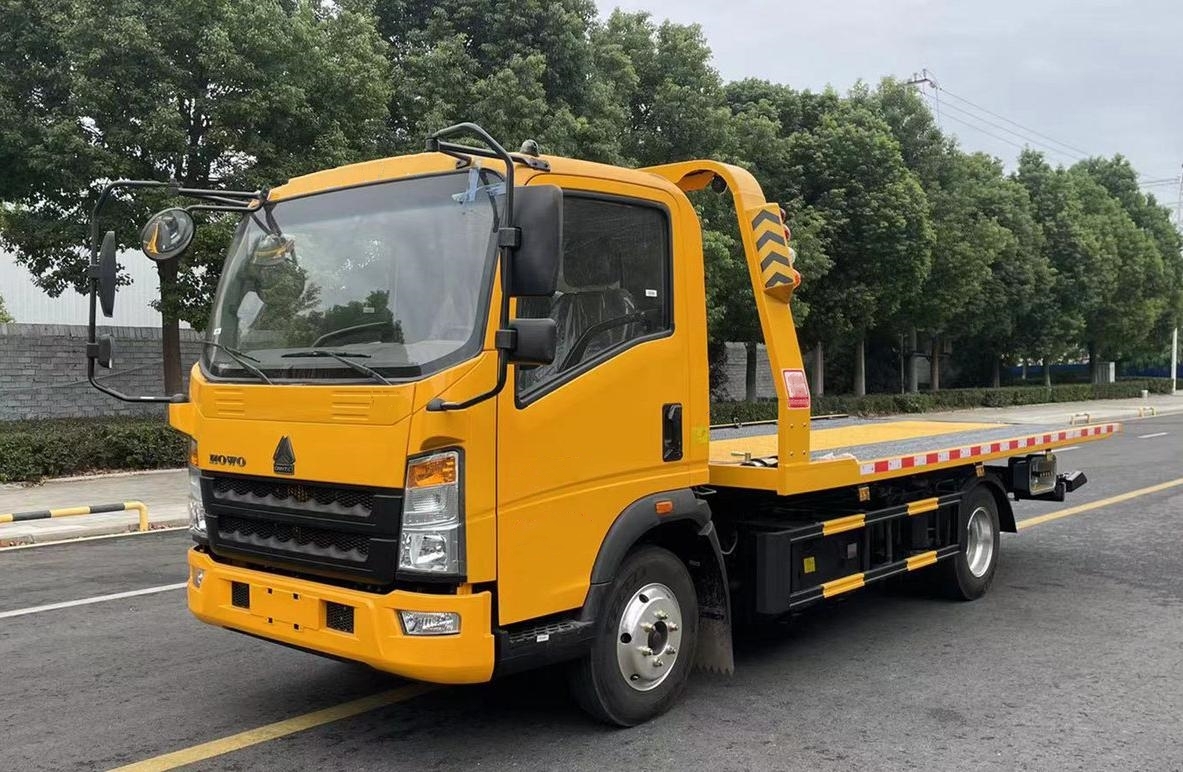
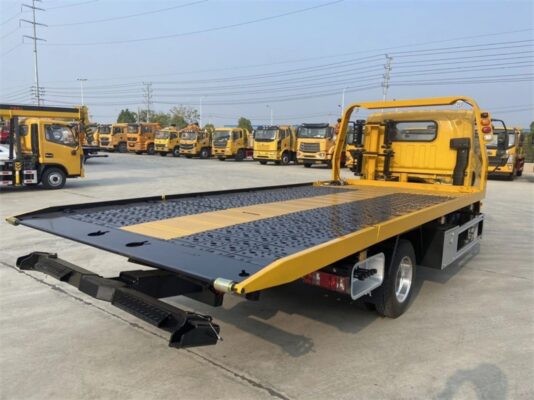
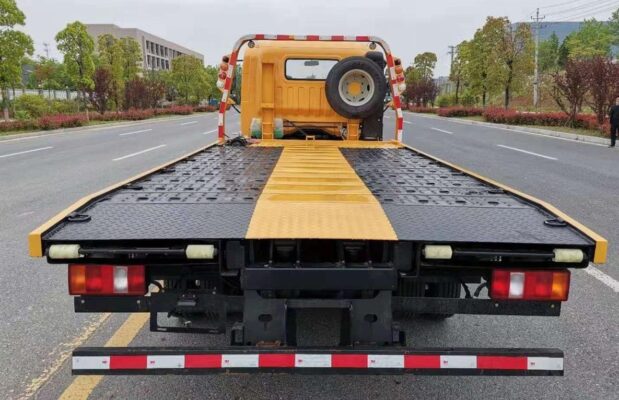
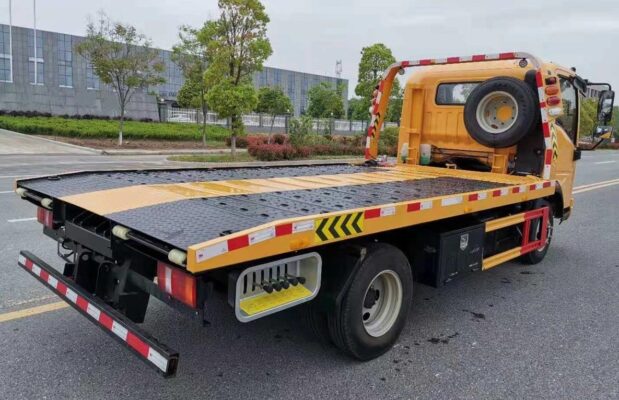
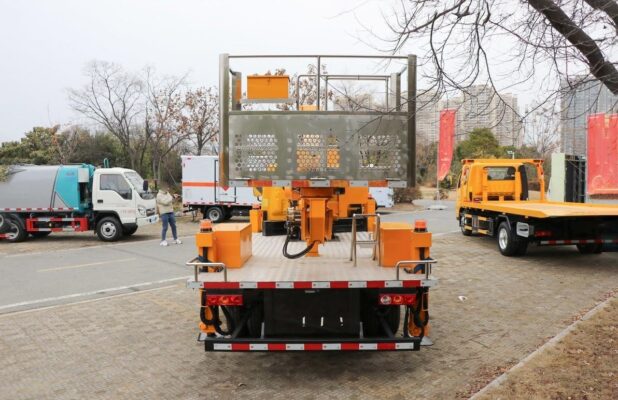
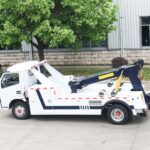
When a disabled vehicle needs to be pulled onto a flatbed tow truck, the real work begins long before the wheels leave the ground. Behind that smooth loading process lies one of the most important components of the entire vehicle — thetow truck winch system.
To the average observer, a winch may look like a simple drum wrapped in steel cable. But in reality, it is a precisely engineered pulling system that determines how safely, efficiently, and reliably a flatbed tow truck performs.Whether you’re a towing professional, fleet manager, or simply curious about heavy-duty equipment, understanding the winch system reveals the true engineering behind modern flatbed tow trucks.
1. What Is a Tow Truck Winch System?
A tow truck winch systemis the mechanical and hydraulic assembly responsible for pulling vehicles onto the flatbed. It consists of several integrated components:
Winch drum
Hydraulic or electric motor
Steel cable or synthetic rope
Fairlead (cable guide)
Control mechanism
Mounting structure integrated into the flatbed frame
In commercial flatbed tow trucks, the winch is typically mounted beneath or at the front of the rollback bed. The system is powered either by a PTO-driven hydraulic pump or an electric motor connected to the truck’s battery system.
When activated, the drum rotates, winding the cable and generating pulling force. That force transfers through the cable to the disabled vehicle, pulling it smoothly onto the tilted flatbed.
Siiski, performance depends on much more than rotation. It depends oncable strength, drum design, hydraulic pressure, and structural reinforcementwithin the flatbed tow truck structure.
2. How Winch Systems Compare Across Different Tow Truck Types
While flatbed tow trucks rely heavily on their winch systems for loading vehicles, other recovery vehicles employ similar principles in more advanced configurations.
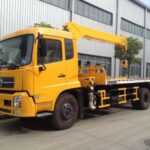
Näiteks, a Kraanaga puksiirautocombines a traditional winch system with a hydraulic lifting boom. In these units, the winch not only pulls vehicles horizontally onto a bed—it may also assist with vertical lifting operations. The integration between the crane boom and the winch drum requires higher torque output and reinforced structural mounting.
An even more advanced configuration is theRotator veoauto, which features a rotating hydraulic boom capable of 360-degree movement. In rotator recovery vehicles, the winch system is often integrated into the boom assembly itself. Unlike a standard flatbed winch that primarily pulls in a straight line, a rotator winch system must handle multi-angle tension loads and dynamic weight distribution.
This comparison highlights an important principle: Regardless of truck type — flatbed, crane-equipped, or rotator — winch engineering remains central to safe and controlled vehicle recovery.
3. Tow Truck Cable Strength: Why It Matters More Than You Think
The cable is the direct link between the tow truck and the vehicle being recovered. That makestow truck cable strengthone of the most critical safety factors in the entire system.
Most commercial flatbed tow trucks use high-tensile steel wire rope. A common configuration is a 3/8-inch or 7/16-inch galvanized steel cable.
Näiteks:
A 3/8-inch steel cable may have a breaking strength exceeding 14,000 lbs depending on construction.
A 7/16-inch cable may exceed 19,000 lbs.
Siiski, rated breaking strength is not the same as safe working load. Industry best practice applies a safety factor, often 2:1 or higher, to ensure operational safety.
Cable Construction Matters
Steel winch cables are commonly built in patterns such as:
6×19 construction (fewer, thicker wires, better abrasion resistance)
6×37 construction (more flexible, better for repeated bending)
Flexibility is important because the cable wraps repeatedly around the drum. Aja jooksul, fatigue can reduce tow truck cable strength, especially if the cable is kinked or improperly spooled.
Environmental Factors
Corrosion, improper lubrication, and side loading can weaken cable fibers. That’s why high-quality flatbed manufacturers often:
Use corrosion-resistant galvanized cables
Optimize drum alignment to prevent uneven wear
Design reinforced winch mounting plates
Cable strength is not just about thickness. It is about engineering integration within the tow truck winch system.
4. Flatbed Winch Capacity: Rated Pull vs Real-World Performance
One of the most misunderstood specifications in the industry isflatbed winch capacity.
A winch rated at 12,000 lbs does not automatically deliver 12,000 lbs in every scenario.
First Layer vs Last Layer Pull
Winch capacity is typically rated at the first layer of cable on the drum. As cable builds up on the drum, the effective pulling power decreases due to increased drum diameter.
This means:
First layer = maximum rated pull
Outer layers = reduced pulling force
For real-world towing operations, this distinction matters.
Line Configuration
Flatbed winch capacity can be increased using a snatch block (pulley system), effectively doubling pulling force by creating a double-line pull. Siiski, this reduces speed and requires proper anchor points.
Hydraulic Pressure Influence
In hydraulic tow truck winch systems, pulling force also depends on:
Hydraulic pump output
System pressure
Motor displacement
Flow rate
An undersized hydraulic system can limit effective winch performance, even if the drum and cable are rated for higher loads.
For commercial fleets, selecting the correct flatbed winch capacity ensures:
Safe vehicle loading
Reduced mechanical stress
Improved operational efficiency
5. Hydraulic vs Electric Tow Truck Winch Systems
Flatbed tow trucks generally use two types of winch drive systems:
Hydraulic Winch System
Powered by PTO and hydraulic pump
Continuous-duty operation
Higher torque output
Better for commercial fleets
More durable in high-use environments
Electric Winch System
Powered by a vehicle battery
Easier installation
Lower upfront cost
Limited duty cycle
Can overheat under heavy loads
For heavy-duty and daily commercial use, hydraulic tow truck winch systems are typically preferred because they deliver consistent pulling force without draining battery reserves.
Hydraulic integration also improves overall durability within the flatbed tow truck structure.
6. Control Systems: Precision and Safety
Moderntow truck winch systemsrely on advanced control mechanisms.
These may include:
Manual hydraulic levers
Electric toggle switches
Wireless remote controls
Proportional valve systems
Remote control capability improves safety by allowing operators to stand at a safe viewing angle while loading a vehicle.
Lisaks, high-quality winch systems include:
Automatic load-holding brakes
Emergency stop features
Anti-backdrive mechanisms
Controlled spooling speed
Control precision determines whether a vehicle loads smoothly or jerks unpredictably.
7. Common Winch System Problems
Even a well-designed tow truck winch system can fail without proper use or maintenance.
Common issues include:
Cable fraying from improper spooling
Drum overloading
Hydraulic overheating
Uneven cable layering
Mounting plate fatigue
Routine inspections should check:
Cable integrity
Hydraulic fluid condition
Fastener tightness
Drum alignment
Preventive maintenance extends both tow truck cable strength and flatbed winch capacity reliability.
8. Engineering Integration Within the Flatbed Tow Truck Structure
A winch does not operate in isolation. It is structurally integrated into the flatbed tow truck frame.
Professional manufacturers optimize:
Reinforced winch mounting crossmembers
Load distribution across the rollback bed
Balanced hydraulic routing
Frame stress resistance
Corrosion protection
The strength of the winch mounting area directly impacts durability.
If the flatbed structure flexes under load, it can reduce effective pulling force and accelerate fatigue.
Engineering focus on structural integrity ensures long-term operational stability.
9. Choosing the Right Flatbed Winch Capacity for Your Business
Fleet buyers should consider:
Light-Duty Use
8,000–10,000 lb winch capacity Ideal for passenger vehicles
Medium-Duty Operations
12,000–16,500 lb capacity Suitable for SUVs and light commercial trucks
Heavy Commercial Application
Higher-rated hydraulic systems with reinforced mounting
Selecting appropriate flatbed winch capacity prevents overworking the system and reduces downtime.
Järeldus
The tow truck winch systemis the core pulling mechanism that defines how a flatbed tow truck performs in real-world recovery operations. While many people focus only on rated pulling force, true performance depends on cable construction, drum design, hydraulic power, control precision, and structural integration.
Understandingtow truck cable strengthensures safe and reliable vehicle recovery. Evaluatingflatbed winch capacitybeyond basic ratings helps prevent mechanical strain and operational inefficiencies. And recognizing how the winch integrates into the broader flatbed tow truck structure reveals the importance of engineering quality.
For commercial operators and fleet buyers, the winch system is not just a component — it is a long-term investment in safety, durability, and performance.