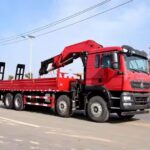
Beyond the Hook—The Engineering Marvel of Rotator Recovery
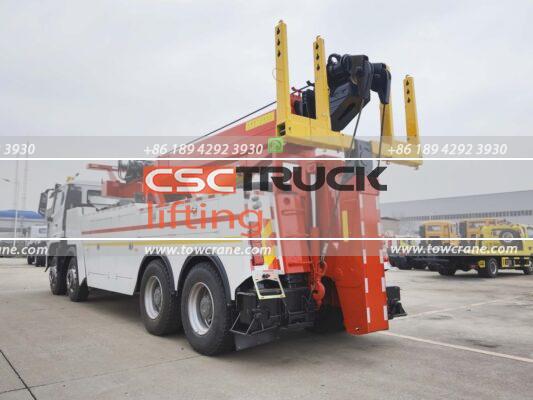
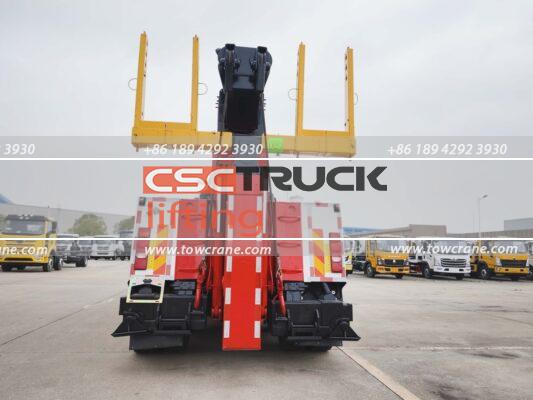
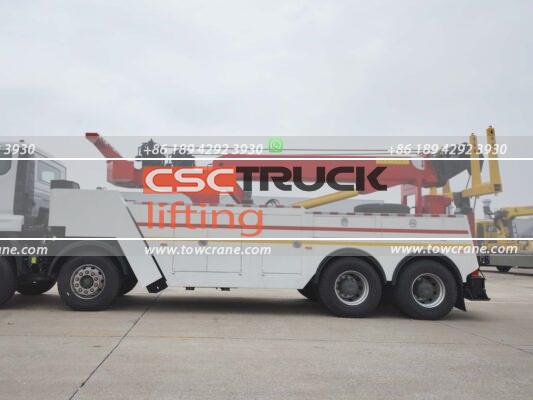
In the world of heavy-duty vehicle recovery, the difference between a successful operation and a catastrophic failure often comes down to milliseconds and millimeters. When a 40-ton tractor-trailer lies overturned on a major highway, with fuel leaking and traffic backing up for miles, the machine that answers the call is unlike any other vehicle on the road—it is aDépanneuse rotateur.
Unlike conventionaltow trucksthat operate within severe spatial limitations, un dépanneuse rotateuris defined by a single, transformative capability: 360-degree continuous rotation. This feature fundamentally changes the physics of vehicle recovery, allowing operators to lift, position, and stabilize loads from any angle without repositioning the truck.
But beneath this capability lies a complex ecosystem of hydraulic engineering, electronic control systems, and structural design that few people ever see.
This article deconstructs the core technologies behind thedépanneuse rotateur, from the pressurized fluid that powers its movement to the intelligent systems that ensure safe and controlled operation.
The Hydraulic Heart—Where Power Begins
Fluid Power Fundamentals
At its core, everydépanneuse rotateuris a demonstration of hydraulic power. The hydraulic system transforms engine output into controlled, repeatable force capable of lifting extremely heavy loads with precision.
The principle is straightforward: an engine-driven hydraulic pump pressurizes fluid, which is then directed through valves to actuators that convert hydraulic energy into mechanical motion.
In adépanneuse rotateur, these systems must perform reliably under extreme conditions—cold, chaleur, pluie, and long-duration heavy operations.
The High-Pressure Pump and Reservoir
Power begins with the hydraulic pump. Modernrotator tow truckstypically usevariable-displacement piston pumps, allowing efficient adjustment of pressure and flow based on operational demand.
The hydraulic reservoir serves both as a storage unit and a thermal management system. Under heavy load, hydraulic fluid temperature rises significantly, and proper cooling is essential to maintain system performance.
Control Valves: The Nervous System
Pressurized fluid flows through control valves, which act as the system’s control network. Many modernrotator tow trucksuseproportional control valves, enabling smooth and precise operation instead of abrupt on/off movements.
This level of control is critical when handling unstable or high-risk loads.
Cylinders and Motors: The Muscles
Hydraulic cylinders generate linear force, while hydraulic motors provide rotational motion. These components enable lifting, extension, and rotation.
The 360-degree rotation of adépanneuse rotateuris achieved through a hydraulic slewing system that supports and rotates the upper structure.
Multi-Winch Coordination—The Art of Controlled Force
One of the most distinctive features of adépanneuse rotateuris its multi-winch configuration.
High-end models typically includetwo to four independent winches, allowing operators to apply force from multiple directions simultaneously.
Hydraulic Winch Motors
Each winch is powered by a high-torque hydraulic motor connected to a gear reduction system. These winches are designed to handle dynamic loads during recovery operations.
Synchronization Challenges
A key challenge in multi-winch operation issynchronization.
If multiple winches operate at different speeds, the load may shift unpredictably. Modernrotator tow trucksuse electronic controls to maintain synchronized operation, improving safety and efficiency.
Wire Rope vs. Synthetic Line
Two common options are used:
Steel wire rope: high durability and abrasion resistance
Synthetic rope: lighter weight and safer in case of failure
Many operators use a combination depending on application requirements
Stability Engineering—The Battle Against Physics
UN dépanneuse rotateurmust constantly manage shifting forces during operation.
As the boom rotates and loads change, le centre de gravité se déplace, requiring precise stability control.
Outrigger Design and Deployment
Outriggers provide a stable base by extending outward from the chassis.
Modern systems can:
Level the truck on uneven ground
Distribute loads effectively
Increase operational safety
Frame Reinforcement
The frame of adépanneuse rotateuris reinforced using high-strength materials to handle extreme torsional stress during lifting and rotation.
Axle Configurations and Weight Distribution
Multi-axle configurations help distribute weight during transport. Pendant le fonctionnement, outriggers may carry most of the load, sometimes lifting wheels off the ground.
The Rotating Boom—Engineering Freedom of Motion
The defining feature of adépanneuse rotateuris its rotating boom.
The Slewing Bearing
The slewing bearing supports the rotating structure and handles complex load forces, including vertical, horizontal, and tipping forces.
Boom Geometry and Materials
Modern booms are built from high-strength steel and designed for maximum strength with optimized weight.
Telescoping sectionsallow extended reach for recovery in difficult environments.
Articulating Arms (on some models)
Some advancedrotator tow trucksinclude articulating boom sections, improving flexibility in confined or complex recovery situations.
Electronic Control Systems—The Brain Behind the Machine
Modernrotator tow trucksrely on advanced electronic systems to enhance safety and control.
Load Moment Indicator (LMI)
The LMI system continuously monitors load conditions, including boom angle, extension, and weight.
It provides warnings and can restrict unsafe operations.
Real-Time Monitoring
Sensors track:
Winch tension
Outrigger load
Hydraulic temperature
This allows early detection of potential issues.
Remote Operation
Wireless remote control systems enable operators to control thedépanneuse rotateurfrom a safe distance while maintaining full visibility.
System Integration—Coordinating Complexity
The real strength of adépanneuse rotateurlies in system integration.
Hydraulics, electronics, and structural systems must work together seamlessly to execute complex recovery operations.
Redundancy and Safety Design
Critical systems often include backup functions and fail-safe mechanisms to ensure continued operation in case of component failure.
Conclusion: The Convergence of Power and Precision
Le Dépanneuse rotateurrepresents a balance of strength and control.
From hydraulic systems to torque management and intelligent safety features, every component is designed to handle demanding recovery scenarios efficiently and safely.
Understanding these technologies helps operators and buyers make informed decisions when selecting the right equipment for heavy-duty recovery operations.