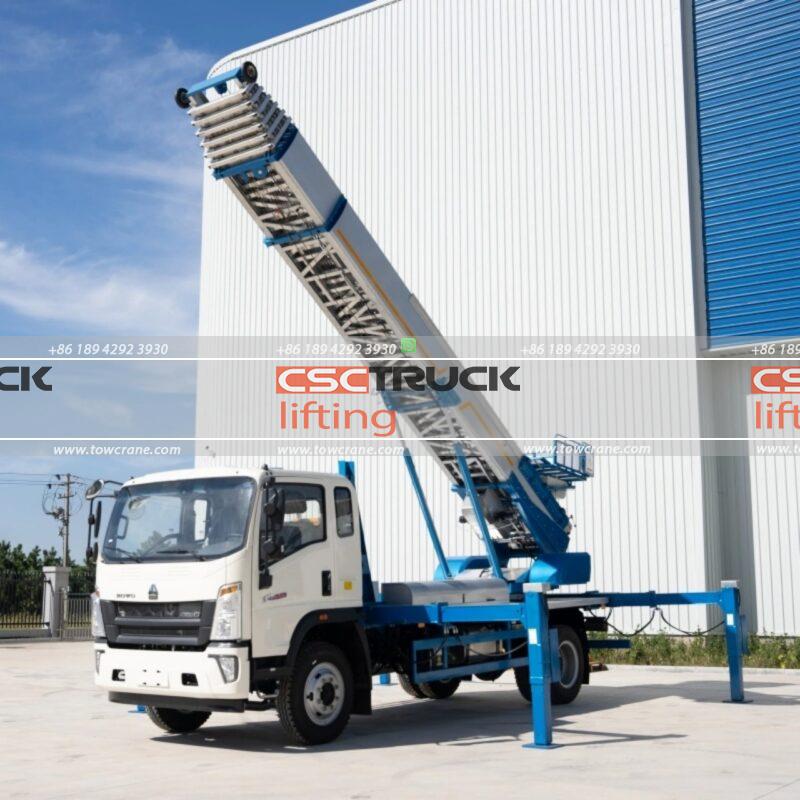
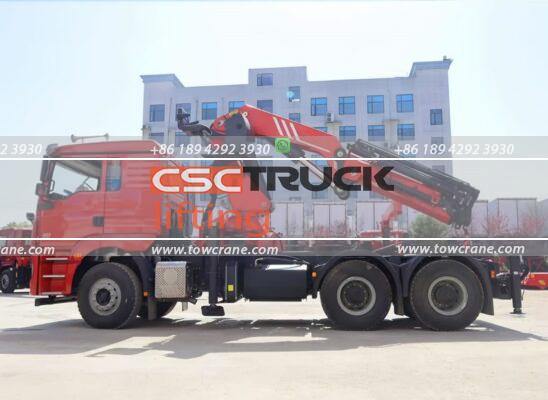
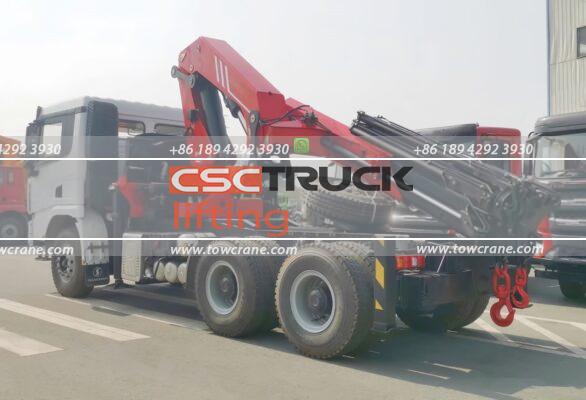
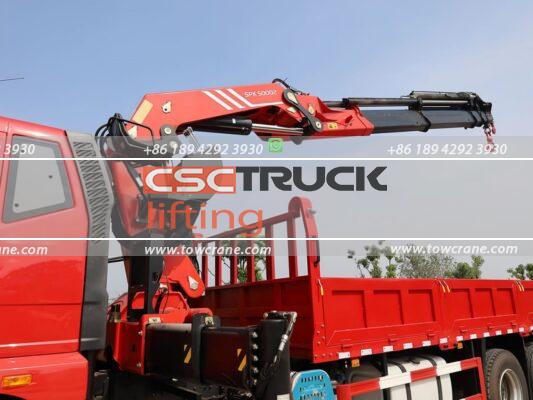
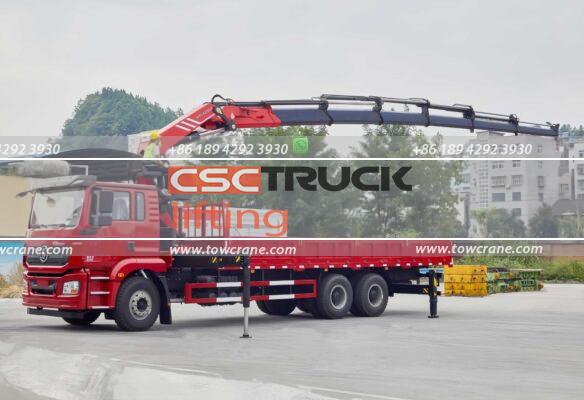
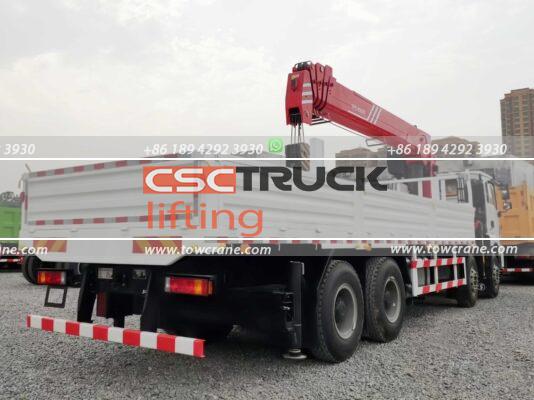
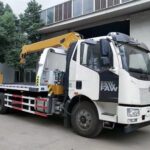
When selecting adépanneuse, il’s crucial to understand the different types and their features to match your operational needs. Dépanneuses are specialized vehicles designed for vehicle recovery, remorquage, and emergency rescue. They come in various designs, including integrated tow-and-lift, separated tow-and-lift, one-to-one, flatbed one-to-two, multifunctional, and hydraulic automatic clamping types.
Choosing the right type of dépanneusedepends largely on your specific needs and the operating environment. Par exemple, if you need to lift a vehicle from a ditch, un dépanneuseequipped with a crane and flatbed would be necessary.
Integrated Tow-and-Lift Type:Thisdépanneusecombines a lifting mechanism, arm mechanism, and boom mechanism. The hydraulic cylinders of the boom and arm mechanisms work together to position the arm accurately. The winch of the lifting mechanism and the boom’s hydraulic cylinders lower the hook to the vehicle’s towing point. The hook then lifts the vehicle’s front end onto the arm, which secures it for transportation.
Separated Tow-and-Lift Type:Similar to the integrated type but generally used for heavier loads. This design allows for greater flexibility and capacity, making it suitable for more demanding towing operations.
Dépanneuses à plateau:These are among the most versatile and popular types. They feature a flatbed that allows for damage-free transportation of vehicles and an arm mechanism for towing. A flatbeddépanneusecan handle two vehicles in one operation, making it highly efficient. It generally includes a lifting mechanism, flatbed sliding mechanism, towing mechanism, and arm mechanism.
Types of Flatbed Boards: À plat dépanneuses can be equipped with various types of boards, such as rear hydraulic tilt boards, flat boards, sunken boards, hydraulic telescopic boards, folding boards, and integrated boards. Each type offers different advantages. Par exemple, the sunken board aligns with the auxiliary beam and main beam, resulting in lower ground clearance and a reduced ramp angle, making it easier for vehicles to load.
Landing Styles:À plat dépanneuses come in full-landing and semi-landing types. A full-landingdépanneusehas a flatbed that can drop completely to the ground, which is ideal for low-chassis vehicles. It features a hydraulic winch and rear support arms. Cependant, the full-deck structure can limit load-bearing capacity and is less common. The semi-landing type allows the rear board to drop to create a sloped surface, facilitating vehicle loading or winching. This style is more common due to its practicality and ease of use.
By understanding these differentdépanneusetypes and their features, you can select the one that best suits your needs. For detailed information on specific models and their capabilities, visiting a specialized vehicle website can provide further insights and options.