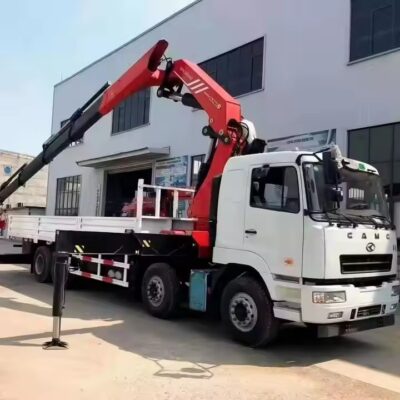
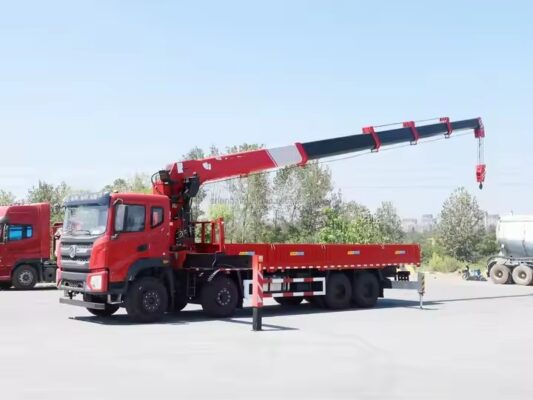
In the world of road recovery and heavy-duty towing, choosing the right equipment often determines the difference between a successful operation and a costly failure. Knuckle boom wreckers et telescopic boom wreckersrepresent two of the most common configurations on the market, each with distinct advantages tailored to different recovery scenarios. This comprehensive guide examines their core differences and helps you match the right equipment to your specific operational needs.
Understanding the Core Differences
Knuckle Boom Wreckers: The Articulated Masters of Flexibility
Knuckle boom wreckers, also known as articulating boom wreckers, feature a boom with one or more hinged joints that fold and unfold like a human finger. This articulated design provides unparalleled flexibility—the ability to reach over obstacles such as buildings, trees, and power lines to access loads in otherwise inaccessible positions.
Key Advantages:
Exceptional obstacle clearance: Can easily reach over, under, and around barriers
Compact transport position: Folds into a low-profile package for travel
Precise load placement: Multiple articulation points enable fine positioning
Versatile mounting options: Can be installed in front, arrière, or center positions
Multi-attachment compatibility: Accommodates grapples, plates-formes, saws, et plus
Limitations:
Limited horizontal reach: Generally offers less horizontal extension than telescopic booms of equivalent size
Complex operation: Requires specialized training and skill
Higher maintenance: More moving parts mean more potential wear points
Telescopic Boom Wreckers: The Straight-Line Specialists
Telescopic boom wreckers utilize a boom consisting of multiple nested sections that extend and retract via hydraulic cylinders. This design provides variable reach without changing the boom angle, making it ideal for highway recoveries and open-area operations.
Key Advantages:
Superior horizontal reach: Achieves maximum working distance in open areas
Rapid deployment: Quick extension to reach the load
High lifting capacity: Direct force transmission enables greater capacity
Intuitive operation: Simpler controls require less training
Durable construction: Fewer exposed moving parts reduce maintenance
Limitations:
Cannot bypass obstacles: Requires a clear line of sight and access
Limited flexibility: Difficult to maneuver in tight spaces
Restricted working envelope: Cannot « reach around » like knuckle booms
Detailed Comparison Table
Aspect
Knuckle Boom Wrecker
Telescopic Boom Wrecker
Obstacle Clearance
Excellent—reaches over/around barriers
Requires open access
Horizontal Reach
Moderate
Best in class
Operating Complexity
Advanced training required
Straightforward learning curve
Setup Time
Slower, requires articulation
Fast, direct extension
Capacité de levage
Lower for given boom length
Higher for given boom length
Transport Profile
More compact when folded
Longer travel configuration
Attachment Versatility
Extensive options
Limited options
Maintenance Requirements
Higher due to articulation points
Lower due to simpler design
Typical Applications
Urban, forestry, complex terrain
Highway, open construction sites
Matching Equipment to Recovery Scenarios
When to Choose a Knuckle Boom Wrecker
1. Urban Street Recoveries Narrow city streets with parked cars, buildings, and overhead obstacles demand the flexibility of a knuckle boom. Its ability to thread through tight spaces and reach over barriers makes it indispensable for municipal operations.
2. Obstacle-Rich Environments Construction sites, industrial facilities, and accident scenes with debris, scaffolding, or other obstructions require equipment that can work around—not just through—these barriers.
3. Multi-Function Operations If your work involves not just towing but also material handling (grapple work), coupe des arbres, or platform operations, the knuckle boom’s attachment versatility is unmatched.
4. Space-Constrained Work Areas When the truck cannot be repositioned easily, the knuckle boom’s ability to reach in multiple directions from a single setup saves significant time and effort.
5. Over-Obstacle Placement Tasks requiring load placement behind buildings, through tree canopies, or across barriers are only possible with articulating boom designs.
When to Choose a Telescopic Boom Wrecker
1. Highway Accident Response When vehicles leave the roadway and end up in ditches, medians, or embankments, maximum horizontal reach from the shoulder is critical—this is where telescopic booms excel.
2. Open Area Operations Quarries, large construction sites, airports, and other open spaces present no obstacles, allowing telescopic booms to deploy their full reach quickly and efficiently.
3. Heavy-Duty Recoveries For recovering tractor-trailers, les bus, and heavy equipment, the higher lifting capacity of telescopic booms provides greater safety margins and capability.
4. Time-Sensitive Clearance When rapid scene clearance is paramount—such as reopening a major highway—telescopic booms deploy faster and operate more intuitively.
5. Elevated Continuous Operations Tasks like bridge inspection or overhead maintenance benefit from the stable, simple extension of telescopic designs.
Operational Safety Considerations
Regardless of boom type, certain safety principles apply to all wrecker crane operations:
Setup Fundamentals
Stable ground is non-negotiable: Outriggers must be fully extended on solid ground, using cribbing when necessary
Level the vehicle: Most systems require level operation (typically within 5 degrés)
Maintain clearance: Keep at least 15 feet from power lines and other hazards
Load Management
Respect capacity limits: Never exceed rated capacities as shown on load charts
Avoid shock loads: All movements should be smooth and controlled
Monitor side loads: Particularly critical for knuckle booms operating at extreme angles
Operator Requirements
Proper certification: Operators must have appropriate training and credentials
Equipment familiarity: Know your specific machine’capacités et limites
Standard compliance: Follow the local regulatory requirements
Remote Operation Safety (Knuckle Boom Specific)
Maintain awareness of surroundings to avoid tripping
Place remote in « stop » position when moving
Never position yourself under suspended loads
Secure remote when not in use
Future Trends in Wrecker Technology
Both boom types continue to evolve with advancing technology:
Smart Systems Load moment indicators, angle sensors, and stability monitoring are becoming standard. Advanced models feature semi-automated controls that reduce operator fatigue and error.
Electrification Electric and hybrid wreckers are emerging for urban operations, offering zero emissions and quiet operation—ideal for nighttime work in noise-sensitive areas.
Télématique Real-time monitoring, GPS tracking, and predictive maintenance alerts help fleet managers optimize utilization and reduce downtime.
Modular Design Increasingly, wreckers feature modular components that allow quick reconfiguration for different tasks, maximizing return on investment.
Making the Right Choice
Selecting between knuckle boom and telescopic boom wreckers ultimately depends on your core business requirements:
Business Focus
Recommended Type
Rationale
Urban/Residential Recovery
Knuckle Boom
Superior maneuverability in tight spaces
Highway/Interstate Service
Telescopic Boom
Maximum reach and rapid deployment
Mixed Operations
Medium Knuckle Boom
Balanced flexibility and capability
Heavy Industrial Recovery
Heavy Telescopic or Rotator
Maximum lifting capacity
Construction Site Support
Knuckle Boom with Grapple
Multi-function versatility
Municipal Fleet
Knuckle Boom
Adaptability to varied tasks
Conclusion
The choice betweenknuckle boom et telescopic boom wreckersis not about which is « better »—it’s about which is better for your specific needs. Knuckle booms offer unparalleled flexibility and obstacle clearance, making them ideal for complex urban environments and multi-function operations. Telescopic booms provide superior reach and lifting capacity, excelling in highway recoveries and open-area applications.
The most expensive machine is not necessarily the best—the best machine is the one that matches your operational requirements. Before making a decision, thoroughly assess your typical job sites, common load types, operator skill levels, and business goals. Consult with equipment specialists and experienced peers to ensure your investment delivers maximum value.
Remember that a wrecker is not just a purchase—it’s an investment in your capability to serve customers, clear scenes safely, and build a reputation for reliability. Choose wisely, train thoroughly, and operate safely.