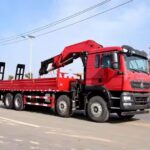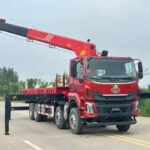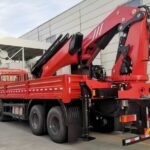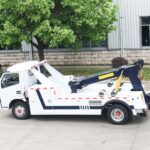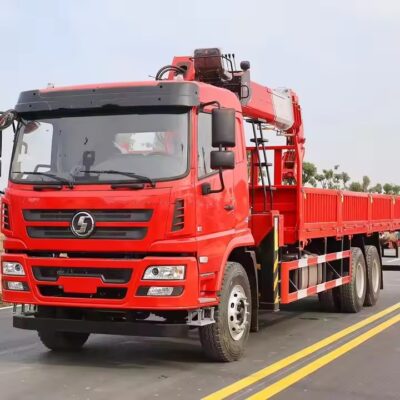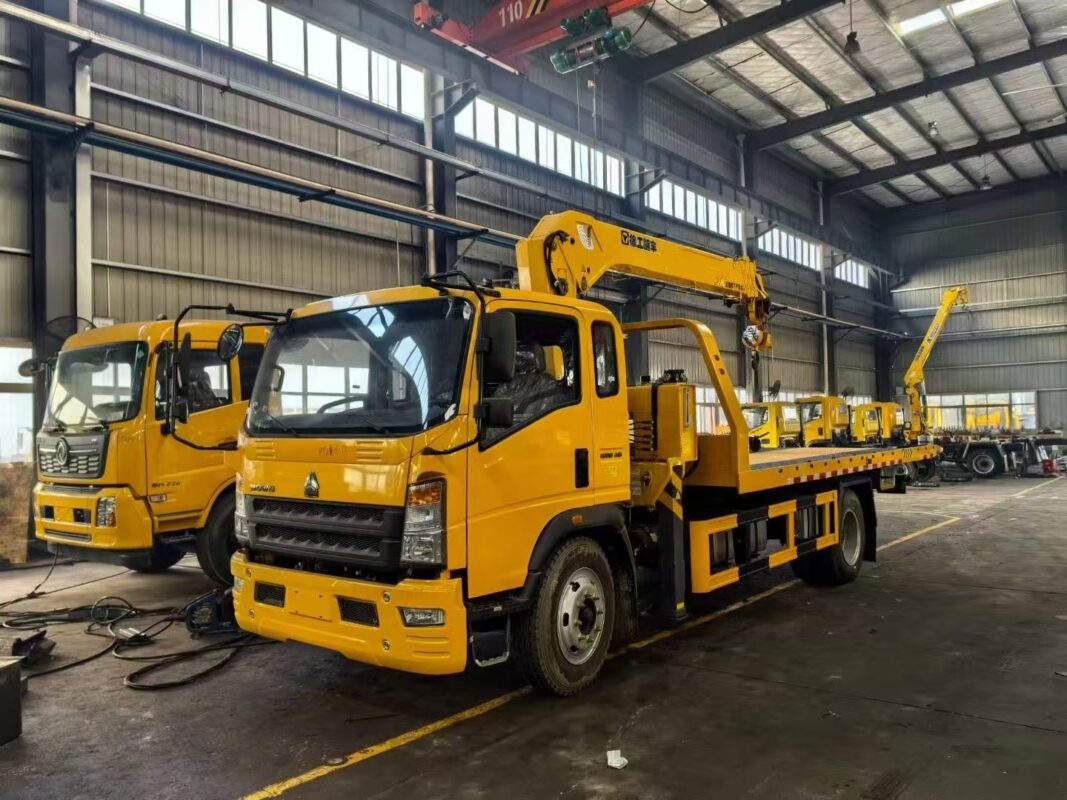
When a 20-ton excavator tips into a foundation hole on a Monday morning, the construction site grinds to a halt. Project managers face a nightmare scenario: a critical machine is disabled, the schedule is slipping, and the recovery operation threatens to shut down the site for days. In these moments, a specialized piece of equipment rolls in that can mean the difference between a minor delay and a project catastrophe—the tow truck with crane.
Ndubata: The Construction Site’s Secret Weapon
Construction projects are inherently risky environments. Heavy equipment operates on uneven ground, excavations create hazards, and the margin for error is razor-thin. When things go wrong, the ability to respond quickly and effectively determines whether a project stays on track or spirals into delays and cost overruns.
Tow truck mounted cranes have emerged as the unsung heroes of construction site recovery. These hybrid vehicles combine the towing capabilities of a traditional wrecker with the lifting power of a hydraulic crane, creating a single vehicle capable of handling the most challenging recovery scenarios. Unlike standard tow trucks that primarily focus on pulling disabled vehicles, these specialized units can lift, okwa, and transport heavy equipment with precision.
Na edemede a, we’ll explore how tow trucks with cranes save construction projects from disaster, examining their applications, technical advantages, and the compelling case for having one on standby.

The Construction Site Rescue: 5 Critical Scenarios
Construction projects face unique challenges that demand specialized recovery solutions. Here are the most common situations where a tow truck with crane becomes indispensable.
1. Excavator and Heavy Equipment Tip-Overs
Excavators, bulldozers, and loaders working on uneven terrain or near excavations are vulnerable to tip-overs. When a 15-ton machine flips onto its side, it’s not just the equipment that’s at risk—the entire project schedule hangs in the balance.
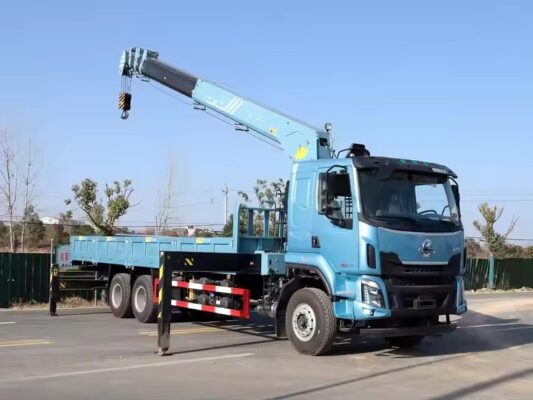
A tow truck mounted crane can approach from the safest angle, stabilize itself with hydraulic outriggers, and use its rotating boom to gently right the machine without causing additional damage. The ability to lift from any direction means the recovery operation doesn’t require moving the disabled equipment first—a critical advantage when space is limited.
2. Equipment Stranded in Soft Ground or Excavations
Construction sites are dynamic environments where ground conditions change rapidly. Heavy machinery can become mired in soft soil, sink into unexpected voids, or slide into excavations. Traditional recovery methods might require excavating around the machine or bringing in additional equipment, both time-consuming and expensive.
With a telescopic boom crane mounted on a tow truck, operators can reach into excavations or across soft ground without putting the recovery vehicle at risk. The long reach allows lifting stranded equipment from a safe distance, minimizing site disruption and avoiding the need for extensive ground preparation.
3. Prefabricated Component Placement and Repositioning
Modern construction increasingly relies on prefabricated components—steel beams, concrete panels, and modular sections that require precise placement. When a component is delivered to the wrong location or needs repositioning, waiting for a dedicated crane can cause significant delays.
Tow truck mounted cranes excel at these intermediate lifting tasks. Their knuckle boom designs provide the articulation needed to maneuver components into tight spaces, while their integrated controls allow precise positioning. For construction managers, this means being able to handle unexpected lifting needs immediately rather than waiting hours or days for specialized equipment.
4. Obstacle Removal and Site Clearing
Construction sites accumulate obstacles: delivery pallets, debris, disabled vehicles, and equipment that needs relocation. Traditional approaches might require multiple machines—a forklift for pallets, a tow truck for vehicles, and a crane for heavy items.
The multi-tasking capability of a tow truck mounted crane means one machine can handle all these tasks. With lifting capacities ranging from light-duty to heavy-duty models capable of handling commercial vehicles and construction machinery, these versatile units keep sites clear and operations flowing.
5. Emergency Response to Accidents
Construction accidents involving falls, entrapment, or structural collapses demand immediate response. While dedicated emergency services handle rescue operations, tow trucks with cranes play a critical support role—lifting debris, moving damaged equipment, and clearing paths for emergency vehicles.
In disaster scenarios, the ability to deploy one vehicle that can both lift heavy objects and transport them away streamlines the response. The hydraulic systems and stabilizing outriggers ensure safe operation even in chaotic environments.
The Cost of Downtime: Why Speed Matters
Construction equipment downtime carries hidden costs that extend far beyond repair bills. When a key machine is disabled:
- Crews stand idle while waiting for recovery, wasting labor dollars
- Successor tasks are delayed, creating ripple effects through the schedule
- Penalties for missed deadlines can reach tens of thousands of dollars per day
- Subcontractors may claim damages for delays beyond their control
Every hour counts. A recovery operation that takes days with conventional methods might be completed in hours with the right equipment. This time savings directly impacts the bottom line.
Tow truck mounted cranes deliver speed through their integrated design. Instead of coordinating multiple vehicles—a crane to lift, a flatbed to transport—a single unit handles both functions. The operator controls lifting, positioning, and loading from one cab, eliminating communication delays and coordination challenges.
Technical Advantages: What Makes These Machines Construction-Site Ready
Not all recovery vehicles are created equal. Tow trucks with cranes designed for construction applications incorporate specific features that make them ideal for site work.
1. Rotating Booms for All-Angle Access
Construction sites are crowded with obstacles—materials, other equipment, excavations, and structures. A fixed-boom crane requires precise positioning relative to the load, which may be impossible in tight spaces.
Rotating boom cranes offer 360-degree rotation, allowing operators to lift from any angle without repositioning the truck. This flexibility is invaluable when working around site constraints or when the disabled equipment is inaccessible from the front or rear.
2. Stabilization Systems for Uneven Terrain
Construction sites rarely offer the flat, paved surfaces found on roads. Hydraulic outriggers with automatic leveling capabilities allow tow truck cranes to establish a stable base even on slopes or soft ground. Load-sensing systems provide real-time feedback on stability margins, ensuring safe operation.
3. Telescopic and Knuckle Boom Designs
Different recovery scenarios demand different boom configurations:
- Telescopic booms provide extended reach for lifting over obstacles or into excavations
- Knuckle boom (articulating) cranes fold at multiple joints, offering precise maneuvering in confined spaces and the ability to handle irregularly shaped loads
Many modern units combine both features, giving operators maximum flexibility for diverse site challenges.
4. Hydraulic Power for Smooth Control
Construction equipment is heavy, valuable, and often positioned in delicate situations. Jerky movements during recovery can cause additional damage or create safety risks. Advanced hydraulic systems provide smooth, proportional control that allows operators to finesse loads into position.
Case Study: When Seconds Count
While detailed case studies of construction site recoveries are often kept confidential, industry sources confirm that tow truck mounted cranes regularly prevent project disasters. Consider this composite scenario based on real operations:
A mid-rise building project in an urban area faced a crisis when a concrete pump truck tipped while positioning on soft ground near an excavation. The truck blocked the only access route for subsequent deliveries, and its boom lay across the work area. With crews standing by and concrete hardening in transit trucks, every minute mattered.
A tow truck with crane arrived within an hour. The operator deployed outriggers on the stable pavement, extended the boom over the excavation, and carefully lifted the pump truck’s front end while another crew stabilized the rear. Within three hours, the truck was righted, inspected, and moved—the site was back in operation by afternoon. Total project delay: zero.
Without this capability, the recovery would have required a separate crane (waiting for availability and transport), followed by a tow truck for removal. The delay would have measured in days, not hours.
Comparing Traditional Recovery vs. Integrated Solution
| Factor | Traditional Approach | Igwe na-aga |
|---|---|---|
| Equipment Required | Crane + Cusgbọ ala + Ewepụghị | Single vehicle |
| Coordination Complexity | Multiple operators, schedules | One operator, immediate response |
| Site Disruption | Large footprint, multiple setups | Compact, single setup |
| Time to Complete | Hours to days | Minutes to hours |
| Cost | Multiple equipment charges | Single vehicle rate |
The efficiency gains are not incremental—they’re transformative for time-sensitive construction recovery operations.

What Construction Managers Should Look For
If you’re considering adding a tow truck with crane to your project’s contingency planning—or selecting a recovery service to partner with—here are key factors to evaluate :
1. Lifting Capacity and Reach
Match the crane’s rated capacity to your largest equipment. Remember that capacity decreases as the boom extends, so consider the full load chart rather than just the maximum rating. For construction sites, a crane capable of 20-50 tons typically covers most equipment recovery needs.
2. Boom Configuration
Evaluate whether telescopic reach or knuckle boom articulation better suits your typical site constraints. Many modern units offer both through multi-section boom designs.
3. Stabilization Capability
Look for outriggers with wide stance and automatic leveling. The ability to establish a stable base on uneven ground is critical for safe construction site operations.
4. Operator Expertise
The machine is only as good as its operator. Ensure your recovery service employs operators trained in both crane operation and construction site safety. Certification through programs like NCCCO or equivalent demonstrates proper training.
5. Response Time Commitment
When equipment is down, every hour costs money. Establish clear response time expectations with your recovery provider. Having a dedicated unit on retainer may be worthwhile for large projects.
Mmechi
Construction projects operate on tight schedules with expensive equipment operating in challenging conditions. When things go wrong—when excavators tip, equipment mires, or components need repositioning—the speed and capability of the recovery response determines whether the project suffers minor delays or major disruptions.
Tow truck mounted cranes represent the ideal solution for construction site recovery. Their integrated design eliminates the coordination challenges of multi-vehicle responses. Their rotating booms and stabilizing outriggers enable safe operation in confined spaces and on uneven terrain. Their versatility means one machine can handle the full spectrum of site lifting and towing needs.
For construction managers, understanding this capability—and ensuring access to it—isn’t just about equipment recovery. It’s about protecting schedules, controlling costs, and keeping projects on track when the unexpected occurs. In the high-stakes world of construction, a tow truck with crane isn’t just a recovery vehicle—it’s project insurance that pays for itself the first time it’s needed.