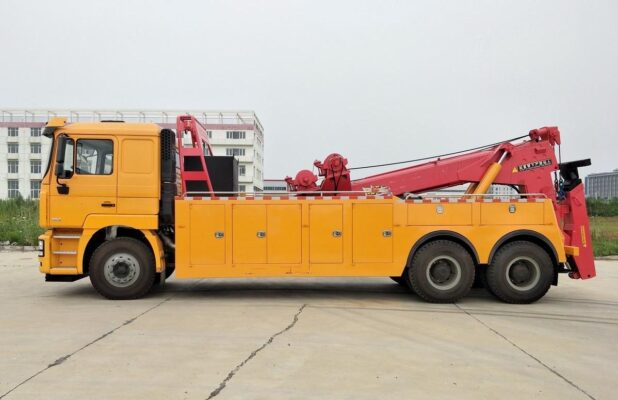
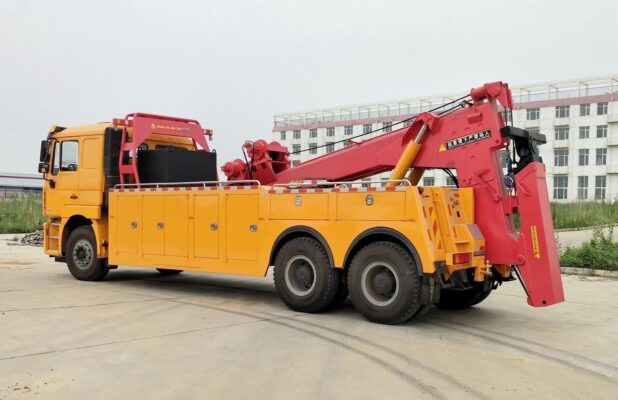
In the roadside assistance industry, efficiency and safety are critical. When a vehicle breaks down or an accident occurs, the type ofDráttarbíllused can significantly impact response time, operational cost, and overall recovery effectiveness.
While traditional tow trucks have long been the backbone of the industry, integrated tow trucksare rapidly gaining popularity as a more versatile and efficient solution. So what exactly makes an integrated tow truck different from a traditional tow truck—and why are more fleet operators making the switch?
What Is an Integrated Tow Truck?
Aninnbyggður dráttarbíllis a multi-functional recovery vehicle designed to handle a wide range of towing and recovery tasks within a single unit. Unlike traditional tow trucks that typically specialize in one function, integrated tow trucks combine multiple systems, such as:
Wheel-lift towingfor quick and efficient short-distance recovery
Flatbed-style transport capabilitiesfor safer vehicle handling
Hydraulic winchesfor pulling vehicles out of difficult situations
Light-duty transport functionsfor cars, jeppar, and small trucks
This all-in-one design allows operators to respond to different types of roadside incidents without needing multiple vehicles.
Limitations of Traditional Tow Trucks
Traditional tow trucks are usually built forspecific towing methods, which limits their versatility. Common types include:
Wheel-lift tow trucks, which are compact and efficient but mainly suitable for smaller vehicles
Hook-and-chain tow trucks, which are less commonly used today due to the risk of vehicle damage
Flatbed tow trucks, which carry the entire vehicle on a platform and are considered the safest option for transport
Among these, flatbed tow trucksstand out for their ability to transport vehicles without causing wear and tear. They are ideal for long-distance towing and high-value vehicles. Hins vegar, they also come with certain drawbacks:
Larger size makes them less maneuverable
Require more space to operate and load vehicles
Slower setup in tight or congested environments
Þar af leiðandi, traditional fleets often need multiple types of tow trucks to handle different scenarios, increasing both cost and operational complexity.
Key Differences Between Integrated and Traditional Tow Trucks
1. Multi-Function Integration vs. Single-Purpose Design
The most fundamental difference is functionality.
Traditional tow trucks:One truck, one primary function
Integrated tow trucks:One truck, multiple capabilities
An integrated tow truck can switch between lifting, towing, and winching without requiring additional equipment or vehicles.
2. Operational Efficiency
In traditional operations, complex recovery situations may require dispatching more than one truck. Til dæmis, a vehicle stuck in a ditch might need a winch truck first, followed by a flatbed for transport.
With an integrated tow truck, the same vehicle can:
Use a winch to recover the vehicle
Immediately transition to towing or transport
This significantly reduces response time and improves overall efficiency.
3. Maneuverability and Urban Adaptability
Flatbed tow trucks, while safe, are often large and less suited for tight environments.
Integrated tow trucks, on the other hand, are typically designed withcompactness and flexibilityin mind:
Easier to navigate narrow streets and parking structures
More effective in congested urban areas
Better suited for complex roadside conditions
This makes them especially valuable in modern cities where space is limited and traffic conditions are unpredictable.
4. Cost Efficiency for Fleet Operators
Traditional fleets often require a combination of vehicles, such as:
Flatbed tow trucks for safe transport
Wheel-lift trucks for quick urban jobs
Additional equipment for recovery tasks
Integrated tow trucks canreplace multiple vehicles with a single unit, resulting in:
Lower upfront investment
Reduced maintenance and insurance costs
Higher utilization rates per vehicle
For fleet operators, this translates into a more streamlined and cost-effective business model.
5. Safety and Vehicle Protection
Flatbed tow trucks are widely regarded as the safest option because the entire vehicle is lifted off the ground.
Integrated tow trucks incorporate similar safety benefits while adding flexibility:
Can perform flatbed-style transport when maximum protection is needed
Can switch to wheel-lift towing for faster operations in low-risk situations
This balance between safety and efficiency gives integrated tow trucks a significant advantage in real-world applications.
Practical Advantages of Integrated Tow Trucks
In day-to-day operations, integrated tow trucks provide clear benefits in various scenarios:
Urban roadside assistance:Quick response and easy maneuvering in tight spaces
Highway recovery:Faster clearance of accidents to reduce traffic disruption
Mixed vehicle handling:Suitable for cars, jeppar, and light trucks
Complex recovery situations:Capable of handling vehicles stuck in ditches, slopes, or confined areas
Their versatility allows operators to handle more jobs with fewer resources.
Future Trends in Tow Truck Design
The evolution of integrated tow trucks is closely tied to advancements in technology. Key trends include:
IoT-enabled fleet managementfor real-time tracking and optimized dispatch
AI-assisted recovery systemsto improve safety and reduce operator workload
Electric and hybrid tow trucksto meet environmental regulations and reduce operating costs
Data-driven operationsfor predictive maintenance and route optimization
These innovations are expected to further enhance the efficiency and appeal of integrated tow trucks in the coming years.
Niðurstaða
The key difference between an integrated tow truck and a traditional tow truck lies inversatility and efficiency. While traditional trucks—including flatbed tow trucks—excel in specific tasks, they often require multiple vehicles to handle diverse recovery scenarios.
Integrated tow trucks combine the strengths of different towing methods into a single platform, offering:
Faster response times
Lower operational costs
Greater flexibility across various recovery situations
Improved balance between safety and efficiency
As roadside assistance continues to evolve, integrated tow trucks are not just an alternative—they are becoming a smarter, more strategic choice for modern fleet operations..