Indonesia is an archipelago of over seventeen thousand islands, stretching across thousands of miles of ocean. From the rugged highlands of Papua to the dense jungles of Kalimantan and the volcanic slopes of Java, delivering essential utility services—electricity, telecommunications, internet infrastructure—is a logistical challenge unlike almost anywhere else on Earth. For the crews who maintain power lines, install cell towers, and repair fiber‑optic cables in these remote regions, access is everything. And when the work is high above the ground, the right equipment makes the difference between a successful repair and a stranded mission.
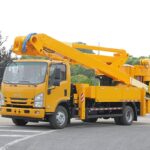
Telescopic aerial lift trucksare emerging as an indispensable tool for utility services in Indonesia’s most isolated areas. These vehicles combine the reach of a crane with the precision of a bucket truck, allowing workers to access elevated infrastructure safely and efficiently—even where roads are rough and terrain is unforgiving.
The Challenge: Serving the Unserved
Indonesia has made impressive progress in expanding electricity and internet access across its vast territory. But millions of people in remote villages, plantation areas, and mountain communities still lack reliable services. The obstacles are formidable:
Difficult terrain– Steep slopes, muddy tracks, river crossings, and narrow paths are common. Standard utility trucks often cannot reach the work site.
Poor road infrastructure– Many remote areas have only unpaved, seasonal roads that become impassable after rain.
Dense vegetation– Overhanging branches and thick jungle can block access and limit maneuverability.
High working heights– Power transmission towers, telecommunication masts, and streetlights in hillside villages often stand tens of meters tall. Ladders and climbing are slow, dangerous, and impractical for routine maintenance.
Extreme weather– Tropical heat, sudden downpours, and high humidity take a toll on both equipment and crews.
Without specialized access equipment, utility workers in these regions face long travel times, heavy physical demands, and significant safety risks.
Why Telescopic Aerial Lift Trucks Are the Answer
А telescopic aerial lift truck—also known as a telescopic bucket truck or boom truck—mounts a multi‑stage extendable boom on a heavy‑duty truck chassis. Unlike articulated (knuckle) booms that bend, telescopic booms extend straight out, providing exceptional horizontal reach and the ability to reach over obstacles. This design is particularly well‑suited for the challenges of remote Indonesia.
Key advantages include:
Long horizontal reach– Telescopic booms can extend far beyond the truck’s footprint, allowing workers to access lines or equipment positioned away from the road or behind natural barriers.
Straight‑line access– The boom does not swing or bend, making it easier to thread through gaps in tree canopies or between tower structures.
High working height– Modern telescopic lifts can reach heights sufficient for the tallest transmission towers and communication masts.
Stability on uneven ground– Outriggers (stabilizer legs) deploy to level the truck and provide a solid platform, even on slopes or soft soil.
Compact transport– When retracted, the boom stores neatly over the chassis, allowing the truck to travel on narrow roads and fit through tight village passages.
Built for Indonesia’s Toughest Conditions
The telescopic aerial lift trucks deployed for utility services in Indonesia are not standard municipal models. They are configured specifically for the archipelago’s unique demands:
Rugged, all‑terrain chassis– High ground clearance, heavy‑duty suspension, and powerful engines capable of climbing steep grades and crossing muddy sections.
Corrosion‑resistant components– Special coatings and stainless steel fittings to withstand humidity, salt air (especially on coastal or island jobs), and tropical rainfall.
Advanced hydraulic systems– Designed to operate efficiently in high ambient temperatures without overheating, with cooling packages that extend component life.
Operator‑friendly controls– Simple, intuitive interfaces that reduce training time for local crews. Many systems include remote control operation, allowing the operator to stand at a safe distance while positioning the bucket.
Large payload capacity– Enough space in the bucket for two workers plus tools and materials, reducing the need for multiple trips up and down.
Додатно, these trucks are equipped withemergency descent systems и fall protection anchor points, ensuring that even in the event of a power failure or hydraulic leak, the operator can return safely to the ground.
Applications Across Remote Indonesia
Telescopic aerial lift trucks are proving their worth in multiple utility sectors:
Electricity grid maintenance– PLN, Indonesia’s state electricity company, operates thousands of kilometers of medium‑ and high‑voltage lines across mountainous and forested regions. Telescopic booms allow crews to inspect, repair, and replace insulators, cross‑arms, and conductors without climbing.
Telecommunications tower work– With the rapid rollout of 4G and 5G networks, new towers are being erected in previously unserved villages. Telescopic lifts install antennas, waveguides, and power supplies at height, then return for periodic maintenance.
Street lighting in hillside towns– Many remote towns are built on slopes. Telescopic lifts with leveling outriggers can set up safely on angled ground to change bulbs or repair fixtures.
Disaster response– After earthquakes, floods, or landslides, utility poles and cables often fall or become dangerous. Telescopic lifts provide rapid access to make safe and restore services.
A Lift Toward Universal Access
Indonesia’s goal of universal electricity and internet access by the end of the decade is ambitious. Reaching the last mile—and the last island—requires equipment that can go where roads do not, lift workers to where the infrastructure lives, and do so safely day after day.
Telescopic aerial lift trucksare not just tools; they are enablers of development. Every time a crew extends the boom to repair a broken insulator or install a new antenna, they bring light, connection, and opportunity to another remote community.
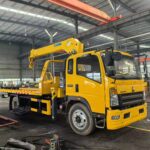
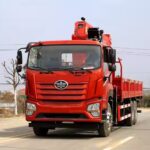
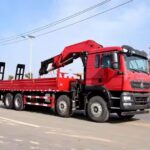
If you are looking to strengthen your utility fleet for remote and challenging environments, contact us. CSCTRUCK towcraneoffers a full range ofкамиони са кашиком и дизалице за утовар—all customizable to the terrain, climate, and working heights of Indonesia’s most isolated regions.