In the towing and vehicle recovery industry, selecting the right equipment is essential for ensuring safe, efficient, and reliable operations. Different types of tow trucks are designed to handle specific towing scenarios, from roadside assistance for passenger vehicles to heavy-duty recovery operations involving large commercial trucks.
Two commonly used vehicles in the towing industry are theintegrated tow truck le ea wheel lift tow truck. While both are designed to move disabled or improperly parked vehicles, they serve different purposes and are built with different structural features.
Understanding the key differences between these two types of tow trucks can help towing companies, fleet operators, and roadside assistance providers choose the right vehicle for their needs. This article explains how integrated tow trucks and wheel lift tow trucks work, their main features, and when each type is most suitable.
What Is an Integrated Tow Truck?
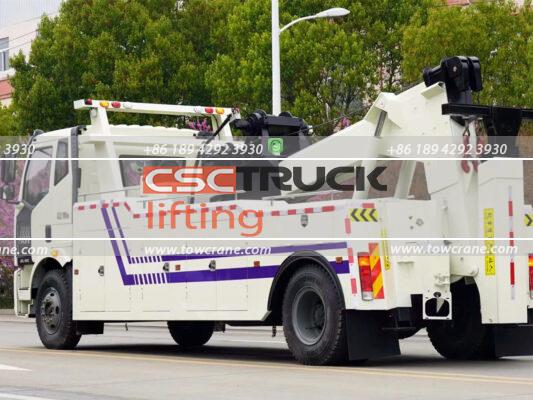
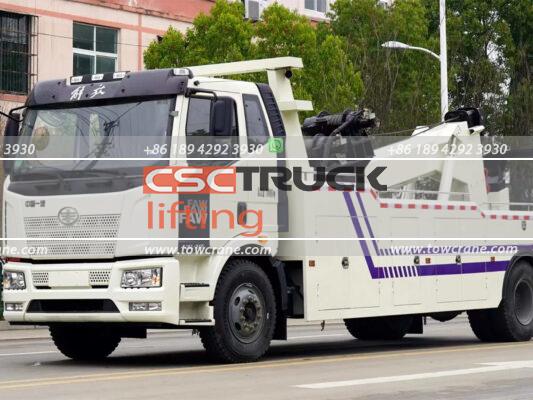
Anintegrated tow truckis a heavy-duty recovery vehicle designed for towing and lifting large vehicles such as buses, trucks, and other commercial transport vehicles. The key feature of this type of tow truck is the integration of theboom and wheel lift systeminto a single, reinforced structure.
This integrated design provides additional stability and strength, allowing the truck to handle heavier loads and more complex recovery situations.
Integrated tow trucks are commonly used for:
Heavy-duty vehicle recovery
Towing commercial trucks and buses
Highway accident recovery operations
Long-distance heavy vehicle towing
Because of their powerful lifting capabilities and durable construction, integrated tow trucks are widely used by professional towing companies that specialize in heavy recovery services.
What Is a Wheel Lift Tow Truck?
A wheel lift tow truckis a lighter-duty towing vehicle designed to lift a vehicle by its wheels using a metal yoke attached to a hydraulic lift system. The yoke slides under either the front or rear wheels of the vehicle and raises them off the ground while the remaining wheels stay on the road.
Wheel lift tow trucks are commonly used for:
Towing passenger vehicles
Removing illegally parked cars
Roadside assistance services
Short-distance vehicle transport
This type ofteraka e hulangis popular in urban environments because it is compact, maneuverable, and capable of operating in tight spaces such as parking lots and narrow streets.
Structural Design Differences
One of the most noticeable differences between integrated tow trucks and wheel lift tow trucks is their structural design.
Integrated tow trucks are built withreinforced frames and heavy-duty componentsthat allow them to support significant weight. The boom and wheel lift system is mounted directly into the truck’s structure, creating a stronger and more stable towing platform.
Wheel lift tow trucks, on the other hand, have a simpler structure. The wheel lift mechanism is typically attached to the rear of the truck and is designed for lighter towing tasks. Because the system does not require the same level of reinforcement as heavy-duty tow trucks, the vehicle is lighter and more compact.
Towing Capacity and Performance
Another major difference between these two types of tow trucks is their towing capability.
Integrated tow trucks are designed to handlelarge and heavy vehicles. Their powerful hydraulic systems and reinforced lifting mechanisms allow them to safely tow commercial trucks, libese, and other oversized vehicles.
Wheel lift tow trucks are designed primarily forlight to medium-duty towing. They are best suited for passenger vehicles such as cars, small vans, and SUVs.
Using a wheel lift truck for heavy vehicle recovery may exceed its design limits, which is why integrated tow trucks are preferred for demanding recovery operations.
Stability and Control
Stability is particularly important during heavy vehicle recovery operations.
Integrated tow trucks provide superior stability because their lifting equipment is integrated directly into the chassis. This design distributes weight more evenly and reduces the risk of imbalance when lifting large vehicles.
Wheel lift tow trucks offer sufficient stability for smaller vehicles but may not provide the same level of support when handling heavier loads.
For challenging recovery situations—such as overturned trucks or vehicles in difficult positions—integrated tow trucks offer better control and safer operation.
Operational Applications
Both types of tow trucks are valuable in the towing industry, but they are typically used in different operational scenarios.
Integrated tow trucks are commonly deployed in situations involving heavy vehicles or complex recoveries. They are frequently used on highways, industrial roads, and long-distance towing operations.
Wheel lift tow trucks are often used in urban environments where quick response and maneuverability are essential. They are particularly useful for parking enforcement, roadside breakdown assistance, and short-distance towing.
Because of their smaller size, wheel lift trucks can easily navigate busy city streets and confined spaces.
Cost and Operational Efficiency
Cost considerations also influence the choice between integrated tow trucks and wheel lift tow trucks.
Integrated tow trucks are larger and more complex vehicles, which generally means higher manufacturing and operational costs. Leha ho le joalo, they provide the power and capability required for heavy-duty towing services.
Wheel lift tow trucks are typically more affordable and easier to maintain. Their compact design and lower operational costs make them a practical choice for companies that focus on light-duty towing and roadside assistance.
For many towing businesses, operating a fleet that includes both types of vehicles allows them to handle a wider range of service requests.
Advantages of Integrated Tow Trucks
Integrated tow trucks offer several benefits, particularly for companies that handle heavy vehicle recovery.
Their reinforced design provides the strength required to tow large vehicles safely. The integrated boom and wheel lift system also improves stability during lifting and towing operations.
These trucks are ideal for demanding recovery tasks and are often used in highway accident response or commercial vehicle transport.
Advantages of Wheel Lift Tow Trucks
Wheel lift tow trucks provide a number of advantages for light-duty towing operations.
Their compact size allows them to operate efficiently in urban environments where space may be limited. They are also capable of performing quick towing tasks, such as removing illegally parked vehicles or transporting disabled cars to repair facilities.
Because they are easier to operate and maintain, wheel lift trucks are commonly used by roadside assistance services and local towing companies.
Choosing the Right Tow Truck for Your Needs
Selecting the right tow truck depends on the type of towing services being offered. Companies that frequently handle heavy vehicles will benefit from the strength and reliability of integrated tow trucks.
Businesses that focus primarily on passenger vehicles and urban roadside assistance may find wheel lift tow trucks more practical due to their maneuverability and lower operating costs.
In many cases, a combination of both types of tow trucks provides the flexibility needed to handle different towing scenarios.
Qetello
Integrated tow trucks and wheel lift tow trucks both play important roles in the towing and recovery industry. While integrated tow trucks are designed for heavy-duty vehicle recovery and long-distance towing, wheel lift tow trucks are better suited for light-duty operations and urban towing tasks.
Understanding the differences between these two types of vehicles allows towing companies and fleet operators to select the most appropriate equipment for their specific needs.
As the demand for reliable roadside assistance and vehicle recovery continues to grow, both integrated tow trucks and wheel lift tow trucks will remain essential tools for ensuring safe and efficient towing services.