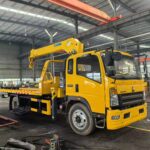
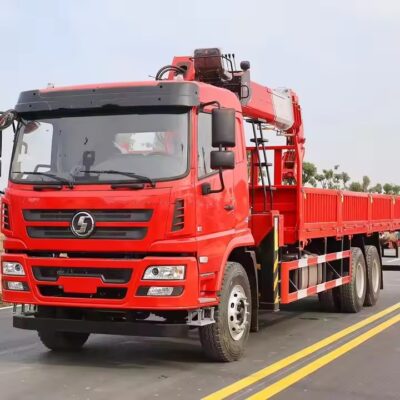
High-altitude work requires precision, safety, and efficiency. Choosing the right aerial lift truck for your construction or maintenance site is a critical decision that can impact productivity, worker safety, and project timelines. Two of the most common options are telescopic aerial lift trucks and articulated bucket lift trucks. While both serve similar purposes, their designs, reach, and flexibility make them suited for different types of work environments.
This guide explores the differences, advantages, and ideal scenarios for each lift type, helping you make an informed choice for your job site.
Understanding the Two Lift Types
Telescopic Aerial Lift Truck
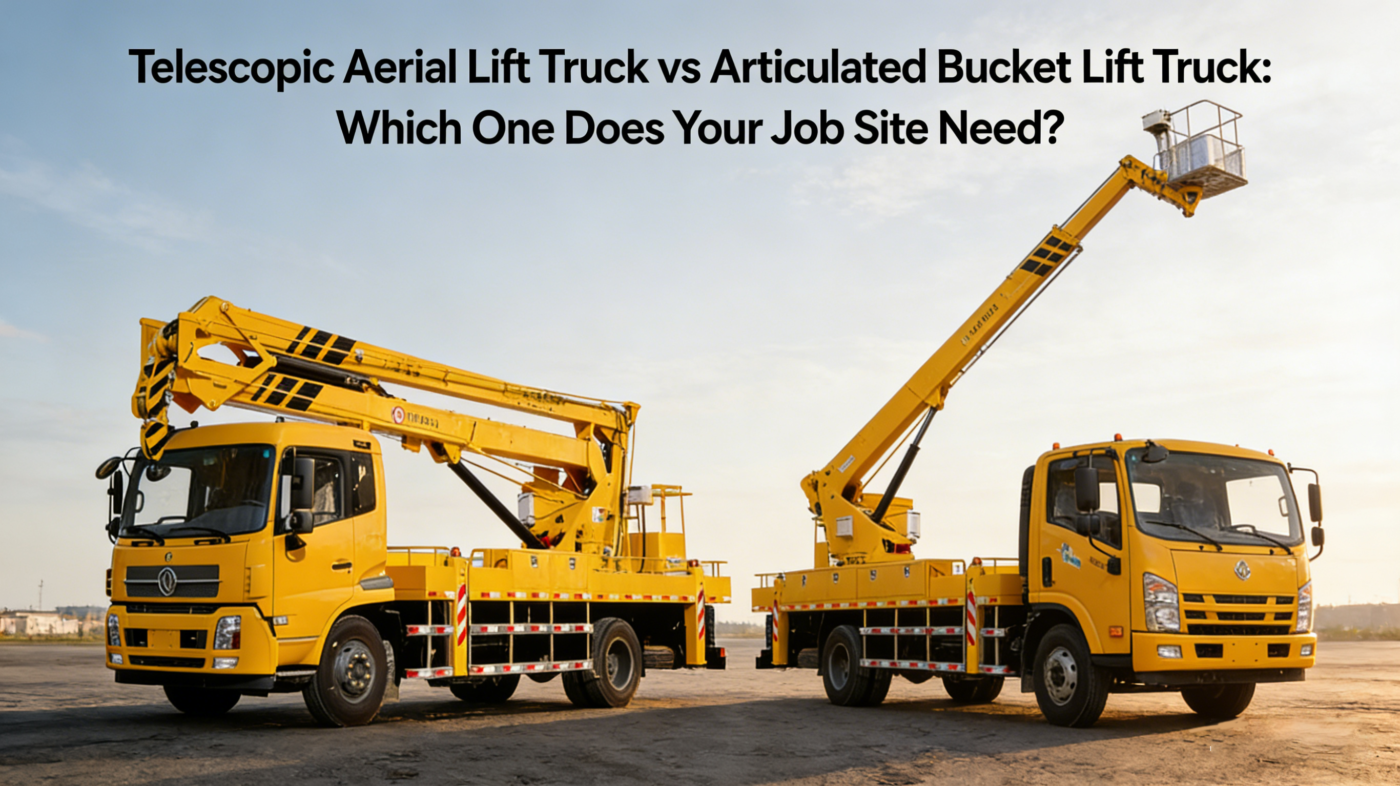
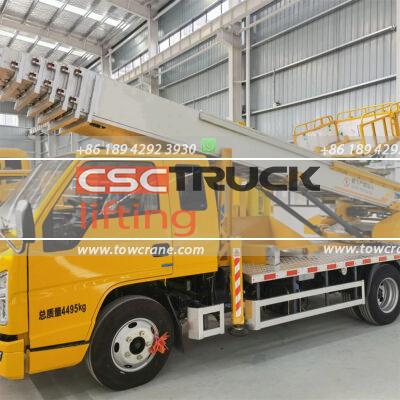
Telescopic aerial lifts, often called straight-boom lifts, feature a single extendable arm. This linear design allows operators to reach elevated areas in a straight path with minimal repositioning. The simplicity of the boom mechanism also makes them straightforward to operate and maintain.
Advantages:
Long linear reach: Ideal for accessing high or distant work areas.
Stable platform: Straight-boom design provides a secure base for workers.
Simple operation: Minimal boom articulation reduces complexity during use.
Common Applications:
Large construction projects requiring high vertical reach
Exterior building maintenance and repairs
Installation or inspection of elevated structures
Articulated Bucket Lift Truck
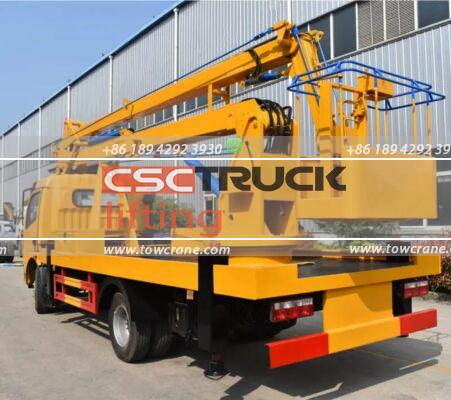
Articulated bucket lifts are designed with multiple jointed boom sections. This allows the lift to bend and maneuver around obstacles, making them particularly versatile in environments with restricted or irregular spaces.
Advantages:
Exceptional flexibility: The jointed design allows reaching over or around obstacles.
Precision positioning: The bucket or platform can be adjusted to various angles.
Versatile applications: Suitable for indoor and outdoor work in complex layouts.
Common Applications:
Tree trimming and landscaping projects
Indoor maintenance of large facilities
Urban job sites with obstacles like buildings, poles, or power lines
Key Differences Between Telescopic and Articulated Lifts
Reach and Access
Telescopic lifts excel in linear, unobstructed reach. They are ideal when a straight path is available to the work area and the job requires covering distance efficiently.
Articulated lifts shine in complex access scenarios. Their multi-section arms allow operators to reach over or around obstacles, providing versatility where a straight path is blocked.
Maneuverability
Telescopic Lifts: Less maneuverable in tight spaces, but require fewer adjustments on open sites due to their long reach.
Articulated Lifts: Highly maneuverable, capable of precise positioning even in constrained areas. Perfect for urban construction or indoor projects.
Safety and Stability
Both lift types are designed with safety in mind, including stabilizers, load monitoring, and secure platforms.
Telescopic Lifts: More stable at full extension due to the single straight arm. Suitable for tasks where maximum reach and platform steadiness are priorities.
Articulated Lifts: Require careful handling at maximum extension due to multiple moving sections, but offer flexibility that can reduce risky repositioning.
Efficiency and Productivity
The right lift type can streamline workflows and reduce project timelines:
Telescopic Lifts: Minimize repositioning on large, open job sites, improving efficiency for linear tasks.
Articulated Lifts: Reduce the need to navigate obstacles, enabling faster work in complex or crowded environments.
Choosing the Right Lift for Your Job Site
When deciding between a telescopic aerial lift and an articulated bucket lift, consider the following factors:
1. Job Site Layout:
Open areas with minimal obstructions favor telescopic lifts.
Sites with tight spaces or numerous obstacles benefit from articulated lifts.
2. Reach Requirements:
Determine the maximum vertical and horizontal reach needed. Telescopic lifts are ideal for long linear reach, while articulated lifts excel at positioning around obstacles.
3. Worker Safety:
Evaluate platform stability, especially at maximum extension. Consider how the lift design affects risk during high-altitude work.
4. Operational Efficiency:
Consider the time required for repositioning. Open sites benefit from telescopic lifts, while complex layouts favor articulated lifts.
Practical Job Site Scenarios
1. Open Construction Sites
For large-scale projects such as high-rise construction or bridge work, a telescopic aerial lift is often the best choice. Its long, straight arm allows operators to reach elevated sections quickly, reducing downtime and simplifying logistics.
2. Urban or Obstructed Environments
In cities or industrial facilities where obstacles are common, an articulated bucket lift is more suitable. Its ability to bend and reach over structures allows precise access without repositioning the base vehicle multiple times.
3. Indoor Maintenance
Facilities with narrow corridors, machinery, or overhead obstructions require articulated lifts for safe and effective work. Their flexible boom design lets operators reach tricky spots that a straight-arm lift cannot.
4. Landscaping and Tree Work
For tree trimming or exterior maintenance in areas with multiple obstacles, articulated lifts provide safe and flexible access. The ability to position the platform at various angles reduces the need for manual adjustments or ladder use.
Operational and Maintenance Considerations
Proper operation and regular maintenance are essential for both lift types:
Operator Training: Skilled operators improve safety and efficiency. Training should cover both lift control and risk management.
Routine Inspections: Check hydraulic systems, joint integrity, platform locks, and tires. Regular inspections prevent downtime and accidents.
Site Assessment: Identify obstacles, ground conditions, and nearby power lines before operation.
Safety Gear: Always use safety harnesses, helmets, and follow high-altitude work regulations.
Cost and Long-Term Investment
While initial equipment costs may vary, selecting the right lift can save money over time:
Telescopic Lifts: Fewer repositionings and faster linear access can reduce labor costs and project duration.
Articulated Lifts: Flexibility in complex environments minimizes inefficiencies caused by obstacles or limited space.
Consider the total cost of ownership, including training, maintenance, and operational efficiency, rather than just the purchase price.
Conclusion
Choosing between a telescopic aerial lift truck and an articulated bucket lift truck depends on your job site’s layout, reach requirements, and operational priorities.
Telescopic Aerial Lifts: Best for open, large-scale projects requiring long, straight-line access. Simple to operate and stable at height.
Articulated Bucket Lifts: Best for obstacle-rich environments, indoor facilities, or sites requiring precise positioning. Flexible, versatile, and ideal for complex layouts.
Investing in the right lift ensures safer high-altitude work, improved efficiency, and smoother project execution. Evaluate your worksite carefully, match the lift type to the job’s requirements, and your team will work smarter, safer, and faster.