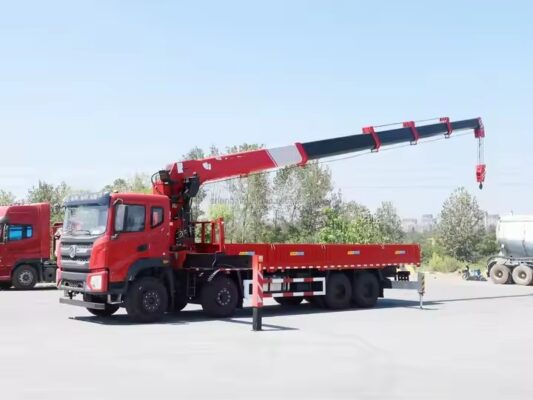
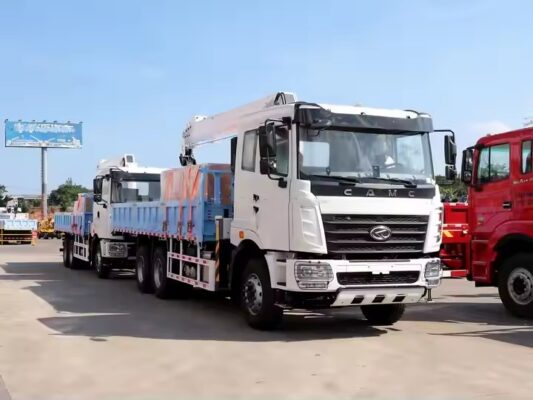
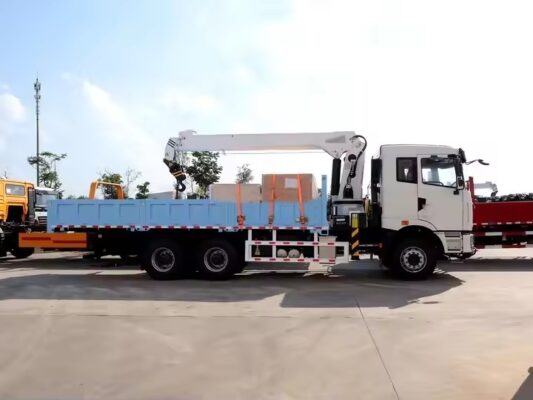
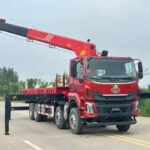
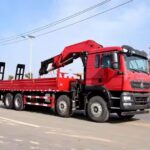
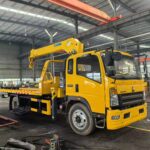
In many lifting operations, vertical lifting precision and safety are critical. Industries such as construction, logistics, utilities, and infrastructure often require loads to be lifted straight up and lowered with maximum control.
This is where truck-mounted telescopic cranes stand out. One of the key reasons for their superior performance is the integrated winch system, which allows operators to lift loads vertically with greater precision, stability, and safety.
Understanding the winch advantage helps explain why telescopic truck cranes are widely used for tasks that demand controlled vertical lifting.
Understanding the Winch System in Truck-Mounted Telescopic Cranes
A winch system is the core lifting mechanism of most telescopic cranes. It typically consists of:
A hydraulic motor
A steel wire rope
A drum spool
A hook block
Instead of relying solely on the movement of the boom, the crane uses the winch drum to raise or lower the load vertically.
When the operator activates the system, the wire rope winds or unwinds from the drum, allowing the hook to move up or down independently from the boom’s position.
This separation between boom positioning and load lifting is what gives telescopic cranes a major advantage in vertical lifting operations.
Precise Vertical Load Control
One of the biggest advantages of using a winch system is the ability to control lifting movements with exceptional precision.
The operator can:
Lift loads slowly and smoothly
Lower loads with fine control
Hold loads steady at a fixed height
This precision is especially important when installing equipment, positioning construction materials, or handling delicate loads.
Unlike some lifting systems that rely heavily on boom motion, the winch allows operators to perform true vertical lifting, minimizing load swing and improving overall control.
Improved Safety During Lifting Operations
Safety is a major concern in any lifting task. The winch system contributes significantly to safer lifting operations.
Key safety benefits include:
Controlled Lifting Speed
The winch allows operators to adjust lifting speed precisely, reducing the risk of sudden movements.
Reduced Load Swing
Because the load can be lifted vertically without excessive boom movement, there is less chance of the load swinging.
Strong Load Stability
Steel wire ropes and hydraulic winches are designed to handle heavy loads with high reliability.
Many modern truck-mounted telescopic cranes also integrate overload protection systems, limit switches, and automatic braking, further improving safety during vertical lifting.
Efficiency in Confined Workspaces
Vertical lifting is often required in tight job sites, such as urban construction zones, warehouses, or maintenance areas.
The winch system helps cranes operate efficiently in these environments because:
The boom can remain mostly stationary
Loads can be lifted straight upward
Minimal repositioning is required
This makes truck-mounted telescopic cranes particularly useful for tasks such as:
Equipment installation
Utility pole lifting
Building material handling
Machinery maintenance
The ability to perform precise vertical lifting without constant boom adjustments saves both time and effort.
Versatility Across Multiple Industries
Thanks to the advantages of the winch system, truck-mounted telescopic cranes are widely used across different industries.
Common applications include:
Construction
Lifting steel structures, concrete components, and building materials.
Utilities and Power
Installing transformers, utility poles, and electrical equipment.
Logistics and Transportation
Loading and unloading heavy cargo from trucks or trailers.
Industrial Maintenance
Handling machinery components and equipment inside factories.
In all these applications, accurate vertical lifting is essential, making the winch system a key component of efficient crane operation.
Why the Winch Advantage Matters
The winch system is more than just a lifting tool—it fundamentally improves how telescopic cranes perform vertical lifting tasks.
Key advantages include:
Precise load positioning
Smooth and controlled lifting
Improved operational safety
Higher efficiency in confined spaces
Versatile use across industries
Because of these benefits, truck-mounted telescopic cranes remain one of the most practical and reliable solutions for lifting operations that demand vertical accuracy.
While truck-mounted telescopic cranes excel at precise vertical lifting thanks to their winch systems, other specialized lifting trucks also serve different roles in the industry. For example, a Knuckle Boom Crane offers greater flexibility for loading and material handling in tight spaces, while a Rotator Tow Truck is designed for heavy-duty vehicle recovery and complex towing operations. Together, these machines demonstrate the wide range of lifting solutions available for construction, logistics, and municipal services.
Conclusion
The ability to perform precise and controlled vertical lifting is a defining advantage of truck-mounted telescopic cranes. At the heart of this capability is the winch system, which allows operators to lift loads independently from boom movement.
By providing better control, enhanced safety, and greater efficiency, the winch system makes telescopic cranes highly effective for a wide range of lifting tasks.
As industries continue to demand safer and more precise lifting solutions, the winch advantage will remain a key factor in the ongoing popularity of truck-mounted telescopic cranes.