Manila is a city in constant motion. Every day, millions of people navigate its crowded streets, hopping between jeepneys, ngaahi pasi, tricycles, and private vehicles, all competing for limited road space. Traffic congestion is a well‑known reality—the metropolis operates under relentless pressure, with commuters losing countless hours to gridlock and the economy suffering significant losses in productivity. For accident recovery teams, every minute counts. When a collision or breakdown blocks a major arterial road like EDSA—where daily vehicle volumes far exceed the road’s designed capacity—the entire urban network can quickly grind to a halt.
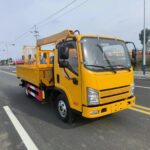
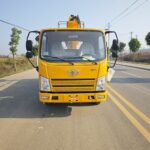
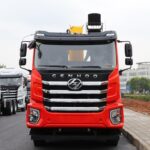
For recovery operators working in this demanding environment, standard tow trucks often fall short. Crane tow trucksare engineered specifically for urban accident recovery in tight, complex spaces.
The Urban Challenge
Manila’s roads were not built for modern traffic volumes. Many streets in older districts like Binondo, Quiapo, and Sampaloc date back decades, with narrow lanes that can barely accommodate two jeepneys passing side by side. Sidewalks are often so narrow that pedestrians are forced to walk on the road itself, leaving recovery vehicles with virtually no margin for maneuvering. Meanwhile, elevated highways and ongoing road rehabilitation projects have imposed additional restrictions, including truck bans that push heavy vehicles onto already overcrowded side streets.
The traffic composition itself is a challenge. Jeepneys and tricycles still account for a significant share of trips in Metro Manila, while motorcycle traffic has grown dramatically over the years on major thoroughfares. In such a dense, heterogeneous traffic environment, accident recovery becomes a logistical puzzle as much as a mechanical one.
The Scale of the Need
The problem is substantial. Over the years, Metro Manila has recorded hundreds of thousands of road crashes. A notable proportion results in non‑fatal injuries, and a smaller but deeply concerning percentage proves fatal. Holiday periods are particularly dangerous, with injury cases often surging compared to ordinary weeks.
Every crash creates a recovery demand. When a heavily damaged vehicle blocks a lane on a congested highway or a container truck overturns on a narrow arterial road, the difference between a minor disruption and a citywide traffic collapse often comes down to the speed and capability of the recovery team.
Why Crane Tow Trucks Excel in Manila
Crane tow trucks are distinguished by a single feature: a hydraulically powered rotating boom capable of full 360‑degree articulation. Unlike standard wreckers that must align precisely with a disabled vehicle, crane tow trucks can lift and reposition vehicles from virtually any angle—a critical advantage on Manila’s cramped streets where repositioning is often impossible.
The benefits are substantial:
Versatility in Confined Spaces.In narrow alleys, parking lots, or accident scenes hemmed in by buildings and stalled traffic, the rotating crane arm allows operators to reach vehicles that would otherwise be inaccessible. Mounted on a single chassis, these integrated units combine lifting, winching, and towing capabilities without requiring additional equipment.
Speed of Clearance.Every minute a disabled vehicle occupies a traffic lane, the risk of secondary accidents increases. Crane tow trucks reduce clearance times significantly, lifting overturned or heavily damaged vehicles directly from accident sites and minimizing disruption to traffic flow.
Heavy‑Duty Capacity for Manila’s Largest Vehicles.Manila’s port area generates a steady stream of heavy vehicle traffic, including container trucks and commercial carriers. Crane tow trucks with substantial lifting capacity are well‑suited to handle disabled container trucks, ngaahi pasi, and commercial vehicles that lighter recovery units cannot manage.
Stability and Safety.Modern crane tow trucks deploy hydraulic outriggers during lifting operations, ensuring a stable platform even when extracting vehicles from ditches, embankments, or awkward angles. This stability protects both the recovery crew and the surrounding environment.
Recovery in Action
Consider a typical Manila accident scenario: a delivery truck suffers brake failure on a narrow two‑lane street in Tondo, jackknifing and blocking both directions. Within minutes, traffic has backed up onto adjacent roads, and motorcycles are weaving dangerously around the obstruction. A standard tow truck would struggle to access the site, let alone extract the damaged vehicle without causing further gridlock.
A crane tow truck, by contrast, can position itself at the edge of the congestion, extend its 360‑degree rotating boom over obstacles, lift the disabled vehicle vertically, and place it onto the carrier bed—all without requiring additional lane space or auxiliary equipment. The entire operation may take only a short time, restoring traffic flow and reducing the risk of secondary collisions.
Building a Smarter Recovery Fleet
For municipalities, towing companies, and emergency services operating in Metro Manila, the case for crane tow trucks is compelling. The combination of extreme congestion, aging infrastructure, diverse vehicle types, and high crash volumes demands recovery equipment that is not merely powerful but also agile.
Crane tow trucks are designed for this environment: they offer the reach of a crane, the stability of a wrecker, and the compact footprint required to work where space is a luxury. As Manila continues to grow and its roads become even more crowded, investing in advanced recovery technology is not just about efficiency—it is about safety, economic productivity, and keeping one of Asia’s most dynamic cities moving.
If you are exploring crane tow truck solutions for urban accident recovery, contact us. CSCTRUCK offers a range of recovery vehicles—fromrotator wreckers ki he integrated tow trucks—all customizable to meet the specific demands of Manila’s streets and beyond.*