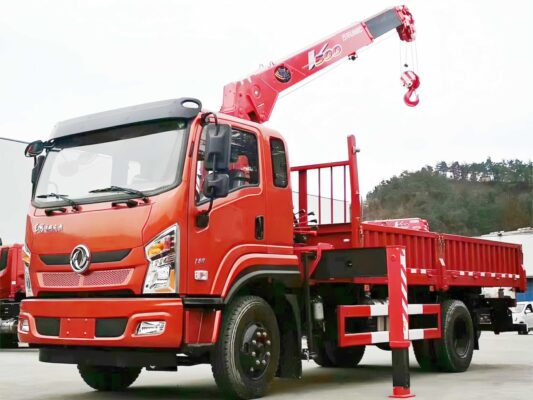
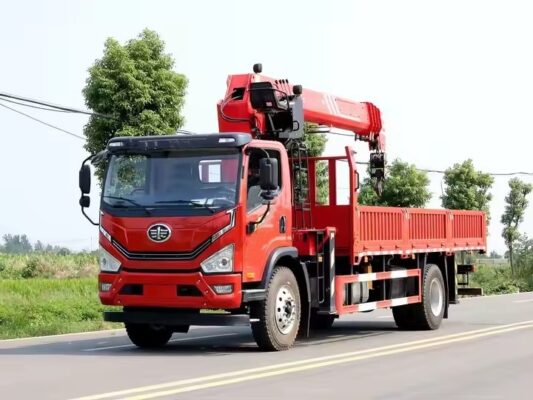
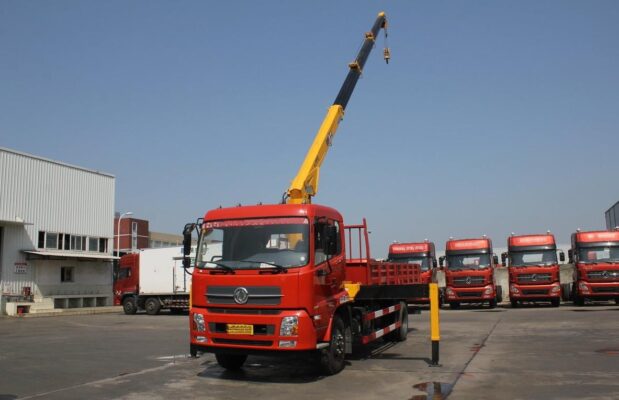
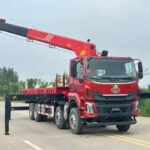
Choosing the rightyükleyici vinçis not about buying the biggest model—it’s about matching the crane to your actual jobs.
Many buyers compare differentloader cranes for salebased only on maximum lifting capacity. But in real job sites, çalışma yarıçapı, ulaşmak, and application scenarios matter just as much.
Choose too small, and you risk unsafe lifting and lost contracts. Choose too large, and you increase cost, fuel consumption, and operational limits.
This guide will help you quickly identify theright crane tonnage for your business.
Quick Loader Crane Selection Guide
Your Job Type
Recommended Crane
Typical Capacity*
Urban delivery / lojistik
10–20 ton-meter
2–4 tons
General construction
30–50 ton-meter
5–10 tons
Heavy industry / infrastructure
60+ ton-meter
12–30+ tons
*Capacity varies depending on working radius (distance from crane).
Light-Duty Loader Cranes (Up to 20 Ton-Meter)
Best for: Urban jobs, fast operations, tight spaces
Light-duty cranes are compact, efficient, and ideal for frequent lifting tasks in cities or confined areas.
Typical Applications
Last-mile delivery (bricks, wood, tiles)
Municipal maintenance (streetlights, small equipment)
Agriculture (fertilizer bags, small machinery)
Recycling and scrap handling
Real-World Insight
Many logistics companies prefer light cranes becausethey allow one-person operation and faster unloading, especially in crowded urban environments.
Typical Lifting Capacity
~2 tons at 8–10 m radius
~4 tons at 4–5 m radius
Temel Avantajlar
Easy to maneuver
Lower fuel and maintenance costs
Faster cycle times
Medium-Duty Loader Cranes (20–60 Ton-Meter)
Best for: Yapı, utilities, and general commercial use
This is the most widely used category in the market. It offers the best balance between lifting power, ulaşmak, ve maliyet.
Typical Applications
Construction materials (steel, concrete, HVAC units)
Infrastructure work (köprü, pipelines, road signs)
Utility services (transformers, poles)
Equipment transport and installation
Real-World Insight
Many contractors choose cranes based only on lifting capacity—but later realizethey lack sufficient reach to lift over obstacleslike walls, trenches, or stacked materials.
Typical Lifting Capacity
~5 tons at 8–10 m radius
~10 tons at 4–6 m radius
Temel Avantajlar
Highly versatile
Strong ROI for most businesses
Suitable for daily heavy use
Heavy-Duty Loader Cranes (60+ Ton-Meter)
Best for: Heavy lifting, industrial projects, and specialized operations
Heavy-duty cranes are designed for demanding environments where both capacity and reach are critical.
Typical Applications
Bridge and large-scale construction
Wind energy projects
Oil & gas equipment handling
Heavy machinery transport (excavators, bulldozers)
Industrial plant maintenance
Real-World Insight
Renting mobile cranes for every heavy lift can quickly become expensive. A heavy-duty loader crane allowsself-loading and transport in one solution, reducing long-term costs.
Typical Lifting Capacity
~15 tons at 8–10 m radius
25–30+ tons at shorter radius
Temel Avantajlar
Maximum lifting power
Extended reach
Ideal for high-value projects
How to Choose the Right Crane Tonnage
If you’re still unsure, use this simple method:
1. Calculate Your Required Capacity
Load Weight (ton) × Working Radius (metre) = Required ton-meter
👉 Add20–30% safety margin
2. Consider Your Job Site Conditions
Urban → compact crane
Open construction → medium range
Industrial/heavy → high tonnage
3. Match the Crane to Your Truck Chassis
Make sure:
Axle load capacity is sufficient
Frame strength supports the crane
Outrigger stability is adequate
Common Mistakes to Avoid
Buying too small → limits jobs, safety risks Buying too large → higher cost, poor maneuverability Ignoring working radius → crane becomes unusable on-site
How to Further Confirm Your Choice
If you already have a general tonnage range in mind, the next step is to refine your decision based on real working conditions:
Will you need to lift over obstacles such as walls, equipment, or stacked materials?
Are you operating in tight spaces or frequently moving between job sites?
Do you need to balance lifting and transport efficiency?
In many cases, these practical factors have a greater impact than tonnage alone.
A More Practical Perspective
In real-world projects, experienced operators rarely rely on specifications alone. Instead, they tend to:
Compare lifting performance at actual working radii
Reference equipment used in similar projects
Allow some margin for future, more demanding jobs
👉 In short: the goal is not just to meet current needs, but to stay adaptable over time.
If You Need a More Specific Reference
Every project is different, and no single formula fits all situations.
Unsure which tonnage to choose?
Please provide: Ağırlık Kaldırma, Operating radius, Vehicle information (if available).
Our engineers will recommend the most suitablevinçmodel for you free of charge.