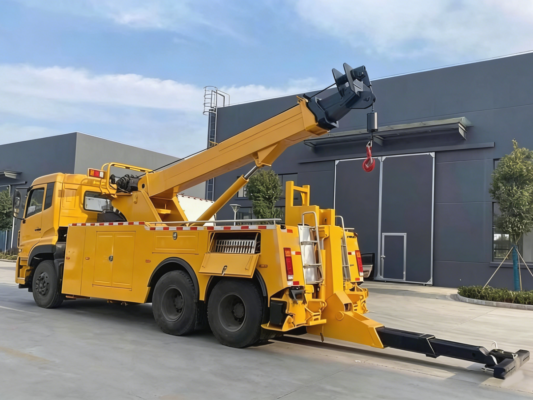
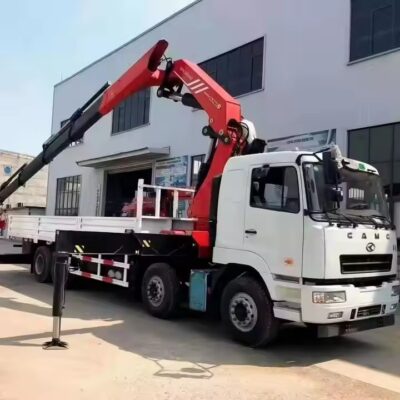
Choosing the rightxe kéois one of the most critical decisions you will make when starting or expanding a towing business. The two most common configurations—traditionalwreckers (also known as hook-and-chain or wheel-lift trucks) Và rollbacks (flatbed trucks)—each offer distinct advantages and limitations. The right choice depends on your target market, typical jobs, budget, and long-term business goals.
This guide breaks down the key differences, helping you make an informed decision that aligns with your business model.
Understanding the Two Types
Người phá hoại (Wheel-Lift Tow Truck) A wrecker uses a hydraulic boom and a wheel-lift assembly to raise either the front or rear wheels of a disabled vehicle off the ground, allowing it to be towed with the remaining wheels rolling on the road. Modern wreckers have largely replaced the old hook-and-chain systems, which could damage vehicle frames. Today’s wheel-lift wreckers are designed to secure vehicles safely and efficiently.
Rollback (Xe kéo phẳng) A rollback features a hydraulically operated flatbed that tilts and slides to ground level, allowing a vehicle to be winched or driven onto the platform. Once loaded, the bed returns to a horizontal position, and the vehicle is transported with all four wheels off the ground.
Key Comparison Factors
1. Bảo vệ xe
Người phá hoại: Towing with a wheel lift leaves the vehicle’s rear or front wheels on the road. While modern wreckers use padded arms and safety straps to minimize wear, there is still some risk of tire wear, suspension stress, or cosmetic damage—especially on long-distance hauls. For short-distance moves or older vehicles, this is rarely a concern.
Rollback: Transporting a vehicle with all wheels off the ground eliminates wear on tires, drivetrain, and suspension. This makes rollbacks the preferred choice for:
All-wheel-drive (AWD) and four-wheel-drive (4WD) xe cộ
Luxury and exotic cars
Vehicles with low ground clearance
Long-distance transport
If your customer base includes high-value vehicles or you plan to contract with insurance companies and dealerships, a rollback is often the safer choice.
2. Operational Efficiency and Speed
Người phá hoại: For quick, short-distance tows—such as moving a car from a parking lot, clearing a minor accident scene, or relocating an illegally parked vehicle—a wrecker is typically faster. The hookup process takes only a few minutes, and the truck’s compact size makes it easier to maneuver in tight spaces like narrow streets, parking garages, and crowded intersections.
Rollback: Loading a vehicle onto a flatbed takes longer—usually 5 ĐẾN 10 minutes—and requires more space to deploy the bed. In high-traffic urban environments or during emergency responses, this extra time and space requirement can be a drawback. Tuy nhiên, for longer hauls or delicate vehicles, the extra time is well worth the added protection.
3. Tính linh hoạt
Người phá hoại: Wreckers excel at handling a wide variety of tasks beyond vehicle towing. They are often used for:
Jump-starts and tire changes (with the boom and winch)
Vehicle extractions from ditches, snowbanks, or off-road locations
Light recovery operations
Towing trailers or small equipment
The integrated winch and boom make wreckers a versatile tool for roadside assistance and recovery work.
Rollback: While rollbacks are less versatile for recovery operations, they offer advantages in specific niches:
Moving equipment, machinery, or multiple vehicles (with larger beds)
Providing a stable platform for loading vehicles that cannot roll (seized brakes, missing wheels)
Some operators use rollbacks primarily for contracted work with dealerships, auctions, or insurance companies, where vehicle protection is paramount.
4. Cost and Investment
Người phá hoại (Wheel-Lift): Entry-level wheel-lift wreckers are significantly more affordable than rollbacks. A quality used wrecker can be purchased for a fraction of the cost of a new rollback. This makes wreckers an attractive option for:
Startups with limited capital
Operators entering the roadside assistance market
Businesses focusing on short-distance, high-volume tows
Rollback: Rollback trucks require a larger upfront investment. The vehicle itself is heavier, the hydraulic system is more complex, and maintenance costs tend to be higher. Tuy nhiên, for operators targeting high-value clients or long-distance transport, the investment often pays for itself through higher per-job rates and reduced liability.
5. Licensing and Operational Requirements
Người phá hoại: In most jurisdictions, a standard driver’s license is sufficient to operate a wrecker based on a medium-duty truck chassis. The smaller size also makes them easier to store and maneuver in urban environments.
Rollback: Rollbacks are typically built on heavier chassis and may push combined vehicle weights into commercial driver’s license (CDL) territory, depending on local regulations. They also require more space for parking and maneuvering, which can be a consideration for home-based operations.
Which One Is Right for Your Business?
The choice between a wrecker and a rollback ultimately depends on your business model and target market.
Choose a Wrecker If:
You are starting with a limited budget
Your primary market is roadside assistance, short-distance tows, and light recovery
You operate in dense urban areas with narrow streets and tight parking
You want a versatile vehicle that can handle multiple types of calls
You plan to build a fleet gradually, starting with one truck
Choose a Rollback If:
You plan to contract with dealerships, insurance companies, or auction houses
Your market includes luxury, AWD, or low-clearance vehicles
You focus on long-distance transport
You prioritize vehicle protection above all else
You have the capital for a higher initial investment
The Hybrid Approach: Building a Balanced Fleet
Many successful towing businesses start with one type and add the other as they grow. A common progression is:
1. Start with a wreckerto build a customer base through roadside assistance and local towing contracts. The lower entry cost allows you to establish cash flow quickly.
2. Add a rollbackonce you have steady revenue and begin attracting higher-value clients—dealerships, insurance referrals, and long-distance moves.
3. Expand the fleetwith additional units of both types, matching equipment to specific contracts and service areas.
This hybrid approach gives you the flexibility to handle virtually any call that comes in, from a quick jump-start in a parking garage to a cross-country transport of a classic car.
Ready to Choose Your Tow Truck?
Selecting the right equipment is the foundation of a profitable towing business. Whether you decide on a wrecker, a rollback, or a combination of both, having the right specifications for your market makes all the difference.
Need help choosing the right configuration for your business?
Contact our equipment specialists for a free consultation. We will help you evaluate your market, budget, and operational needs to find the tow truck that fits your business.