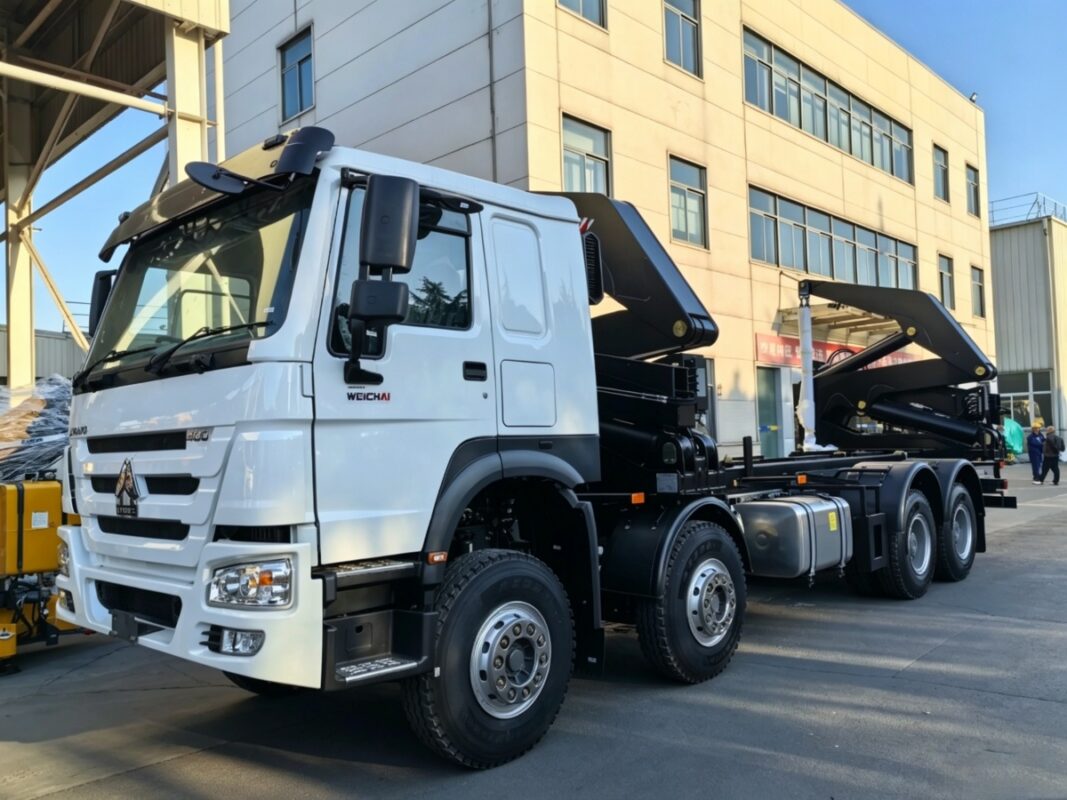
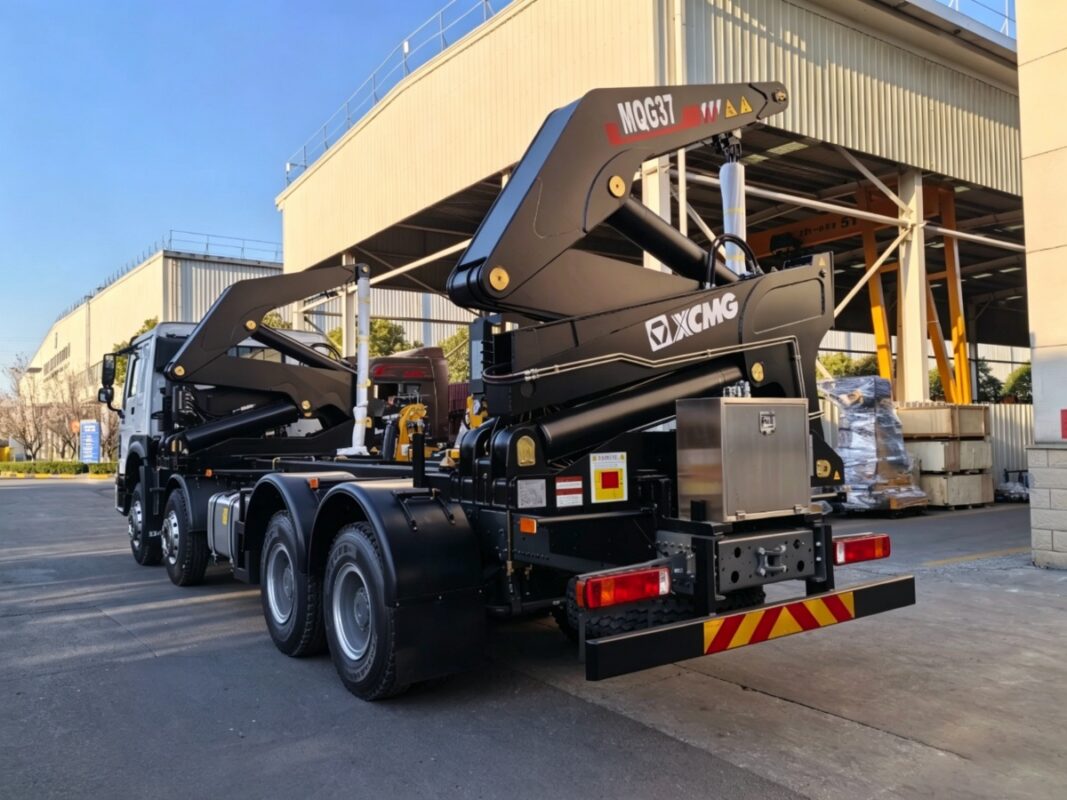
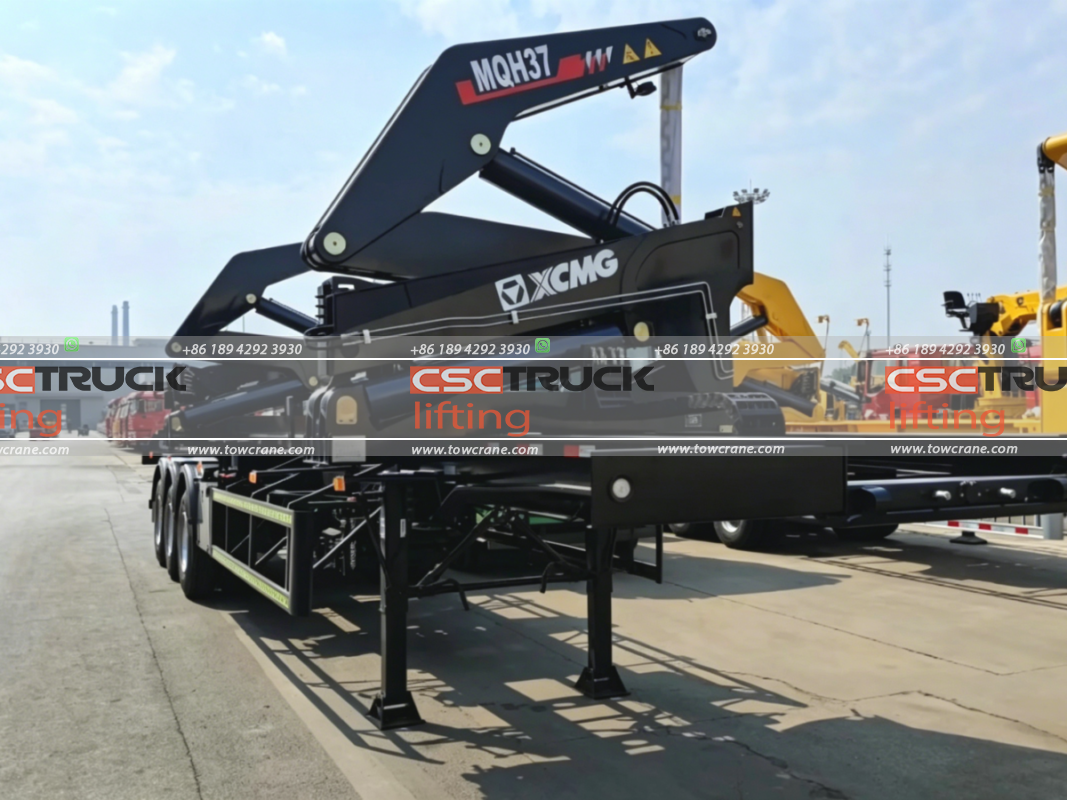
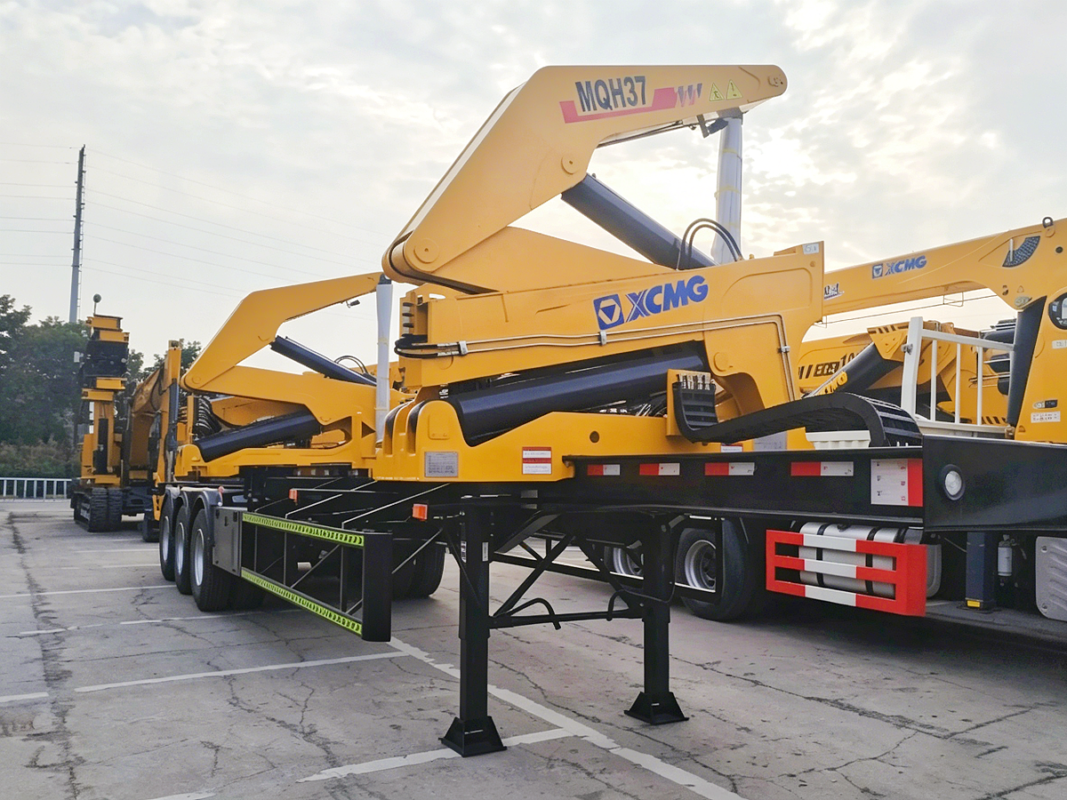
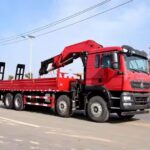
Side loader cranes—also known ascontainer side lifters—are specialized lifting systems designed to load and unloadshipping containersfrom the side of a transport vehicle. Instead of relying on external infrastructure such asgantry cranes ወይም reach stackers, ይሰጣሉ ሀ self-sufficient lifting solutionthat combinesተንቀሳቃሽነት እና hydraulic lifting powerin a single system.
Although the core engineering principle remains the same across all side loaders, the industry generally adopts two major configurations: truck-mounted side loaders እና semi-trailer side loaders. These two variants are not competing technologies but rather optimized solutions for differentoperational environments.
In modernሎጂስቲክስ, ግንባታ, እና port operations, choosing between them can significantly impactቅልጥፍና, cost structure, እና operational flexibility.
Understanding the Core Technology Behind Side Loaders
Before comparing the two configurations, it is important to understand what makes side loaders unique incontainer handling.
A typical side loader system includes:
ሀ hydraulic crane armmounted on the vehicle chassis
Extendablelifting beams ወይም spreader barsdesigned for standardISO containers
Stabilizing outriggersto ensure safe lifting during operation
ሀ power system (often a PTO-driven hydraulic pump or auxiliary engine)
The system allows operators to lift containers weighing up to tens of tons from ground level and place them directly onto a truck or trailer bed.
This capability eliminates the need for fixed lifting infrastructure and significantly improves flexibility incontainer logistics, especially in regions where port or yard infrastructure is limited.
Truck-Mounted Side Loaders: Mobility-Driven Logistics
Truck-mounted side loadersintegrate the crane system directly onto a rigidየጭነት መኪና በሻሲው, forming a single self-contained vehicle.
1. Operational Concept
The defining feature of truck-mounted side loaders isindependence. The same vehicle that transports the container is also responsible for loading and unloading it. There is no need for an additionaltractor unit ወይም trailer couplingprocess.
This makes them particularly suitable for dynamic logistics networks wheredeliveriesare spread across multiple locations.
2. ቁልፍ ጥቅሞች
(1) Maximum Flexibility in Route Planning Truck-mounted units can perform multipledeliveriesin a single trip, moving from one site to another without requiring support vehicles.
(2) Fast Deployment and Turnaround Since the crane and transport system are unified, operators can beginበመጫን ላይ ወይም በማውረድ ላይalmost immediately upon arrival.
(3) Urban and Regional Accessibility These vehicles are commonly used inurban logistics, where narrow roads, tight delivery schedules, and frequent stops require high maneuverability.
(4) Cost Efficiency in Low-to-Medium Volume Operations For companies that do not require continuous heavy lifting, truck-mounted systems provide a balancedcost structurewith lower operational complexity.
3. Limitations
Lowerየማንሳት አቅምcompared to heavy semi-trailer systems
Reducedመረጋጋትin extreme heavy-load scenarios
Limited chassis reinforcement space
Less suitable for high-volumeyard operations
Semi-Trailer Side Loaders: Heavy-Duty Industrial Workhorses
Semi-trailer side loadersare mounted on atrailer chassisand require a separatetractor unitfor mobility. Unlike truck-mounted systems, they are typically designed for intensive, repetitivecontainer handlingin controlled environments.
1. Operational Concept
The separation between tractor and trailer allows engineers to optimize the trailer specifically forlifting performance. This leads to stronger structural reinforcement, higherload-bearing capacity, and improvedመረጋጋት በሚሠራበት ጊዜ.
These systems are widely used inወደቦች, container depots, freight yards, and large-scaleየሎጂስቲክስ ማዕከሎች.
2. ቁልፍ ጥቅሞች
(1) Higher Load Capacity and Structural Strength Semi-trailer configurations can handle heavier and more frequent lifting cycles.
(2) Enhanced Stability During Lifting The longer wheelbase improvesoperational safetywhen handling full-load containers.
(3) Operational Efficiency in High-Volume Environments In container yards with high throughput, semi-trailer systems deliver betterቅልጥፍናand lower per-unit handling cost.
(4) Easier Maintenance Segmentation Trailer-based design allows more flexibleየጥገና መርሐግብር.
3. Limitations
Requirestractor unitdependency
Lower flexibility for multi-location delivery
Slower deployment compared to integrated systems
Less suitable forየከተማ አካባቢ
Side-by-Side Comparison
ባህሪ
Truck-Mounted Side Loader
Semi-Trailer Side Loader
ተንቀሳቃሽነት
Fully self-propelled
Requires a tractor unit
Best Application
Multi-drop delivery, urban logistics
Port, yard, industrial operations
የማንሳት አቅም
Medium
ከፍተኛ
Structural Stability
Moderate
ከፍተኛ
Setup Speed
Very fast
Moderate
Operational Flexibility
Very high
Medium
Cost Efficiency
Best for low-to-medium volume
Best for high-volume usage
Application-Based Decision Making
The choice between truck-mounted and semi-trailer side loaders should not be based ontechnical superiority, but onoperational context እና business model.
Choose Truck-Mounted Side Loaders If:
Your operations involve multi-pointdelivery routes
Containers must be delivered directly tocustomer sites
Urban logisticsor regional transport flexibility is essential
You prioritize fast deployment and autonomy
Choose Semi-Trailer Side Loaders If:
You operate inወደቦች, rail terminals, ወይም container yards
Your workflow involves high-volumecontainer movement
መረጋጋት, ዘላቂነት, and lifting efficiency are critical
You aim to minimize the cost per container in high-throughput environments
Industry Evolution: Toward Hybrid Fleet Strategies
Modern logistics operators increasingly adopthybrid fleetsthat combine both types of side loaders.
Truck-mounted units handlefirst-mile እና last-mile delivery
Semi-trailer units dominatehigh-density yard operations
This hybrid approach improvesasset utilization, cost efficiency, and overallsupply chain performance.
With advancements inየሃይድሮሊክ ስርዓቶች, telematics, እና load-sensing technology, both configurations are becoming safer, የበለጠ ውጤታማ, and more data-driven.
ማጠቃለያ
Truck-mounted እና trailer-mounted sideየመጫኛ ክሬኖችare not competing solutions but two optimized applications of the sameengineering concept.
One emphasizesተንቀሳቃሽነት እና ተለዋዋጭነት, while the other prioritizespower, መረጋጋት, and high-volume efficiency.
በመጨረሻ, the key decision is straightforward:
Do you need a highly mobiledelivery solution, or a high-capacity system for centralizedindustrial operations?
That answer defines the optimal configuration for any modernlogistics system.