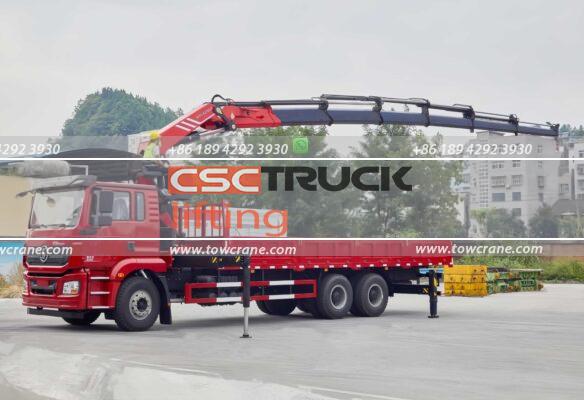
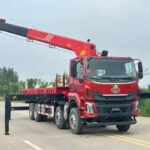
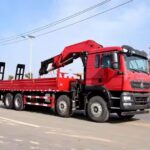
Are you familiar with the motocin-saka crane? Its full name is the motocin-saka crane abin hawa. It is a novel type of special vehicle that has gained significant popularity in recent years. Its advent has gradually displaced the traditional truck crane. Favored by the market for its flexibility and versatility, it holds immense market potential. Motocin-saka cranes are typically classified into front-mounted and rear-mounted based on the position of the crane, and they can further be categorized into folding boom type and straight boom type depending on the form of the crane. Haka, what exactly are the pros and cons of the front-mounted and rear-mounted cranes of the motocin-saka crane?
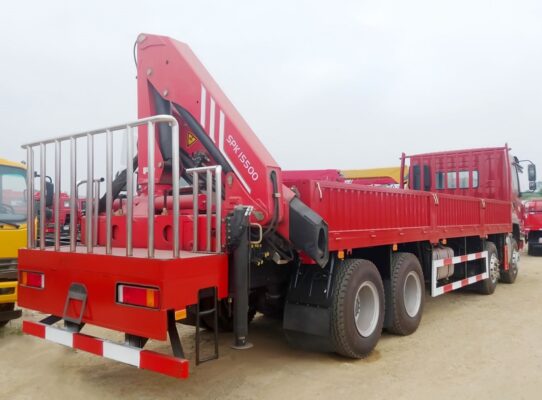
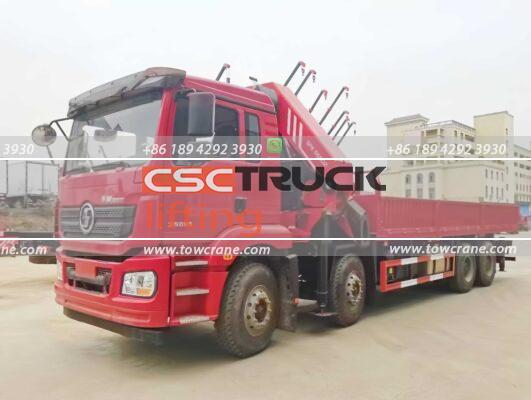
Let’s commence with the front-mounted crane, which is a more widely used type of crane in the present day. Its crane is installed on the girder situated between the vehicle cab and the cargo box. This configuration offers several advantages:
- The axle load distribution is relatively uniform, which bestows excellent operational stability and ride comfort. Such an even distribution of load is highly beneficial as it contributes to extending the service life of the tires of the motocin-saka crane. A balanced axle load ensures that the tires experience consistent stress, reducing the likelihood of premature wear and tear.
Mu zama mai zurfin zurfafa cikin wannan bangon. When a vehicle undergoes various maneuvers such as cornering, birki, or traversing uneven terrain, a uniform axle load helps maintain stability and control. This not only enhances safety but also reduces the shock and stress on the tires, prolonging their lifespan and reducing the frequency of replacements.
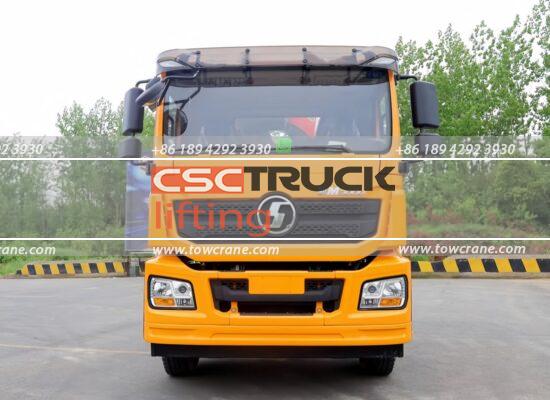
- When the vehicle initiates, accelerates, or ascends on the road, the load on the driving wheels escalates, and its traction significantly surpasses that of the rear-mounted type. This enhanced traction is a crucial factor, especially in challenging road conditions or when dealing with heavy loads. It enables the vehicle to overcome obstacles and gradients more effectively, ensuring smooth and efficient operation.
The improved traction of the front-mounted crane is a direct result of the weight distribution and the position of the crane. When the force is applied to the driving wheels during acceleration or climbing, the front-mounted design provides better grip and power transfer, minimizing wheel spin and maximizing forward momentum.
- The assemblies, such as the engine, clutch, transmission, and hydraulic operating device, are in close proximity to the cab, facilitating the simplification of the control mechanism layout. The steering mechanism features a straightforward structure, making maintenance highly convenient. This proximity not only reduces the complexity of the control linkages but also enables easier access for servicing and repairs.

Duk da haka, the front-mounted crane is not without its drawbacks:
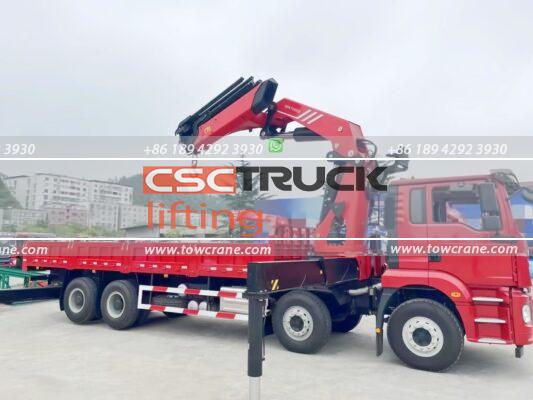
Yanzu, let’s consider the rear-mounted crane. The rear-mounted crane is characterized by the installation of the crane at the rear of the vehicle compartment. Such an installation offers three notable advantages:

Nonetheless, the rear-mounted type also has its share of disadvantages:
To summarize, whether the crane is front-mounted or rear-mounted, each configuration has its unique set of advantages and disadvantages. When making a choice regarding a motocin-saka crane, it is essential to consider your specific requirements and operational circumstances. Factors such as the nature of the lifting tasks, yanayin aiki, and personal preferences should all play a role in determining the most suitable configuration for your needs.
A karshe, a comprehensive understanding of the pros and cons of both front-mounted and rear-mounted cranes is crucial for making an informed decision and maximizing the efficiency and effectiveness of the motocin-saka crane in various applications.