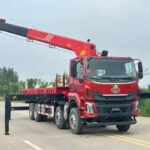
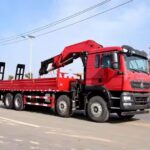
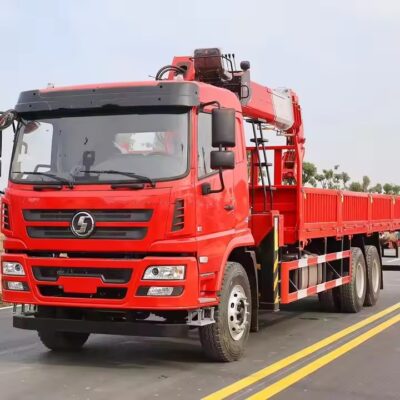
Knuckle boom cranesare widely used in construction, logistics, ululāʻau, and municipal operations due to their flexibility, compact design, and strong lifting capabilities. Eia naʻe, like any heavy machinery, they are not immune to wear and tear. Understanding common problems—and how to fix them—can help extend equipment lifespan, reduce downtime, and improve job site safety.
In this guide, we’ll explore the most frequentknuckle boom crane problemsand practical solutions to keep your equipment running efficiently.
Why Maintenance of Knuckle Boom Cranes Matters
Properknuckle boom crane maintenanceis key to:
Extending equipment lifespan
Preventing costly breakdowns
Ensuring operator safety
Maintaining lifting performance
Neglecting maintenance can lead to serious mechanical or safety failures.
1. Hydraulic System Leaks
Pilikia:
Hydraulic leaksare one of the most common issues. They can occur in hoses, seals, or fittings, leading to reduced lifting power and potential safety hazards.
Causes:
Worn or damaged seals
Cracked hoses
Loose connections
How to Fix:
Inspect hoses and fittings regularly
Replace worn seals immediately
Tighten or replace faulty connections
Use high-qualityhydraulic oilto reduce wear
Regularhydraulic system maintenancecan prevent costly downtime and improve lifting performance.
2. Reduced Lifting Capacity
Pilikia:
The crane struggles to lift loads it previously handled with ease, indicating reducedlifting capacity.
Causes:
Lowhydraulic pressure
Worn cylinders or valves
Overloading over time
How to Fix:
Check hydraulic pressure levels
Inspect cylinders for internal leakage
Avoid exceeding the rated load capacity
Calibrate the system if necessary
3. Boom Movement Issues
Pilikia:
The boom moves slowly, jerks, or becomes unresponsive—commonboom operation problems.
Causes:
Air in the hydraulic system
Contaminatedhydraulic fluid
Faulty control valves
How to Fix:
Bleed air from the hydraulic system
Replace or filter the hydraulic oil
Inspect and repair control valves
4. Electrical System Failures
Pilikia:
Controls, sensors, or indicators stop working properly due toelectrical system failure.
Causes:
Loose wiring
Corrosion in connectors
Faulty control units
How to Fix:
Check and secure all wiring connections
Clean or replace corroded connectors
Test and replace damaged electrical components
5. Excessive Wear on Joints and Pins
Pilikia:
Unusual noise, looseness, or reduced precision caused byjoint and pin wear.
Causes:
Lack of lubrication
Heavy or improper use
Aging components
How to Fix:
Lubricate joints and pins regularly
Replace worn bushings and pins
Follow proper operating procedures
6. Stabilizer (Outrigger) Malfunctions
Pilikia:
Outriggers fail to deploy properly or do not provide stable support—commonoutrigger problems.
Causes:
Hydraulic failure
Mechanical damage
Uneven ground conditions
How to Fix:
Inspect hydraulic cylinders and hoses
Repair or replace damaged components
Always operate on stable, level ground
7. Load Moment Indicator (LMI) Display Errors
Pilikia:
ʻO ka Load Moment Indicator (LMI)displays incorrect data or shows error warnings, affecting safe crane operation.
Causes:
Sensor malfunction or damage
Calibration errors
Electrical wiring issues
System overload history affecting readings
How to Fix:
Recalibrate theLMI systemaccording to manufacturer guidelines
Inspect and replace faulty sensors
Check and repair wiring connections
Reset the system if necessary and avoid overloading
Proper maintenance of theLMI systemis essential to ensure accurate load monitoring and safe crane operation.
Preventive Maintenance Tips
To avoid these commonknuckle boom crane issues, preventive maintenance is key:
Perform daily visual inspections
Follow manufacturer maintenance schedules
Use genuine spare parts
Train operators properly
Keep detailed service records
Regularcrane maintenancenot only improves safety but also reduces long-term operating costs.
Ka hopena
Understanding commonknuckle boom crane problems and solutionsis essential for anyone working with this equipment. Fromhydraulic leaks i electrical failures, most issues can be prevented or resolved with proper inspection and maintenance.
Investing in regular servicing and high-quality components will keep your crane operating at peak performance—saving time, money, and ensuring safety on every job site.
CSCTRUCK Towcraneoffers a comprehensive range of high-qualityknuckle boom cranes a loader cranes, along with genuine spare parts and maintenance support — fully customizable to meet the demanding lifting needs of construction, logistics, and material handling operations worldwide.