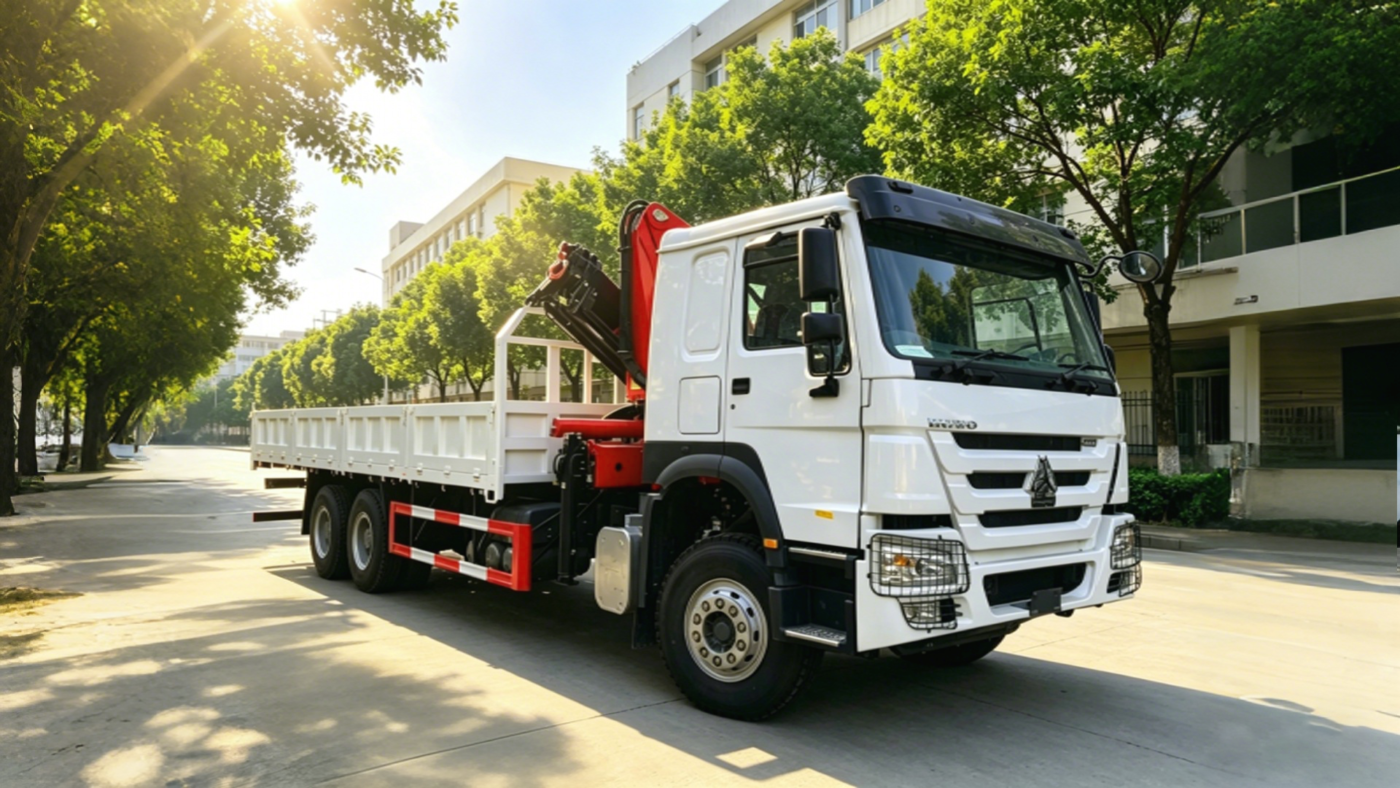
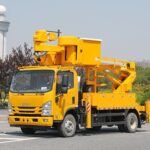
Operating aknuckle boom craneis not a task for anyone without proper training. According to relevant regulations, the operator of a truck‑mounted knuckle boom cranemust complete professional safety training, pass an examination approved by the relevant authority, and obtain a valid operator’s license before operating the equipment alone. Unlicensed personnel are strictly prohibited from using the crane. Before the operation, the operator must read the equipment’s manual, understand its lifting capacity parameters, and be familiar with all safety requirements.
II. Pre‑Operation Inspection (Before Departure)
A thorough pre‑operation inspection is the first step to ensuring safe operation. It includes the following key areas:
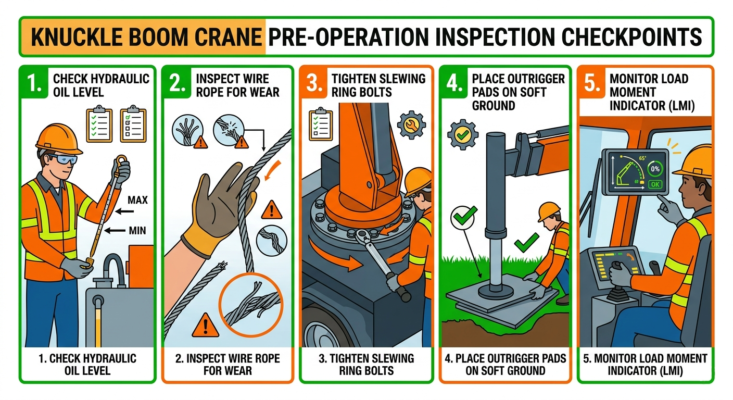
Overall equipment check– Inspect all crane components to ensure they are complete, in good condition, and comply with safety regulations. Verify that all controls, wire ropes, brakes, hydraulic devices, and safety devices are functioning properly and are sensitive and reliable. Never operate the crane with known defects.
Hydraulic system check– The knuckle boom crane is powered by a hydraulic system consisting of a hydraulic pump, valve groups, and hydraulic cylinders. No laila, check the hydraulic oil level and oil quality to ensure normal operation. Replace or top up the oil if it is contaminated or low. Also, inspect hydraulic lines for leaks or damage.
Structural component check– Inspect the boom sections, hook, and other structural parts for cracks, deformation, a i ʻole ka ʻaʻahu nui. Check the tightness of all connecting bolts, especially those between the column flange and the slewing ring, and between the slewing ring and the frame. These two sets of bolts bear the entire weight of the crane and the load.
Site and environment check– Before operation, check for obstacles within the crane’s slewing range. Understand the working environment, travel routes, overhead power lines, building structures, and the weight and distribution of the object to be lifted. Also assess ground conditions – avoid working on soft soil, slopes, or unstable surfaces.
Safety device check– Verify that the load moment limiter (LMI), emergency stop button, limit switches, and other safety devices are working properly. The LMI will issue audible and visual alarms and automatically lock out control signals that would move the crane into a dangerous direction when the operation exceeds safe limits.
III. Operating Procedures (During Work)
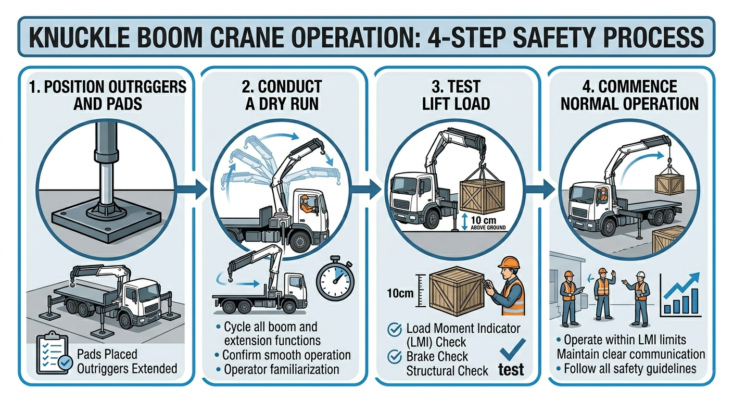
1. Engage the power take‑off (PTO)– With the vehicle stopped and the parking brake firmly applied, shift the transmission into neutral, depress the clutch, and engage the PTO gear to start the hydraulic pump. Observe the pump for abnormal noise, haʻalulu, or oil leakage.
2. Deploy the outriggers– Extend the crane’s outriggers to the required working width. The outrigger spread (span) directly determines the crane’s stability moment – the wider the span, the higher the rated lifting capacity. Outriggers must be properly padded. If the ground is soft, use steel plates or wooden sleepers to prevent sinking. Never perform heavy lifts with the outriggers not fully extended.
3. Dry run without load– After starting the crane, perform a dry run without any load to check that all controls, brakes, hydraulic devices, and safety devices operate smoothly and reliably.
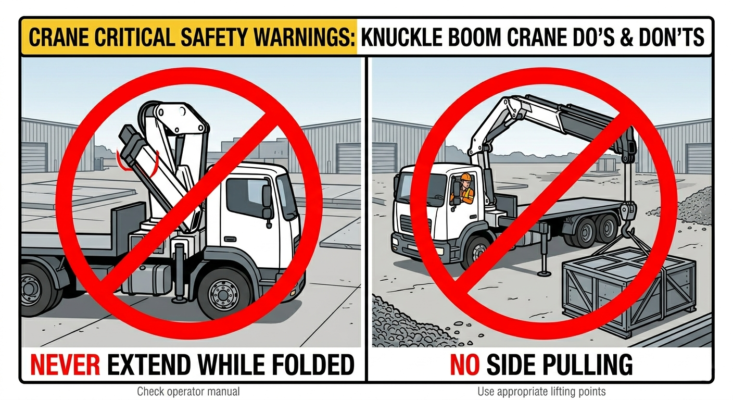
4. Unfold the boom– First, fully unfold the knuckle boom from its traveling/folded position, then perform any boom extension or retraction. Never extend the telescopic sections while the boom is still in the folded (travel) position– doing so can cause the inner boom sections to disengage from their seats, and the outer boom may suddenly drop due to the cantilever effect, resulting in serious injury.
5. Test lift– When lifting a heavy object, firstraise the load about 10 cm (4 inches) off the groundto check crane stability and brake effectiveness. Only proceed after confirming that everything is normal.
6.Formal lifting operation
The boom angle should not be less than 30°.
Operate smoothly – avoid sudden starts or stops.
When operating the slewing or luffing valve, move it slowly. Do not drag objects that are outside the crane’s working range.
Never pull or lift obliquely (side pull).
When operating at or near full capacity, avoid performing two or more movements simultaneously (e.g., slewing while extending).
7.Work zone safety– During operation, no one is allowed to stand under the boom or the suspended load. If anyone gives an emergency stop signal, the operator must stop immediately and only resume work after the unsafe condition has been eliminated.
IV. Post‑Operation Shutdown
After finishing the work, follow these steps:
Retract the hydraulic cylinders as far as possible. Apply grease to any portions that cannot be retracted.
Stow the hook and boom in their designated transport positions.
Return all control levers to the neutral position.
Turn off the hydraulic pump and cut off the power supply.
Retract the outriggers.
Disengage the PTO.
V. Key Safety Precautions
A. The “Ten No‑Lift” Rules
According to industry standards, lifting isstrictly prohibitedin the following situations:
Overloadingor when the weight of the load is unknown.
Unclear or incorrect hand signalsfrom the signal person.
The load isnot securely or evenly riggedand may slip.
There arepeople or loose objectson the load.
The crane hasstructural or component defectsthat affect safe operation.
The load isburied,and the required pulling force is unknown.
Side pulling or oblique lifting.
The work area isdark or poorly lit, making it impossible to see the load, the work area, or hand signals.
Sharp edgeson the load are not padded between the load and the slings.
The container formolten metalis overfilled (for foundry applications).
B. Strictly Forbidden Actions
Never exceed the crane’s rated capacity (overload).
Never extend the boom while it is carrying a heavy load.
Never operate across a slope, and never swing the boom downhill on a slope.
Never perform repairs or adjustments while the crane is lifting a load.
Never change the control lever direction before the boom movement has stopped safely.
Never perform heavy lifts with the outriggers not fully extended or on unstable ground.
C. Environmental Limitations
When working at maximum boom length, wind speed must not exceedBeaufort force 5 (about 40 km/h or 25 mph).
When wind speed exceeds20 mph (32 km/h), adjust the operation or stop working altogether.
Maintain a minimum safe distance of at least20 wāwae (about 6 mika)from overhead power lines.
No lifting over the front of the crane– the load’s center of gravity must not cross the line between the slewing ring center and the front outrigger ground contact points.
VI. Routine Maintenance
Hydraulic system– Regularly check the hydraulic oil level and quality. Replace or top up if the oil is degraded or low. Always thoroughly clean the hydraulic system before replacing the oil.
Lubrication– Regularly lubricate the knuckle joints, bearings, slewing ring, and other moving parts. Proper lubrication can extend equipment life by two to three times. Grease points such as the boom pivot pins, slewing gearbox, and cylinder pivot points should be greasedevery 2 i 4 months.
Structural inspection– Weekly or monthly, inspect structural components for cracks or deformation. Repair or replace any damaged parts immediately.
Electrical system– Regularly check cables, the control panel, and other electrical components.
Wire rope– Never operate the crane if the wire rope is damaged to the point of reaching the discard criteria. Always keep at least three wraps of wire rope on the winch drum.
Hōʻaʻakeʻa
A knuckle boom craneis a flexible and efficient lifting device. Safe operation depends on four key elements: licensed operators, thorough inspections, correct procedures, and timely maintenance. Operators must always put safety first, strictly follow the operating rules, and never take chances. This guide is for reference only – always refer to themanufacturer’s manualfor the specific equipment you are using.