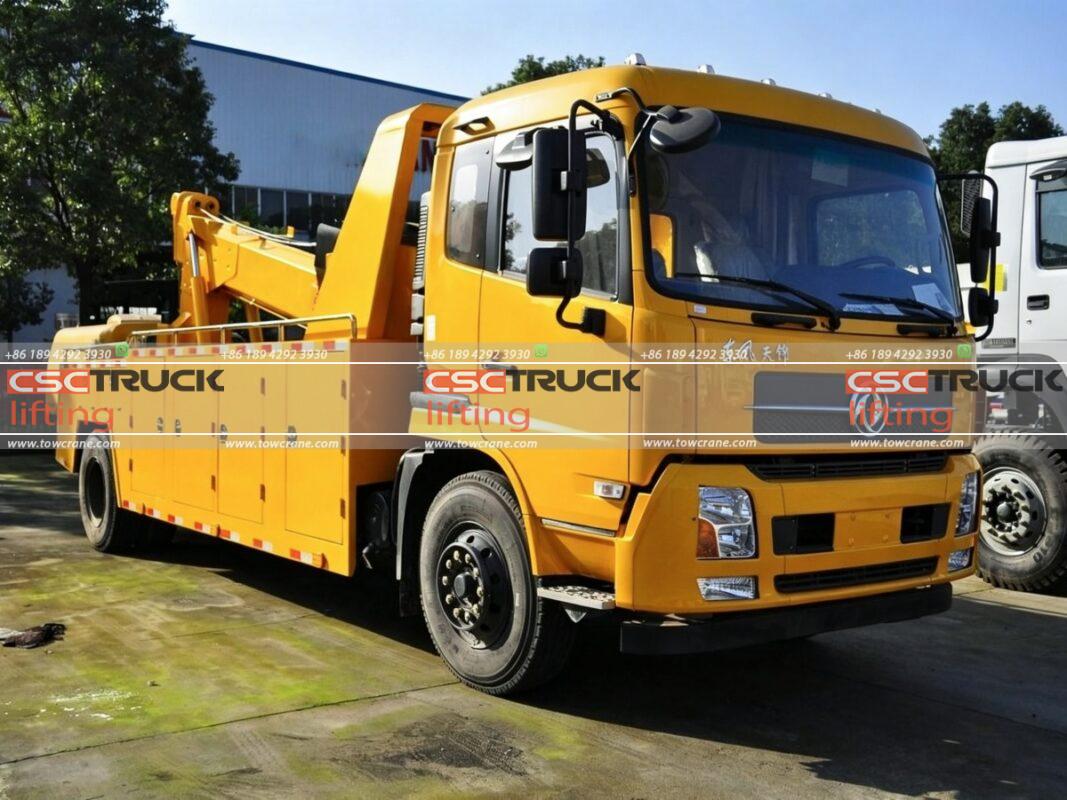
Recovering a heavily damaged truck, bus, trailer, or other commercial vehicle is very different from towing a passenger car. The vehicle may be extremely heavy, difficult to access, badly damaged, or positioned in a way that makes conventional towing equipment impractical.
This is where an Integrated Tow Truck becomes particularly valuable. By combining the recovery boom, wheel-lift system, winches, hydraulic equipment, and heavy-duty chassis into one purpose-built vehicle, an integrated wrecker can provide the pulling force and stability needed for demanding recovery operations.
What Is an Integrated Tow Truck?
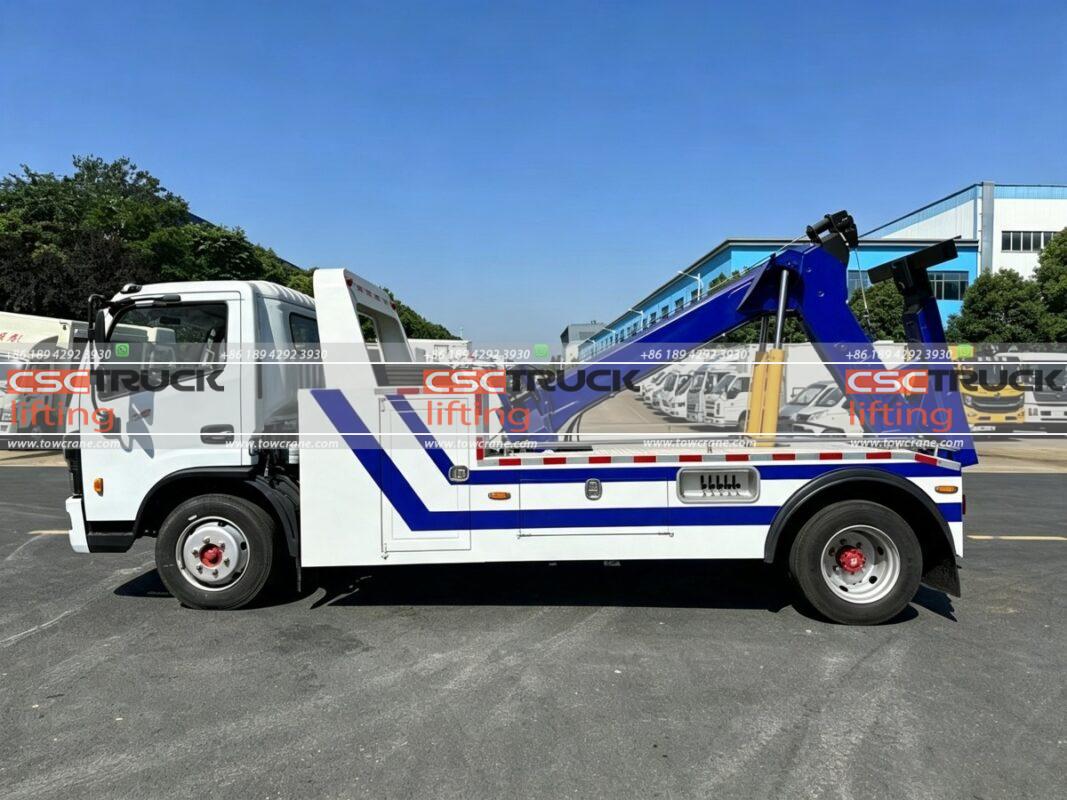
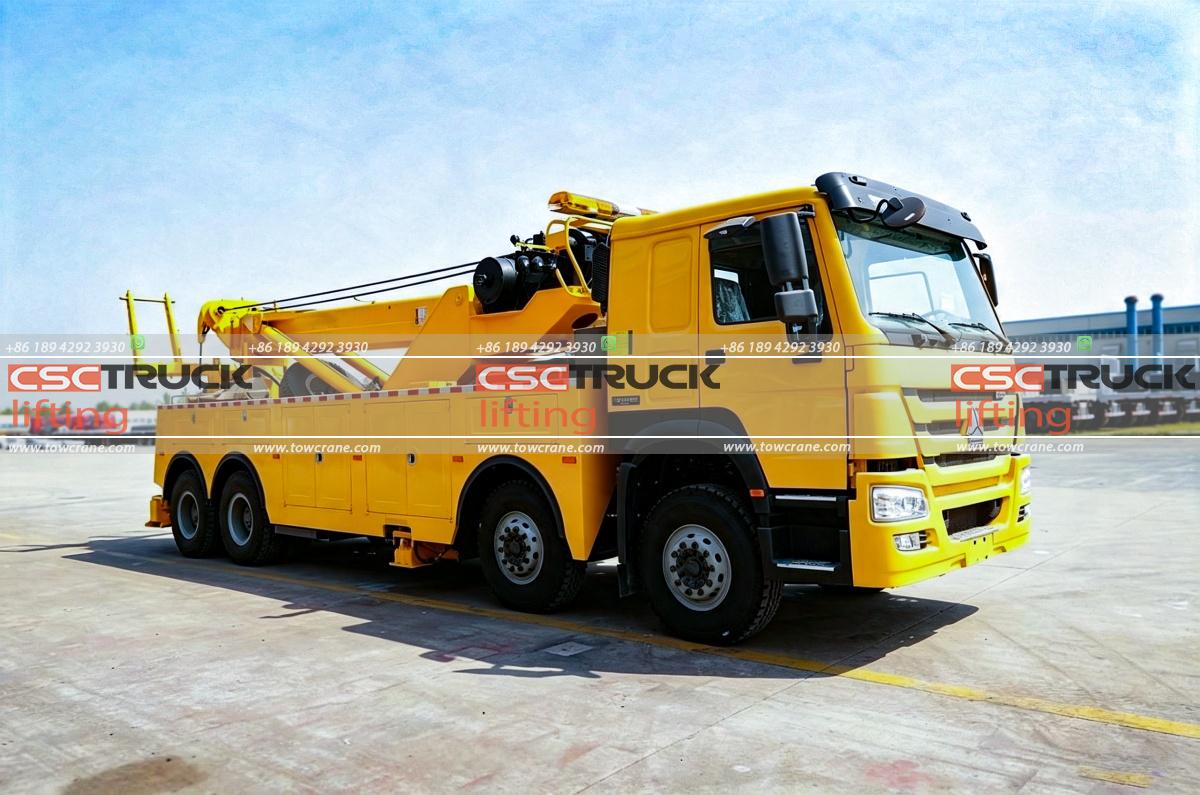
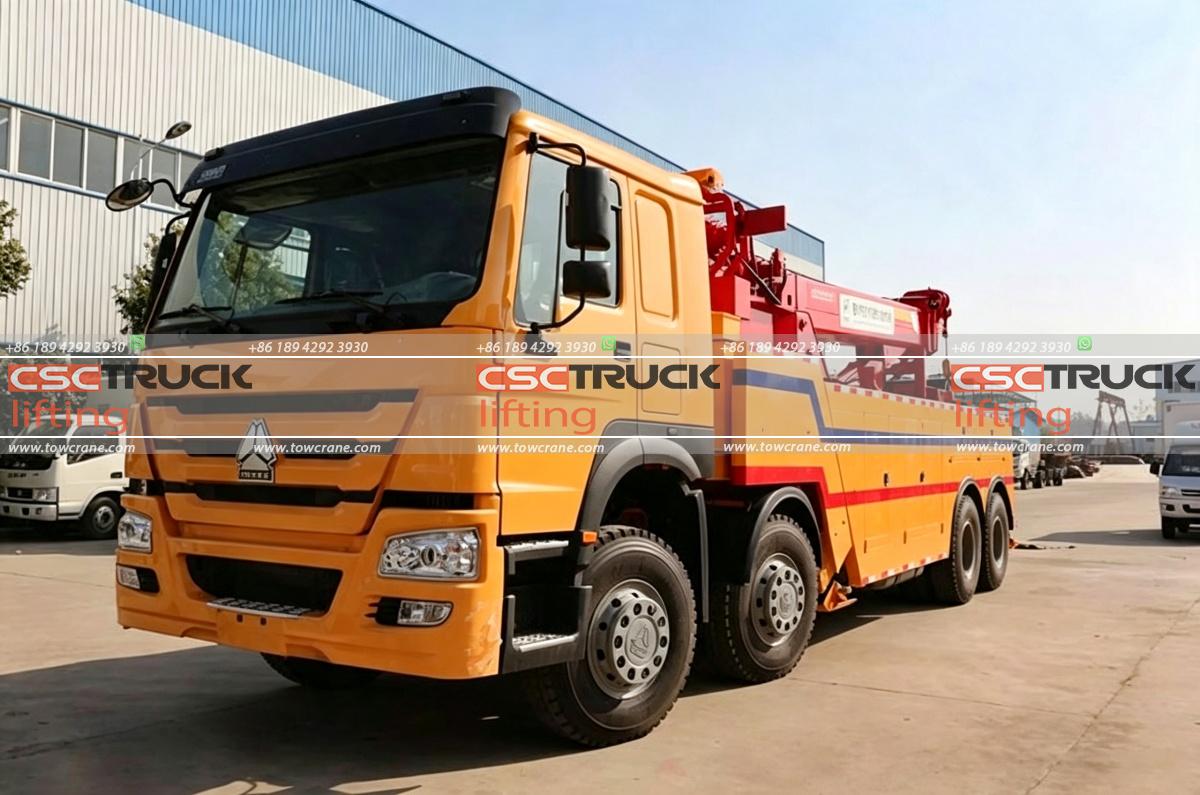
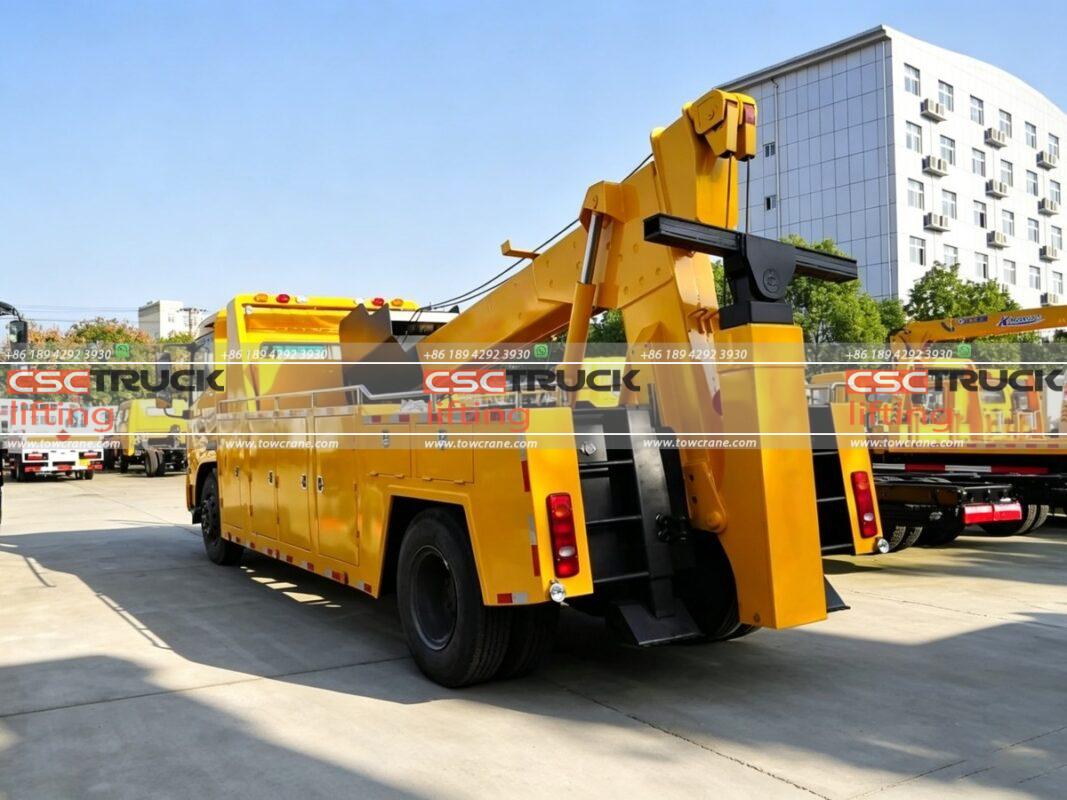
An Integrated Tow Truck, also called an integrated wrecker or integrated recovery truck, combines the towing and lifting equipment into a single superstructure mounted directly on a heavy-duty truck chassis.
Unlike a basic tow truck that may primarily use a wheel lift or a simple boom, an integrated tow truck is designed for significantly heavier vehicles and more complex recovery situations.
A typical heavy-duty configuration may include:
Heavy-duty recovery boom
Hydraulic wheel-lift system
One or more high-capacity winches
Hydraulic controls
Stabilizing equipment
Heavy-duty towing attachments
Reinforced recovery frame
High-capacity truck chassis
The exact configuration depends on the required towing capacity, lifting capacity, winch capacity, and operating conditions.
Why Heavy Recovery Jobs Are More Difficult
The biggest challenge in heavy vehicle recovery is simply weight. A fully loaded tractor-trailer can weigh many times more than a passenger vehicle.
However, weight is not the only factor.
A commercial vehicle may be overturned, stuck in mud, positioned on an embankment, or damaged after a collision. Its wheels may no longer rotate, and the vehicle may not be able to provide any assistance during the recovery.
In these situations, the recovery truck must generate sufficient pulling force while maintaining stability.
The operator also needs to consider the vehicle’s position, ground conditions, available anchoring points, and the safest recovery direction.
High-Capacity Winches Provide the Pulling Force
One of the most important components of an Integrated Heavy-Duty Tow Truck is its winch system.
Heavy recovery trucks can be equipped with one or multiple high-capacity winches. These winches provide the pulling force required to move disabled vehicles that cannot be driven or rolled normally.
For example, if a loaded truck has left the roadway and become stuck in soft ground, the recovery operator can position the recovery vehicle at a suitable location and deploy the winch cable toward the disabled vehicle.
The cable is connected to an appropriate recovery point, and hydraulic power is used to pull the vehicle gradually toward a safer position.
Winch capacity should not be confused with the total towing capacity of the recovery truck. Actual recovery requirements depend on factors such as ground resistance, slope, vehicle weight, cable angle, and whether the recovered vehicle can roll freely.
The Recovery Boom Adds Lifting Capability
The boom is another critical part of an integrated recovery system.
A hydraulic recovery boom can lift or partially support the front or rear of a disabled vehicle, allowing operators to reposition it for towing.
This is especially useful when the recovered vehicle has damaged wheels, steering components, suspension, or axles.
Instead of attempting to pull the entire vehicle with its damaged wheels carrying the load, the boom and wheel-lift can support the affected end while the recovery truck moves it.
The boom can also assist with recovering vehicles from difficult positions where direct towing is not practical.
Wheel Lift for Controlled Towing
The wheel-lift system allows an integrated tow truck to lift the axle or wheels of a disabled vehicle and tow it behind the recovery truck.
For heavy commercial vehicles, the wheel lift must be designed to handle substantial loads.
When properly configured, it provides a more controlled connection between the recovery truck and the disabled vehicle. The recovery operator can select the appropriate towing attachment according to the vehicle type and recovery situation.
Wheel lifting is particularly useful when the recovered vehicle can still roll but cannot be driven because of engine, transmission, steering, or other mechanical problems.
Heavy-Duty Chassis Provides the Foundation
The recovery superstructure can only perform effectively if it is mounted on a suitable chassis.
A heavy-duty Integrated Tow Truck normally uses a reinforced commercial truck chassis with sufficient gross vehicle weight rating, engine output, axle capacity, and braking performance.
The chassis provides the foundation for the boom, winches, hydraulic system, and towing equipment. It also needs to maintain sufficient stability when the recovery equipment is under load.
Engine power is important because the truck may need to move both its own weight and the recovered vehicle. However, recovery performance depends on more than horsepower alone.
Transmission, axle configuration, wheelbase, tires, frame strength, and traction all influence the vehicle’s ability to perform heavy recovery work.
How Stabilization Supports Heavy Recovery
When a recovery boom or winch is operating under heavy load, stability becomes a major consideration.
Depending on the vehicle design, integrated recovery trucks may use stabilizing equipment to increase support during lifting and pulling operations.
Stabilizers help distribute forces and reduce unwanted movement while the recovery equipment is being used.
Proper positioning is equally important. Operators need to consider the ground surface, slope, recovery angle, and position of the disabled vehicle before applying significant pulling or lifting force.
Heavy recovery should never rely simply on maximum equipment capacity. The recovery plan needs to account for the actual forces generated during the operation.
Recovering Vehicles in Different Situations
One advantage of an integrated recovery truck is its ability to handle different types of heavy recovery scenarios.
For a disabled tractor-trailer on a highway, the truck may use the wheel lift or boom to connect the vehicle and tow it to a safe location.
For a vehicle stuck in soft ground, the winch can provide controlled pulling force while the recovery truck maintains a suitable position.
For an overturned commercial vehicle, the recovery process may involve multiple stages, including winching, stabilization, lifting, and repositioning before the vehicle can be safely transported.
For a damaged bus or heavy truck, the boom and wheel-lift can help support damaged sections while the vehicle is moved.
Each situation requires different equipment combinations and recovery techniques.
Why Integrated Design Matters
The major advantage of an integrated recovery truck is that multiple recovery functions are combined into one vehicle.
A single truck can provide winching, lifting, towing, and vehicle positioning capabilities without requiring several separate recovery machines for every job.
This can be especially valuable for professional towing companies, highway recovery contractors, municipal emergency services, and fleet operators responsible for heavy commercial vehicles.
The integrated design also allows the recovery equipment to be engineered as part of the vehicle rather than treating each component as an independent attachment.
This can improve overall coordination between the chassis, hydraulic system, boom, winches, and towing equipment.
Choosing the Right Integrated Tow Truck
Not every heavy recovery operation requires the same configuration. Selecting an Integrated Tow Truck should begin with the type and weight of vehicles that the recovery company expects to handle.
Important specifications include towing capacity, boom lifting capacity, winch capacity, boom reach, wheel-lift capacity, chassis configuration, engine power, and axle ratings.
For operations involving heavy trucks and buses, a 4×2 configuration may be sufficient in some conditions, while demanding off-road or difficult-terrain recovery may require a 6×4 or 8×4 chassis.
The working environment should also be considered. Highway recovery, construction-site recovery, mining operations, and off-road vehicle recovery can require very different equipment configurations.
CSCTRUCK Heavy-Duty Integrated Tow Truck Solutions
The heaviest recovery jobs require more than a powerful engine. They require a recovery system in which the chassis, boom, winches, wheel lift, hydraulic system, and towing equipment work together as one platform.
CSCTRUCK Towcrane provides heavy-duty Integrated Tow Trucks designed for commercial vehicle recovery, accident recovery, highway rescue, fleet support, and demanding towing applications. Configurations can be customized according to towing capacity, winch configuration, boom capacity, chassis, axle arrangement, and operating environment.
If you are looking for an tow truck for vehicle recovery, contact us to discuss the recovery capacity and configuration required for your fleet.