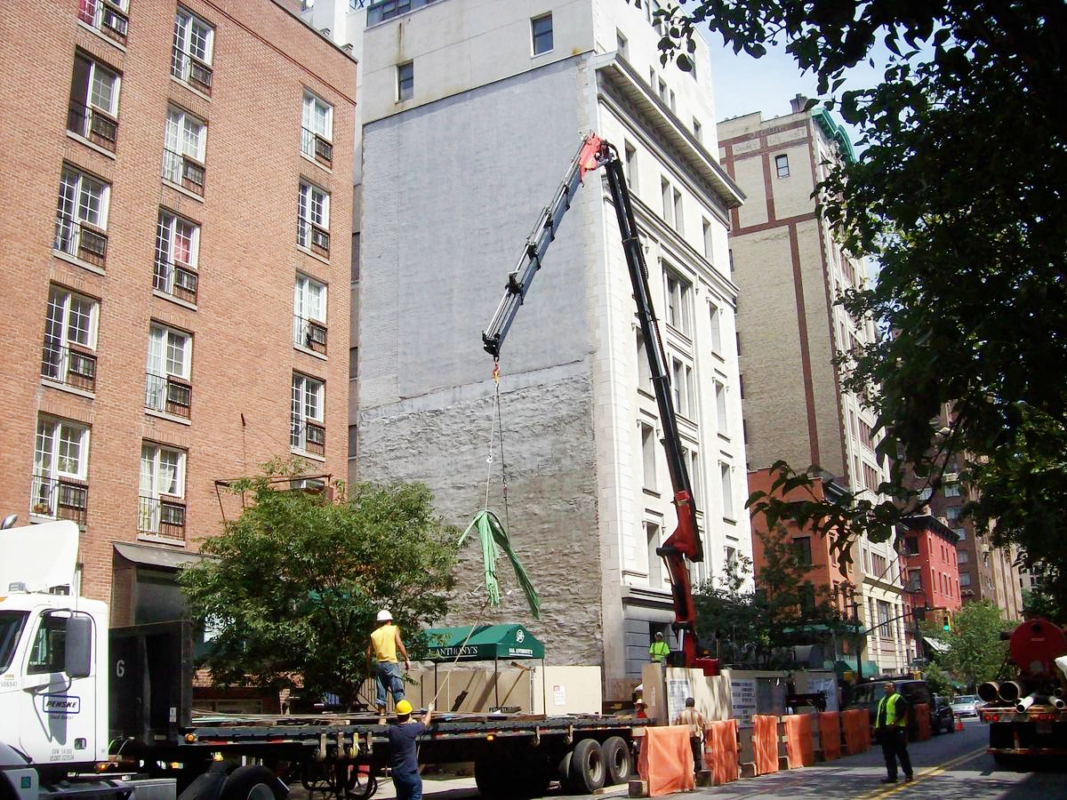
In the dense urban fabric of Bangkok, construction is often a test of precision as much as strength. Narrow alleys, tangled overhead wires, and tightly packed shophouses leave little room for traditional heavy machinery. Yet steel beams still need to be delivered, lifted, and installed. In these constrained environments, the knuckle boom crane has become one of the most valuable tools in modern urban construction.
A knuckle boom crane, also known as an articulating crane, is designed with a jointed hydraulic arm that mimics the movement of a human finger. Unlike a straight boom crane, it can fold in multiple sections, allowing it to reach into tight spaces and maneuver loads around obstacles. This flexibility makes it especially suitable for cities like Bangkok, where space is a constant limitation rather than an exception.
Imagine a steel beam delivery in a narrow Bangkok alley, locally known as a “soi.” The process begins long before the crane is even activated. A flatbed truck carries long steel beams through the city’s congested roads until it reaches the closest accessible point to the construction site. In many cases, the truck cannot enter the alley itself, so the crane becomes the bridge between the road and the site.
Once the truck is positioned, the knuckle boom crane mounted on it is deployed. Hydraulic outriggers extend outward to stabilize the vehicle. Even on uneven or restricted ground, these supports ensure the crane remains balanced during heavy lifting operations. Safety is critical, as steel beams can weigh hundreds of kilograms and must be controlled with precision.
The lifting process begins with the crane’s first joint raising the beam vertically from the truck bed. Unlike traditional cranes that require wide swinging arcs, the knuckle boom crane can lift straight up and immediately fold inward. This “elbow-like” motion allows the operator to avoid nearby walls, balconies, and overhead electrical lines that are common in Bangkok’s older neighborhoods.
As the beam is lifted, the operator carefully articulates each segment of the crane arm. The load is guided through the narrow alley, sometimes with only a few centimeters of clearance on either side. Ground workers play a crucial role, using hand signals and guide ropes to ensure the beam remains stable and aligned. Communication between the crane operator and the ground crew must be precise and constant, as even a small misalignment could result in damage to property or injury.
One of the key advantages of the knuckle boom crane in this environment is its ability to “thread” materials into spaces that would otherwise be inaccessible. Instead of relying on a long, sweeping boom, it behaves more like a robotic arm, bending and adjusting its shape in real time. This capability is particularly valuable in Bangkok, where many construction sites are surrounded by existing buildings that cannot be demolished or disturbed.
Once the steel beam reaches its destination, the final placement begins. The crane slowly lowers the beam into position, often onto temporary supports or directly onto structural columns. Workers on site make final adjustments, ensuring that the beam is aligned correctly before it is secured in place. This step marks the transition from transportation to construction, turning raw materials into part of a growing structure.
Beyond efficiency, the knuckle boom crane represents a shift in how cities adapt to spatial constraints. Instead of reshaping neighborhoods to accommodate machinery, the machinery itself adapts to the city. In places like Bangkok, where space is at a premium, this adaptability is essential for continued urban development.
As skyscrapers rise and older districts undergo renovation, the knuckle boom crane will remain a silent but essential presence in the skyline of construction activity—delivering steel beams, one narrow alley at a time.