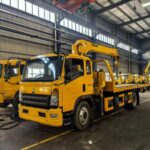
Heavy vehicle breakdowns on highways and urban roads can quickly become complex operations, especially in a country with vast distances and diverse terrain likeBrazil. Aslogistics, construction, and freight industries continue to grow, the demand for faster, safer, and more efficient vehicle recovery has led to the rise of theintegrated tow truckas a modern solution.
The Evolution of Heavy Vehicle Recovery
Traditionaltow trucksoften relied on separate equipment for lifting, towing, and stabilizing disabled vehicles. This setup required more time, multiple operators, and increased risk during recovery operations.
Theintegrated tow truckchanges this approach by combining key recovery functions into a single system. Hydraulic lifting, winching, towing arms, and stabilization mechanisms are all built into one unified platform. This integration significantly improves response time and operational efficiency.
Why Integrated Tow Trucks Matter in Brazil
Brazil’s road network includes long interstate highways, mountainous regions, and dense urban centers such as São Paulo and Rio de Janeiro. These conditions create unique challenges for vehicle recovery operations:
High traffic congestionin urban areas
Long-distance towing requirementsin rural regions
Heavy freight transport demandfrom the agriculture and mining sectors
Variable road conditions, including unpaved or uneven surfaces
Integrated tow trucks are particularly valuable in this environment because they reduce the need for multiple support vehicles and allow faster clearance of blocked roads.
Key Features of Integrated Tow Trucks
Modern integrated tow trucks used in Brazil typically include:
1. Hydraulic Recovery System
Provides controlled lifting and stabilization for heavy vehicles such as buses, trucks, and construction machinery.
2. Multi-Function Boom and Winch
Enables precise vehicle positioning and safe towing even in tight or difficult locations.
3. Reinforced Chassis Design
Built to handle high loads and ensure stability during recovery operations on uneven terrain.
4. Operator-Controlled Automation
Advanced control systems improve accuracy and reduce manual effort during complex recovery tasks.
5. Rapid Deployment Capability
Designed for emergency response teams to reduce downtime on busy highways.
Applications Across Industries
Integrated tow trucks are widely used in:
Freight and logistics recovery
Highway accident response services
Construction equipment transport recovery
Municipal roadside assistance programs
Mining and industrial site operations
In Brazil, where transportation is critical to economic activity, these vehicles play an essential role in minimizing disruptions.
The Future of Vehicle Recovery in Brazil
As infrastructure continues to develop, the role of intelligent and integrated recovery systems will expand. Future integrated tow trucks are expected to include:
Smarter digital diagnostics for vehicle assessment
Remote operation capabilities
Enhanced fuel efficiency systems
Improved safety sensors and AI-assisted positioning
These innovations will further reduce response times and improve safety for operators and drivers alike.
Conclusion
Theintegrated tow truckrepresents a significant advancement in heavy vehicle recovery technology. In Brazil’s demanding transport environment, it provides a practical, efficient, and safer solution for managing roadside emergencies. As technology continues to evolve, these systems will become even more essential in keeping Brazil’s transportation networks running smoothly.