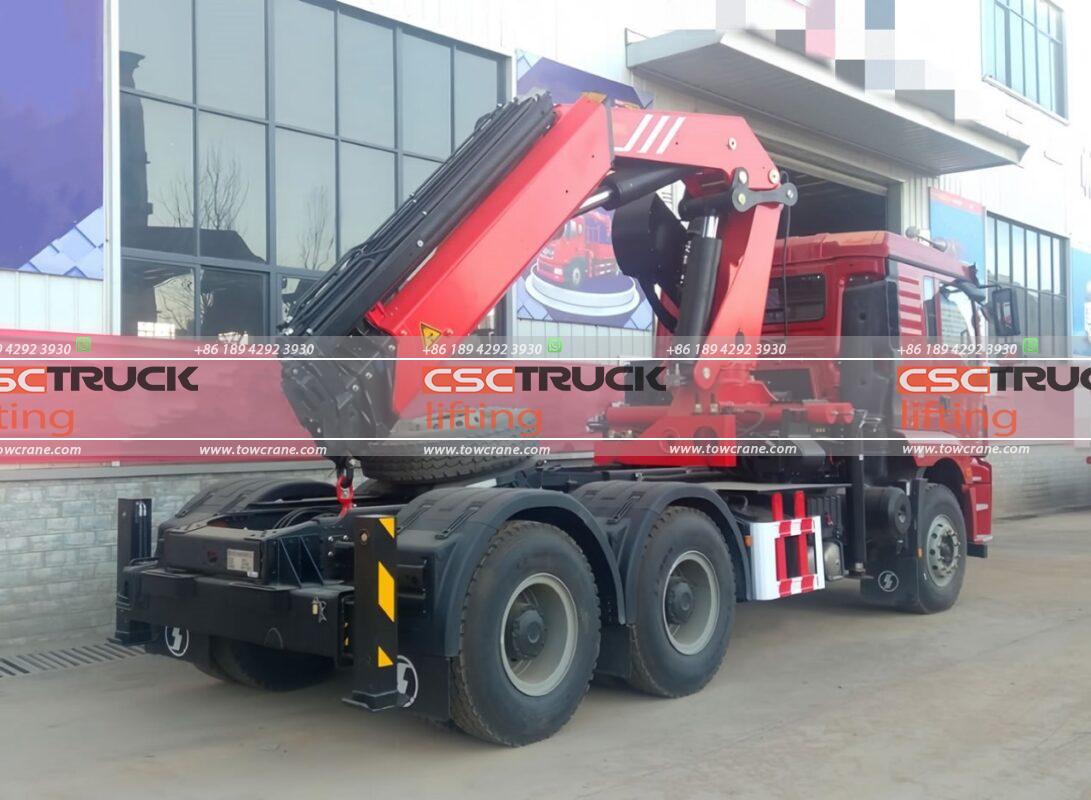
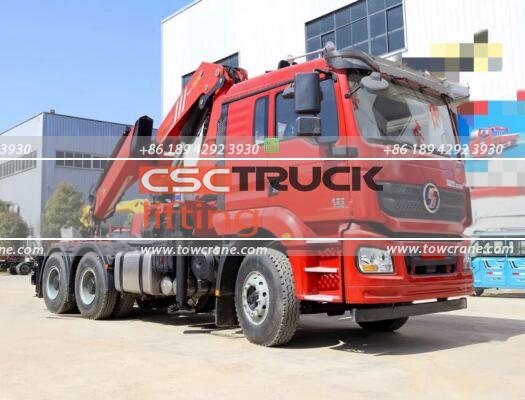
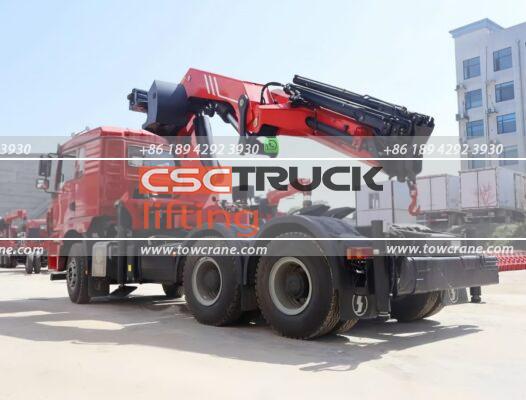
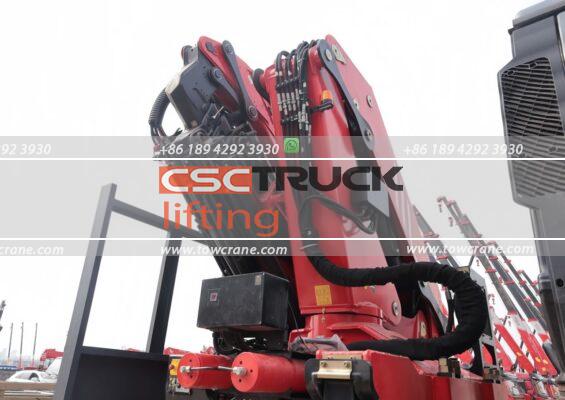
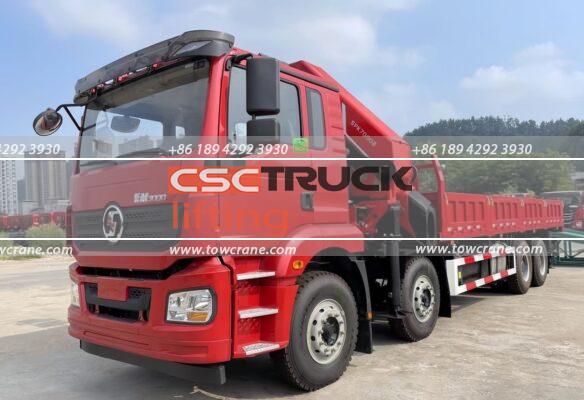
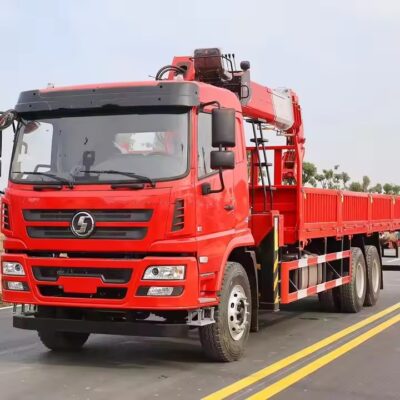
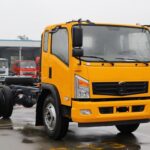
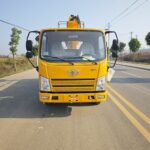
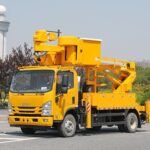
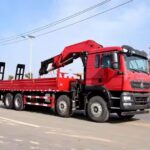
In recent years, the demand forau ʻa e lolis has been on a steady rise. As more and more people are considering purchasingau ʻa e lolis for various applications, the choice of the right equipment becomes crucial. There are numerous brands available for the chassis and upper structure ofau ʻa e lolis, and when making a selection, one can often rely on the reputation of these brands to guide the decision. Neongo ia, the cargo box of au ʻa e lolis poses a unique challenge as it typically does not come with a specific brand. So, how should one go about choosing the ideal cargo box?
The material of the cargo box of a au ʻa e loliis generally high-quality steel plate. This choice of material ensures durability and strength, capable of withstanding the rigors of transporting various loads and equipment. While the material is an important consideration, the main focus often lies in the choice of the size of the cargo box. Many users find themselves unsure of how to choose the appropriate length of the cargo box. It is essential to understand that the length of the cargo box must conform to the official vehicle announcement. Failure to do so can lead to significant difficulties in obtaining a license for the vehicle. So, what else is the length of the cargo box related to? The answer lies in the chassis and crane. Let the author explain in detail below.
Small-tonnage truck-mounted cranes:
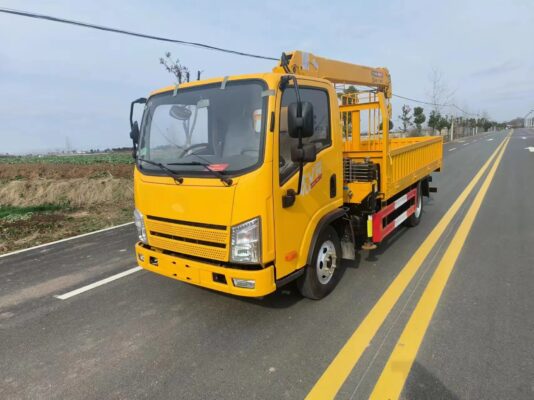
For small-tonnageau ʻa e lolis, such as 2-ton and 3-ton models, the choice of chassis is relatively limited due to their lower lifting capacities. These small-tonnage cranes typically use chassis that are relatively compact in size. The wheelbase of these chassis is generally around 3.3 mita ʻe. Hange ko ʻeni, blue-plateau ʻa e lolichassis such as Dayun Aopuli, Sinotruk Wangpai, Dongfeng Furuika, and others are commonly used for these smaller cranes.
When considering the cargo box length for these small-tonnage au ʻa e lolis, it can generally be made to be in the range of 3.4 meters to 3.6 mita ʻe. This length is suitable for the smaller chassis and provides enough space to transport smaller loads and equipment. It is important to note that even for these smaller cranes, the cargo box length must still comply with the vehicle announcement to ensure a smooth licensing process.
For instance, imagine a small construction site or a landscaping project where a 2-ton au ʻa e loliis needed. The compact size of the chassis and the appropriately sized cargo box allow for easy maneuverability in tight spaces. Ko e 3.4 to 3.6-meter cargo box length is sufficient to carry tools, small materials, and equipment needed for the job. Neongo ia, if the cargo box length is too long or too short, it can affect the balance and stability of the vehicle, as well as potentially cause issues with licensing.
4-ton and 5-ton cranes:
Forau ʻa e lolis in the 4-ton and 5-ton range, a wider variety of chassis options are available. Chassis such as Dayun Aopuli, Sinotruk HOWO, Dayun Yuntu, Dongfeng Duolika, and others are commonly used for these mid-sized cranes. The length of the cargo box for these cranes is typically between 4.3 meters and 6.1 mita ʻe.
It is important to note that installing a large crane on a small vehicle can lead to several issues. Poor stability is a significant concern as the weight and size of the crane may overwhelm the capabilities of the smaller chassis. This can result in overturning risks, especially when operating in uneven terrain or when lifting heavy loads. ʻIkai ngata ai, a mismatched combination of crane and chassis can prevent the crane from exerting its proper lifting performance. The correct sizing of the cargo box in relation to the chassis and crane is crucial to ensure safe and efficient operation.
Hange ko ʻeni, in a medium-sized construction project or industrial setting, a 4-ton or 5-ton au ʻa e lolimay be required. Ko e 4.3 to 6.1-meter cargo box length provides enough space to transport larger materials and equipment while still maintaining a reasonable balance with the crane and chassis. Neongo ia, if an improper combination is chosen, it can lead to inefficiencies, safety hazards, and potential legal issues due to non-compliance with licensing requirements.
5-ton to 8-ton cranes:
For au ʻa e lolis in the 5-ton to 8-ton range, more robust chassis are needed to handle the increased weight and lifting capacity. Chassis such as Dayun Fengjing, Dongfeng Tianjin, Foton Auman, and others can be selected for these larger cranes. The length of the cargo box for these cranes can generally be made to be in the range of 5.6 meters to 6.1 mita ʻe.
If an 8-ton crane is to be installed, additional considerations come into play. The girder of the chassis needs to be more than 280mm to provide sufficient strength and support for the heavier crane. Neongo ia, it is also crucial to ensure that the overall vehicle does not exceed the weight limits. Overweight vehicles can face significant challenges in obtaining a license and may also pose safety risks on the road.
For instance, in a large construction project or heavy-duty industrial application, a 5-ton to 8-ton au ʻa e loliwith an appropriately sized cargo box can be a valuable asset. Ko e 5.6 to 6.1-meter cargo box length allows for the transportation of larger loads and equipment, while the stronger chassis and proper girder size ensure stability and safety during operation. Neongo ia, careful consideration must be given to weight limits and licensing requirements to avoid potential problems down the line.
8-ton to 12-ton cranes:
Forau ʻa e lolis in the 8-ton to 12-ton range, even more substantial chassis are required. Chassis such as Dongfeng small three-axle, Hubei Dayun, Dongfeng D913 rear double-axle, and others can be matched with these larger cranes. At this stage, the length of the cargo box can be made to be in the range of 6.1 meters to 7.5 mita ʻe.
The increased size and weight of these cranes demand a more stable and capable chassis. The longer cargo box length provides enough space to transport larger and heavier loads, while also ensuring that the crane can be properly supported and operated. As with smaller cranes, compliance with licensing requirements is essential, and the cargo box length must be in accordance with the vehicle announcement.
Hange ko ʻeni, in large-scale construction projects or heavy industrial operations, an 8-ton to 12-ton au ʻa e loliwith a 6.1 to 7.5-meter cargo box can handle significant loads and tasks. The larger chassis and longer cargo box allow for the transportation of bulky materials and equipment, while the powerful crane can perform heavy lifting operations. Neongo ia, proper planning and selection are crucial to ensure safe and legal operation.
12-ton cranes and 16-ton cranes:
For these relatively largeau ʻa e lolis, even more robust chassis are needed. Chassis such as Shaanxi Automobile Delong front four and rear eight, Dongfeng Liuzhou Automobile, Foton Auman front four and rear eight, and others are commonly used. The length of the cargo box for these cranes can be made to be in the range of 7.5 meters to 8.4 mita ʻe.
These large cranes are typically used in major construction projects or heavy industrial applications where the transportation of extremely large and heavy loads is required. The longer cargo box length provides ample space for these large loads, while the powerful chassis ensures stability and safety during operation. As with allau ʻa e lolis, compliance with licensing requirements and proper selection of cargo box length are essential.
For instance, in large infrastructure projects or heavy-duty industrial settings, a 12-ton or 16-tonau ʻa e loliwith a 7.5 to 8.4-meter cargo box can handle massive loads and perform complex lifting operations. The large chassis and long cargo box are designed to meet the demanding requirements of these applications, but careful consideration must be given to ensure that all aspects of the vehicle are in compliance with regulations.
After reading these details, you should have a better understanding of how to choose the cargo box of a au ʻa e loli. There are many pictures of truck-mounted cranes onCSCTRUCK, which can serve as valuable references. By carefully considering the size and capacity requirements of the crane, the characteristics of the chassis, and compliance with licensing regulations, you can make an informed decision and select the cargo box that best suits your needs. Whether it’s a small project or a large-scale operation, choosing the right cargo box is crucial for the efficient and safe operation of your au ʻa e loli.