When a vehicle breaks down or is involved in an accident, the right recovery equipment can make a major difference. A small passenger car, a disabled truck, and an overturned tractor-trailer do not require the same type of towing equipment. This is why the wrecker truck market includes several different configurations.
Although these vehicles all perform towing or recovery work, they use different methods to lift, pull, load, or transport vehicles. The main types include Integrated Tow Trucks, Pickup Tow Trucks, Flatbed Tow Trucks, Rotator Tow Trucks, and Tow Trucks with Cranes.
Each configuration has its own strengths. Understanding how they differ can help towing companies, fleet operators, contractors, and municipal departments choose a recovery vehicle that matches their actual working requirements.
What Is a Wrecker Truck?
A wrecker truck is a specialized recovery vehicle designed to move vehicles that are damaged, disabled, stuck, or unable to travel normally.
Depending on its configuration, a wrecker may use a winch, hydraulic boom, wheel lift, flatbed platform, or truck-mounted crane to recover a vehicle.
The recovery process generally involves three basic tasks: lifting or pulling the vehicle, securing it, and transporting it to another location. Different wrecker configurations are designed to perform these tasks in different ways.
For example, a flatbed loads the entire vehicle onto a platform, while a rotator can use a rotating boom to lift and reposition a heavy vehicle from a difficult angle.
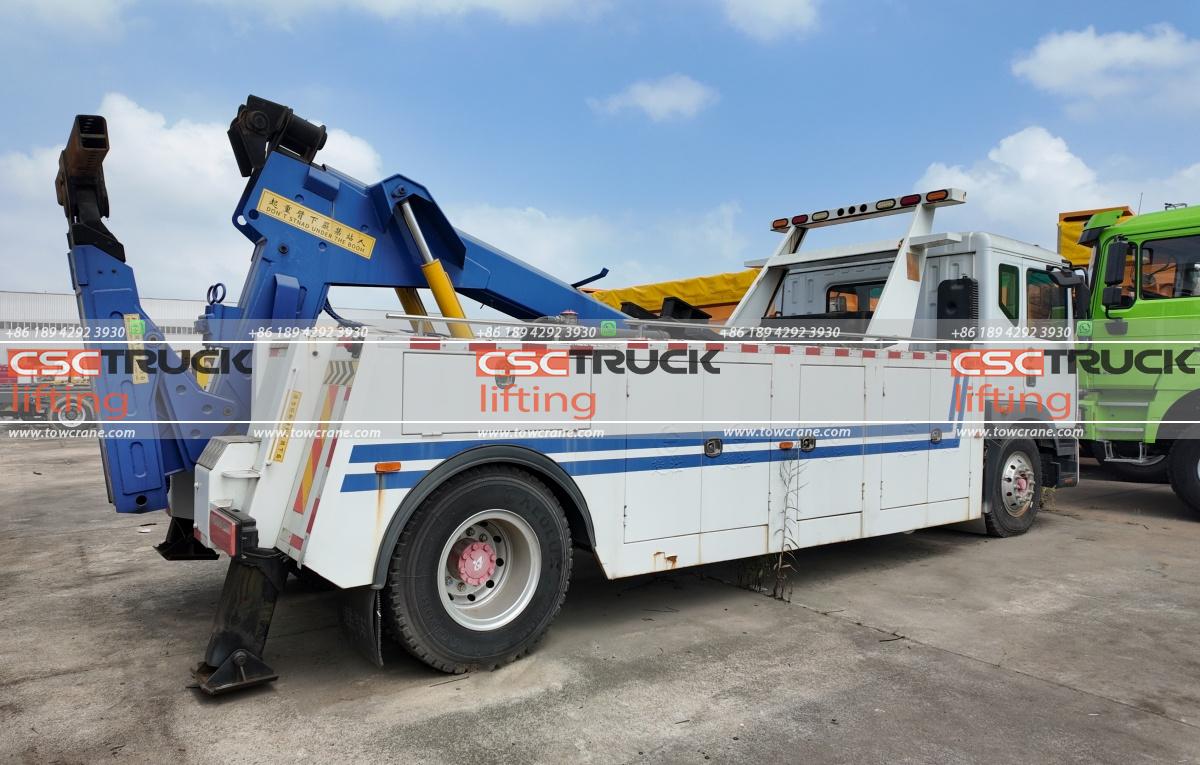
An Integrated Tow Truck is designed with the towing and recovery equipment built directly into the truck’s superstructure. This creates a compact and powerful recovery system, making it particularly suitable for commercial and heavy-duty towing.
How it works:
The truck typically uses a hydraulic boom and winch to pull or lift the disabled vehicle. A wheel-lift system can then support the vehicle for towing. Hydraulic controls allow the operator to adjust the recovery equipment according to the vehicle’s position and weight.
Main characteristics:
The integrated design provides a strong connection between the recovery equipment and chassis. It can deliver substantial towing and recovery capacity while keeping the equipment relatively compact.
Typical applications:
Integrated tow trucks are commonly used for trucks, buses, trailers, and other commercial vehicles. They are particularly useful for highway recovery and professional towing operations where stronger recovery capability is required.
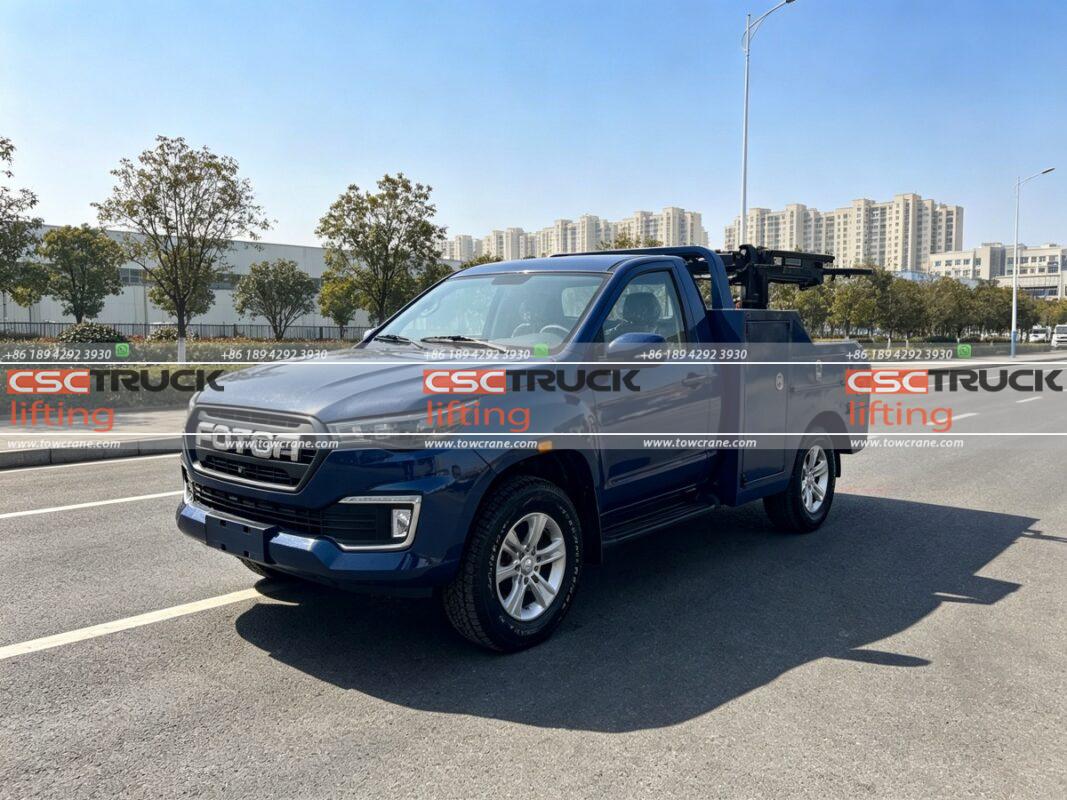
A Pickup Tow Truck is a light-duty recovery vehicle built on a pickup truck chassis. Its compact design makes it suitable for quick roadside assistance and light vehicle recovery.
How it works:
Depending on the configuration, the truck can use a winch, wheel lift, or compact towing device to lift and tow a vehicle. The recovered vehicle is generally supported by the towing equipment rather than loaded completely onto the truck.
Main characteristics:
The biggest advantage is maneuverability. A pickup tow truck can easily operate in narrow streets, parking areas, residential neighborhoods, and congested urban environments.
Its smaller chassis also generally means lower operating costs compared with larger recovery trucks.
Typical applications:
Pickup tow trucks are mainly used for passenger cars, SUVs, pickup trucks, and light commercial vehicles. They are a practical choice for roadside breakdowns, vehicle transportation, and everyday towing services.
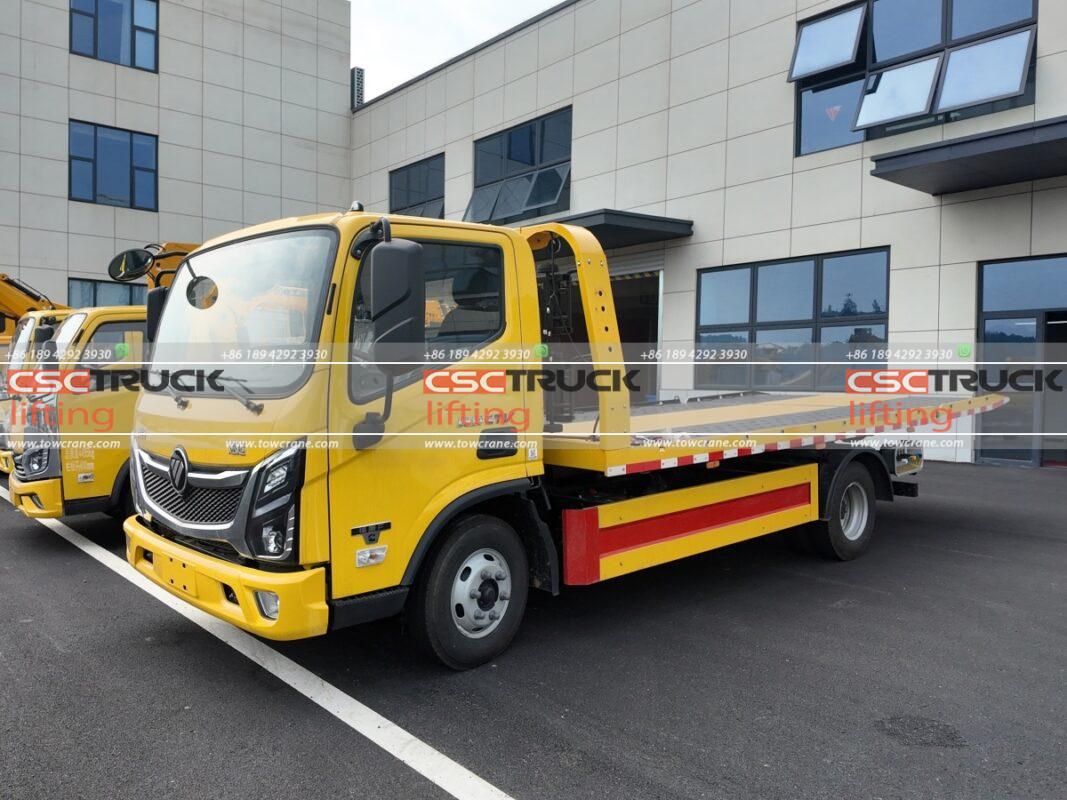
A Flatbed Tow Truck uses a flat loading platform to transport the entire recovered vehicle. It is also commonly known as a rollback tow truck.
How it works:
The flatbed platform can tilt or slide backward using a hydraulic system. The operator lowers the platform, connects the winch cable to the disabled vehicle, and pulls the vehicle onto the platform. After loading, the platform returns to its transport position.
Main characteristics:
Unlike a conventional wheel-lift system, a flatbed carries all four wheels of the recovered vehicle off the road. This reduces contact between the vehicle and the road during transportation and is particularly useful when the vehicle cannot drive normally.
Typical applications:
Flatbed tow trucks are widely used for accident-damaged vehicles, broken-down cars, SUVs, luxury vehicles, and light commercial vehicles.
They are especially suitable when preventing additional vehicle damage during transportation is a priority.
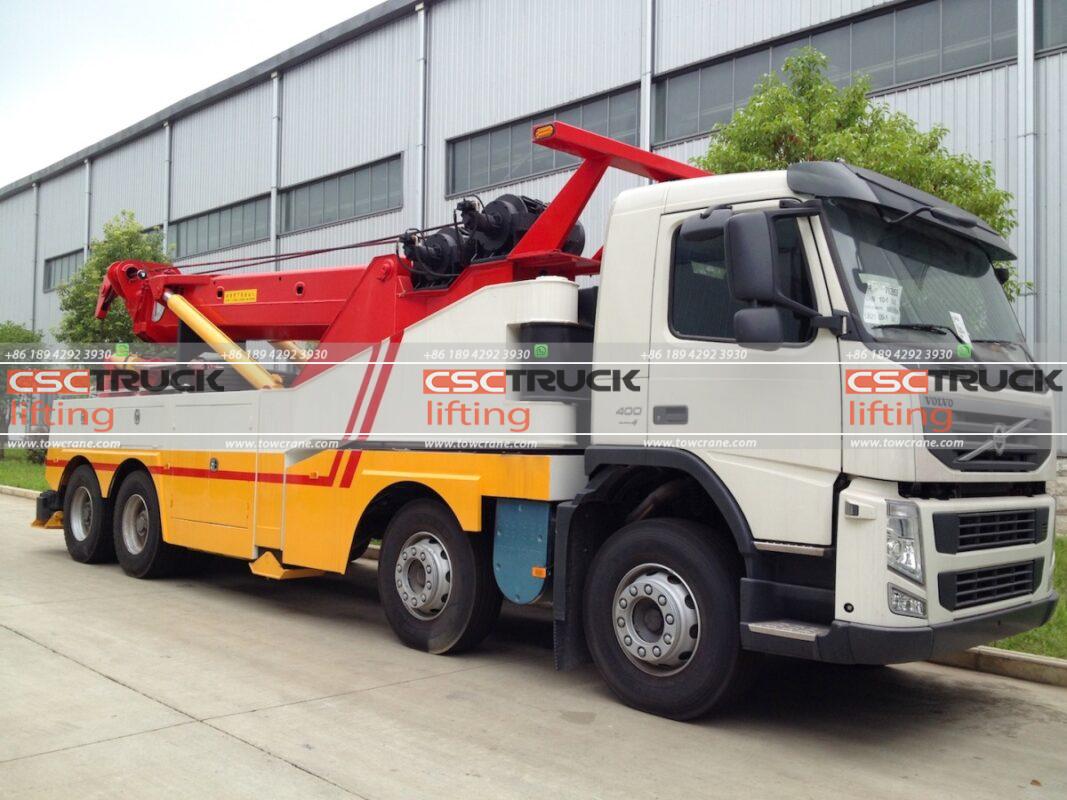
A Rotator Tow Truck is designed for complex and heavy-duty vehicle recovery. Its most important feature is a hydraulic boom that can rotate around the truck.
How it works:
After the truck is stabilized with its outriggers or stabilizer legs, the operator positions the rotating boom toward the recovery target. Hydraulic winches and lifting equipment are then used to pull, lift, or reposition the vehicle.
Because the boom can rotate, the operator does not always need to position the entire truck directly in line with the disabled vehicle.
Main characteristics:
The major advantage of a rotator is recovery flexibility. It can provide lifting and pulling forces from different directions, which is especially valuable when the vehicle is not in a normal towing position.
Typical applications:
Rotator tow trucks are mainly used for overturned trucks, tractor-trailers, vehicles in ditches, highway accidents, and other complex heavy-duty recovery operations.
For professional recovery companies, a rotator can handle situations that may be difficult or impossible for a conventional tow truck.
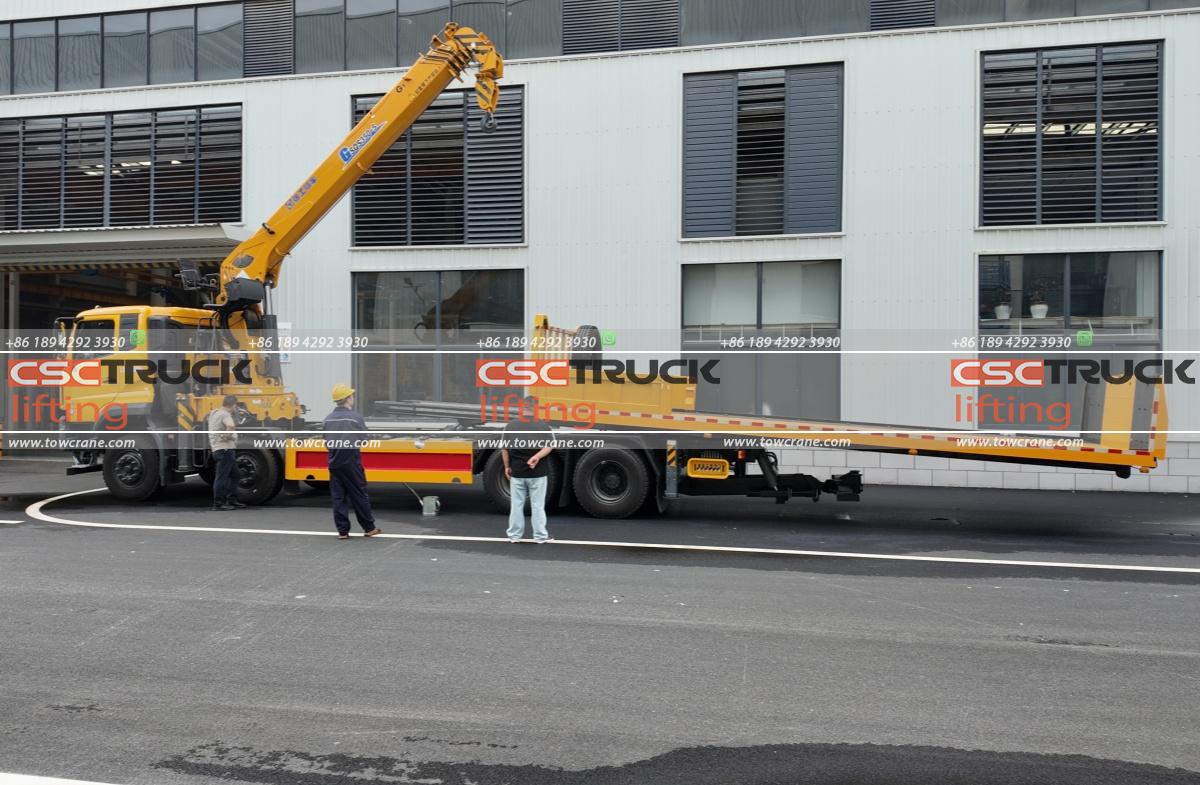
A Tow Truck with Crane combines vehicle recovery with material lifting and loading.
How it works:
The truck is equipped with a truck-mounted crane, such as a knuckle boom crane or telescopic crane. The crane can lift equipment or materials, while the towing system can recover and transport disabled vehicles.
Main characteristics:
Its biggest advantage is multifunctionality. Instead of using one vehicle for towing and another vehicle for lifting, a tow truck with a crane can perform both tasks.
The crane can also provide greater flexibility when loading machinery or equipment that cannot be moved onto the truck using a conventional loading method.
Typical applications:
These trucks are suitable for construction sites, industrial operations, logistics, equipment transportation, and vehicle recovery.
They are particularly valuable for companies that need both towing and lifting capabilities in their daily operations.
What Is the Difference Between These Wrecker Trucks?
The five configurations mainly differ in how they recover and transport vehicles.
Wrecker Type
Recovery Method
Best Application
Integrated Tow Truck
Boom + winch + wheel lift
Commercial and heavy vehicles
Pickup Tow Truck
Light towing equipment
Cars and light vehicles
Flatbed Tow Truck
Full-platform loading
Damaged and non-running vehicles
Rotator Tow Truck
Rotating boom + winches
Complex heavy recovery
Tow Truck with Crane
Crane + towing equipment
Towing + lifting operations
The differences become clearer when looking at the type of work each truck is designed to perform.
If the priority is light-duty roadside assistance, a pickup tow truck provides the necessary mobility. If the vehicle needs to be completely lifted off the road for transportation, a flatbed is usually more appropriate.
For commercial vehicle recovery, an integrated tow truck provides stronger towing equipment. When the recovery is more complicated, such as an overturned truck or a vehicle stuck in a ditch, a rotator offers greater flexibility.
If the operation also involves lifting machinery or materials, a tow truck with a crane provides an additional function beyond conventional vehicle recovery.
How to Choose the Right Wrecker Truck?
Choosing the right wrecker truck should start with the recovery job rather than the truck itself.
First, consider the type and weight of vehicles you need to recover. Passenger cars require much less capacity than buses, tractor-trailers, or construction trucks.
Next, consider the recovery environment. Urban roadside towing may require a compact vehicle, while highway accident recovery may require a heavy-duty truck with stronger winches and lifting equipment.
You should also consider the required towing capacity, winch capacity, boom capacity, working radius, chassis configuration, hydraulic system, and additional equipment.
For businesses handling several types of recovery jobs, a combination of different configurations may provide better coverage than relying on a single type of tow truck.
The different types of wrecker trucks are not simply different versions of the same vehicle. Each configuration is designed around a specific recovery method.
By understanding these differences, operators can choose a wrecker truck that provides the right combination of capacity, mobility, recovery flexibility, and functionality for their specific operation.