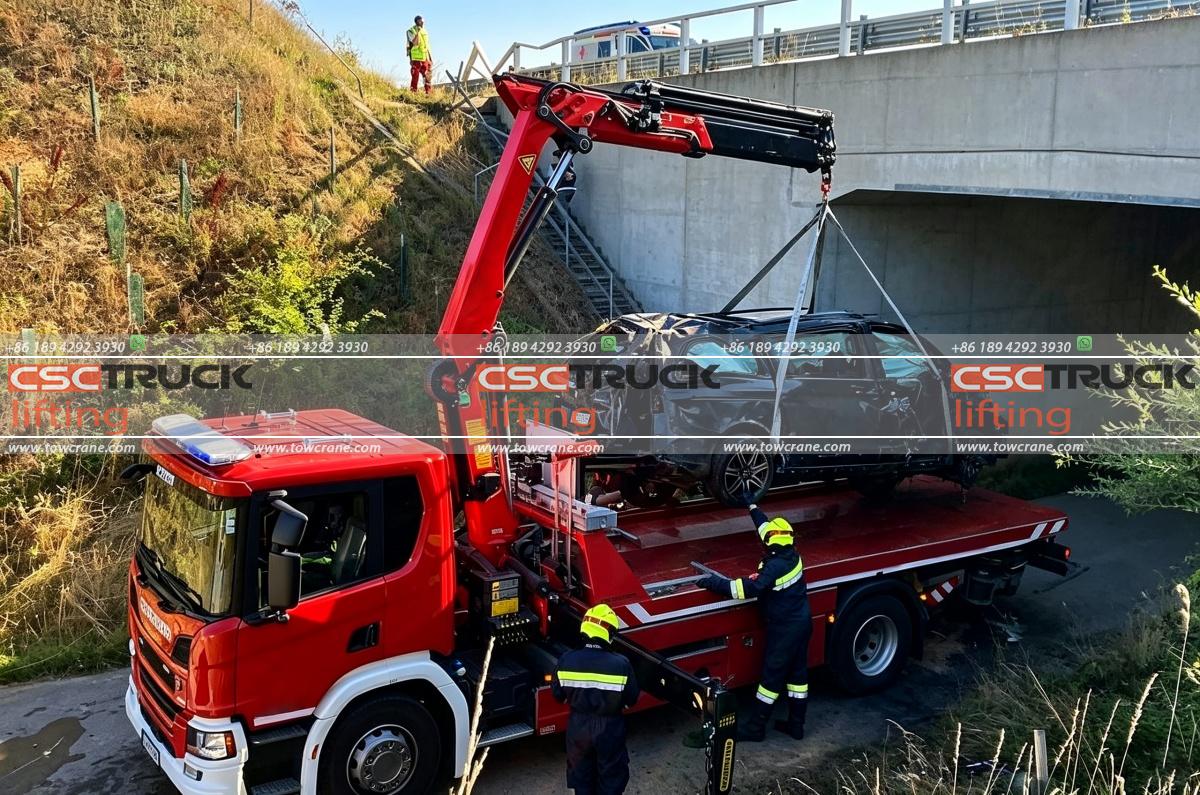
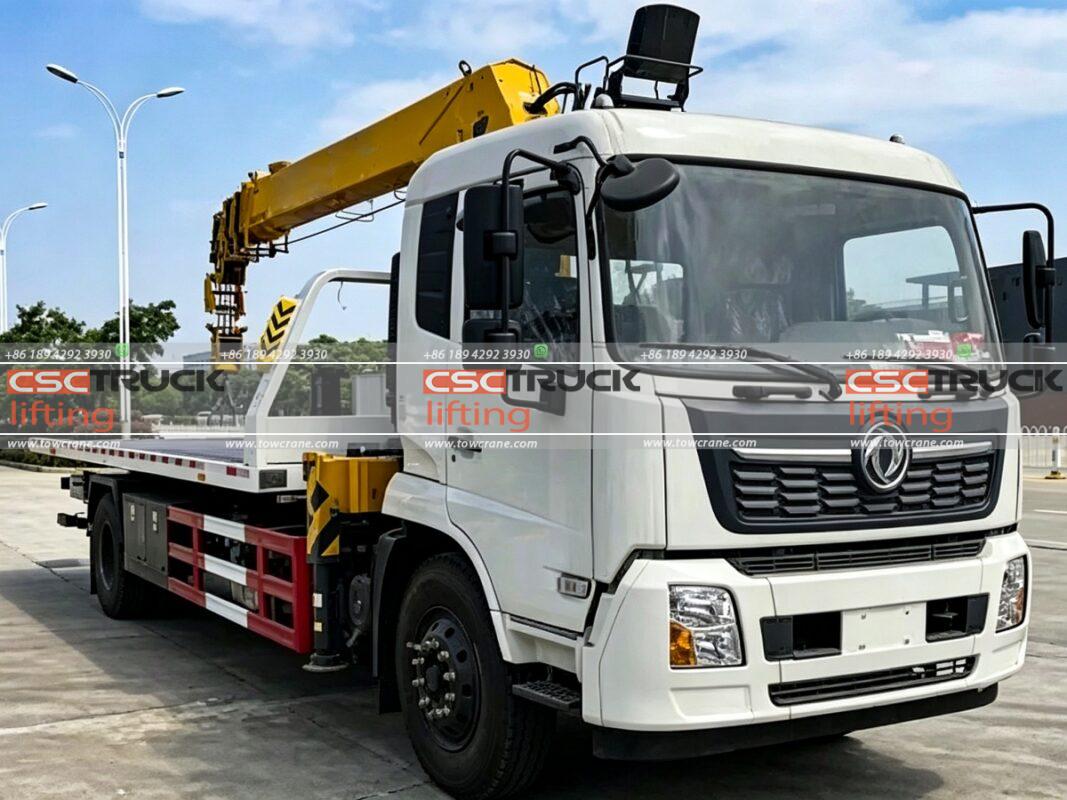
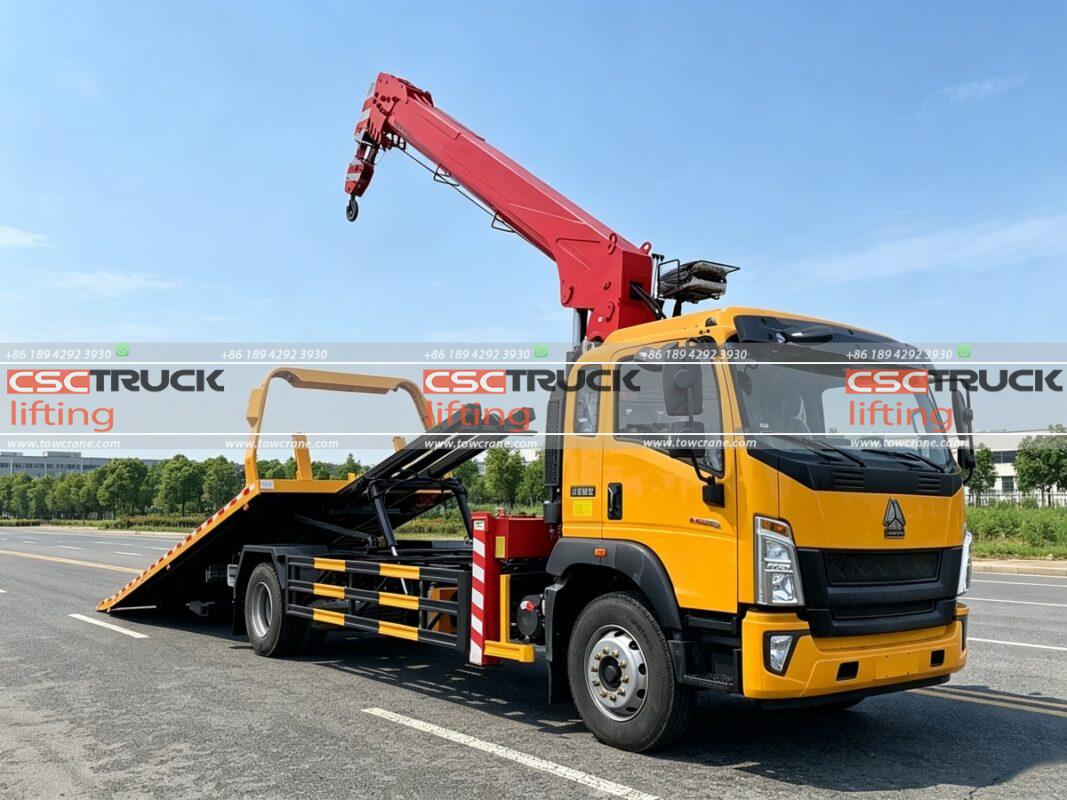
A Tow Truck with Crane is a versatile recovery vehicle that combines vehicle towing, lifting, and cargo-handling capabilities on one truck. Unlike a conventional tow truck that mainly focuses on pulling or transporting disabled vehicles, a crane-equipped tow truck can use its lifting equipment to recover vehicles, machinery, and heavy objects that cannot be moved easily by towing alone.
The overall performance of a Crane Tow Truck depends on how its chassis, crane, winch, hydraulic system, towing equipment, and stabilization components work together. Understanding these major components makes it easier to select the right truck for vehicle recovery, construction, industrial maintenance, and roadside assistance.
1. Truck Chassis
The truck chassis is the foundation of a Tow Truck with Crane. It supports the cab, engine, recovery body, crane, hydraulic equipment, and the load being transported.
The chassis needs to provide sufficient gross vehicle weight capacity, axle capacity, wheelbase, engine power, and structural strength for the intended application. A light-duty chassis may be suitable for passenger cars and small commercial vehicles, while medium- and heavy-duty chassis are better suited to trucks, buses, construction machinery, and industrial equipment.
Drive configuration is another important consideration. A 4×2 chassis generally provides good maneuverability for urban recovery, while 6×4 and 8×4 configurations offer greater load capacity and traction for heavy-duty applications.
2. Crane System
The crane is the defining component of a Tow Truck with Crane. It provides the lifting capability needed when a disabled vehicle cannot be recovered using a winch or towing device alone.
Depending on the truck configuration, the crane may be a knuckle boom crane, telescopic boom crane, or another hydraulic lifting system. The crane typically consists of a boom, hydraulic cylinders, lifting hook, control system, and supporting structure.
A knuckle boom crane uses articulated sections to provide flexible positioning and compact storage. A telescopic boom crane, on the other hand, uses extendable boom sections to provide greater reach.
The required crane capacity depends on the type of vehicle or equipment being recovered. Operators must consider not only the maximum lifting capacity but also the lifting capacity at different boom lengths and working radii.
3. Hydraulic System
The hydraulic system supplies the power needed to operate the crane, outriggers, winches, and other recovery equipment.
A typical hydraulic system includes a hydraulic pump, oil tank, control valves, hydraulic cylinders, hoses, filters, and related components. The pump generates hydraulic flow, while valves regulate the direction and pressure of hydraulic oil.
Hydraulic cylinders convert this pressure into mechanical movement, allowing the crane boom to raise, lower, extend, and fold.
For a recovery truck, a properly matched hydraulic system is essential because lifting heavy vehicles requires controlled movement rather than simply maximum force. Smooth hydraulic operation allows the operator to position a load more accurately and safely.
4. Winch System
The winch is another key component of a Tow Truck with Crane. While the crane provides vertical lifting, the winch provides horizontal pulling force.
A typical recovery winch consists of a hydraulic motor, drum, wire rope or synthetic rope, fairlead, and control mechanism. During recovery, the operator anchors the vehicle or equipment and uses the winch to pull it toward the truck or reposition it.
The required winch capacity depends on the vehicle weight, recovery angle, terrain, and type of operation. Heavy-duty Tow Trucks with Cranes may use one or more high-capacity winches to provide greater pulling capability.
In difficult recovery situations, the winch can work together with the crane. For example, the crane can lift one end of an overturned vehicle while the winch helps pull or reposition it.
5. Outriggers and Stabilizers
When the crane lifts a heavy load, the truck needs a stable working platform. This is the role of hydraulic outriggers or stabilizer legs.
Outriggers extend from the recovery body and transfer part of the lifting load toward the ground. By increasing the support footprint, they help reduce excessive vehicle movement and improve stability during lifting.
The size and configuration of the outriggers depend on the crane capacity and truck design. Heavy-duty recovery trucks may use multiple stabilizer legs to provide additional support when handling large vehicles or equipment.
Operators should always deploy the outriggers correctly and position them on suitable ground before performing heavy lifting operations.
6. Towing and Recovery Equipment
A Tow Truck with Crane also requires dedicated towing equipment to safely connect the recovered vehicle to the truck.
Depending on the design, this equipment may include towing forks, lifting slings, chains, wheel-lift devices, towing bars, chain hooks, and other attachment accessories.
The exact configuration depends on the type of vehicles the truck is intended to recover. Passenger vehicles require different attachment methods from heavy trucks, buses, and construction machinery.
Proper towing equipment helps distribute loads correctly and reduces the risk of damage to the recovered vehicle.
7. Recovery Body or Flatbed
Some Tow Trucks with Cranes are equipped with a recovery body or flatbed platform for transporting vehicles or equipment after recovery.
A flatbed provides a stable loading surface for vehicles that cannot be safely towed over long distances. Hydraulic cylinders may be used to tilt or move the platform during loading.
For industrial applications, the body may instead be configured as a cargo platform for transporting machinery, generators, construction equipment, or other heavy loads.
The recovery body can therefore make the truck more versatile than a vehicle designed solely for towing.
8. Crane Mounting Structure
The crane cannot simply be mounted directly onto the truck chassis. A reinforced crane mounting structure is required to distribute lifting forces throughout the vehicle.
This structure connects the crane to the chassis and helps transfer the lifting load safely. It must be designed to withstand repeated loading, vibration, torsional forces, and dynamic recovery conditions.
A properly engineered mounting structure is particularly important for heavy-duty Tow Trucks with Cranes because the crane can generate significant forces when lifting or repositioning large vehicles.
9. Control System
The control system allows operators to manage the crane, winch, hydraulic functions, and stabilizers.
Depending on the vehicle design, controls may be installed beside the crane, on both sides of the recovery body, inside the cab, or through a remote-control system.
A well-designed control system gives the operator precise control over lifting speed, boom movement, winch operation, and stabilizer deployment. This is particularly useful when recovering vehicles in confined areas or complicated accident scenes.
10. Safety and Lighting Equipment
Recovery operations often take place on highways, accident scenes, construction sites, or industrial facilities where visibility and safety are critical.
Therefore, a professional Tow Truck with Crane is commonly equipped with warning lights, work lights, reflective markings, emergency equipment, and other safety features.
Work lights illuminate the recovery area during nighttime operations, while LED warning lamps help alert approaching drivers and nearby personnel that recovery work is underway.
Additional safety equipment may include backup alarms, fire extinguishers, wheel chocks, and protective devices depending on the vehicle specification.
How These Components Work Together
The real advantage of a Tow Truck with Crane is not any single component but the way the systems work together.
For example, when recovering an overturned truck, the operator can first position the recovery vehicle and deploy the hydraulic outriggers. The crane can then connect to the vehicle using suitable chains or lifting accessories. The hydraulic system controls the boom while the winch provides additional pulling force.
Once the vehicle is returned to a stable position, the towing equipment can secure it for transportation. If the truck has a flatbed or cargo platform, the recovered vehicle or equipment can also be loaded for transport.
This combination of lifting, pulling, stabilizing, and transporting makes a crane-equipped tow truck highly useful for complex recovery operations.
Choosing the Right Tow Truck with Crane
When selecting a Tow Truck with Crane, buyers should consider more than the crane’s maximum lifting capacity. The chassis GVW, axle capacity, crane working radius, lifting capacity at extension, winch capacity, outrigger configuration, hydraulic system, and towing equipment all affect actual recovery performance.
For passenger vehicles and light commercial vehicles, a compact crane and 4×2 chassis may be sufficient. For heavy trucks, buses, trailers, and construction equipment, a larger chassis with a higher-capacity crane, stronger winch, and more robust stabilization system is generally required.
A properly matched configuration allows the truck to perform lifting and towing operations efficiently while providing the versatility needed for different recovery scenarios.