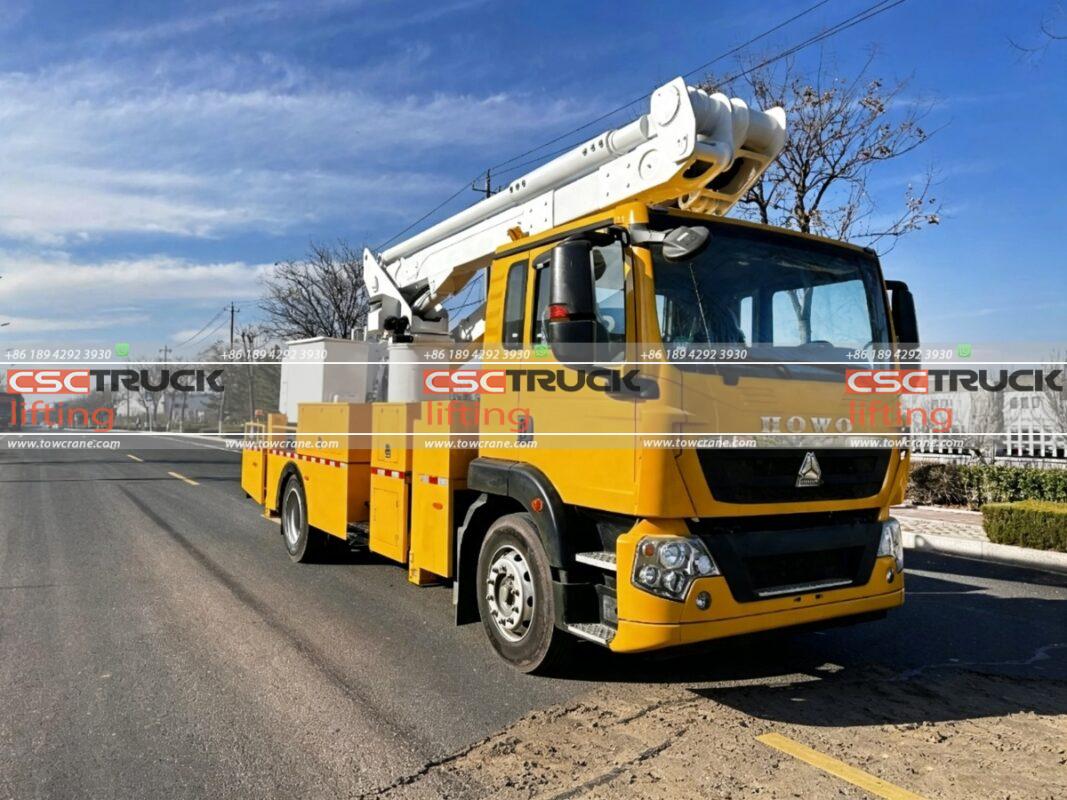
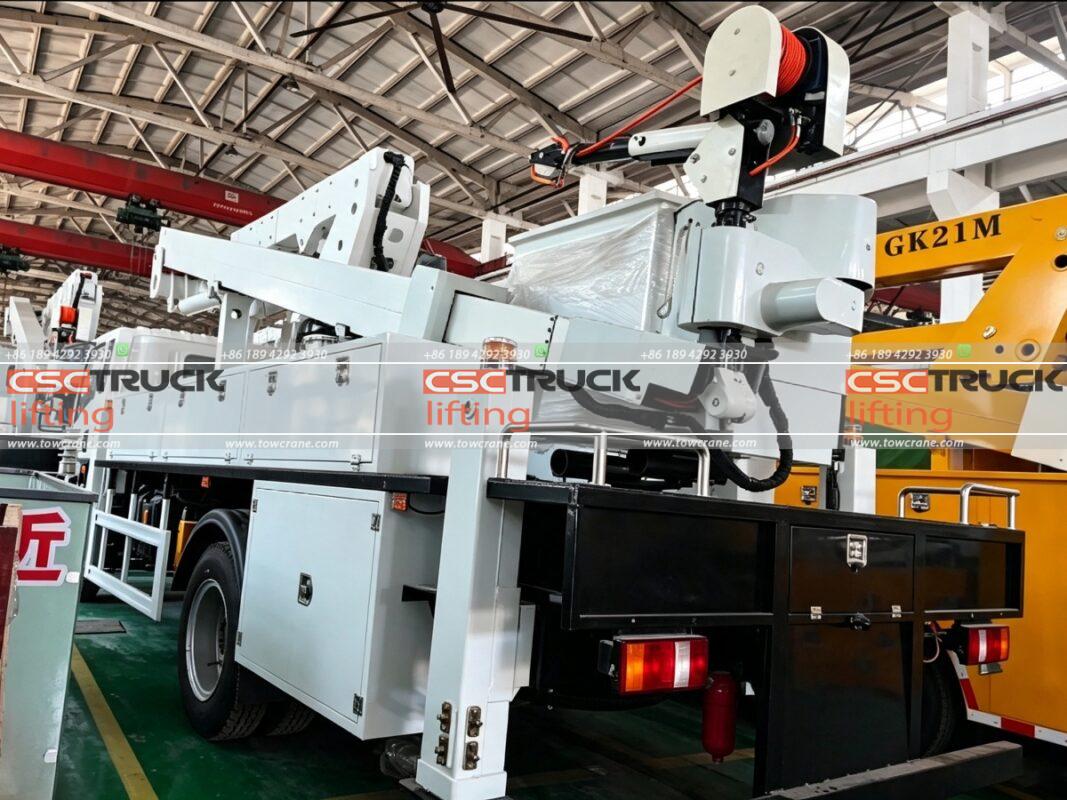
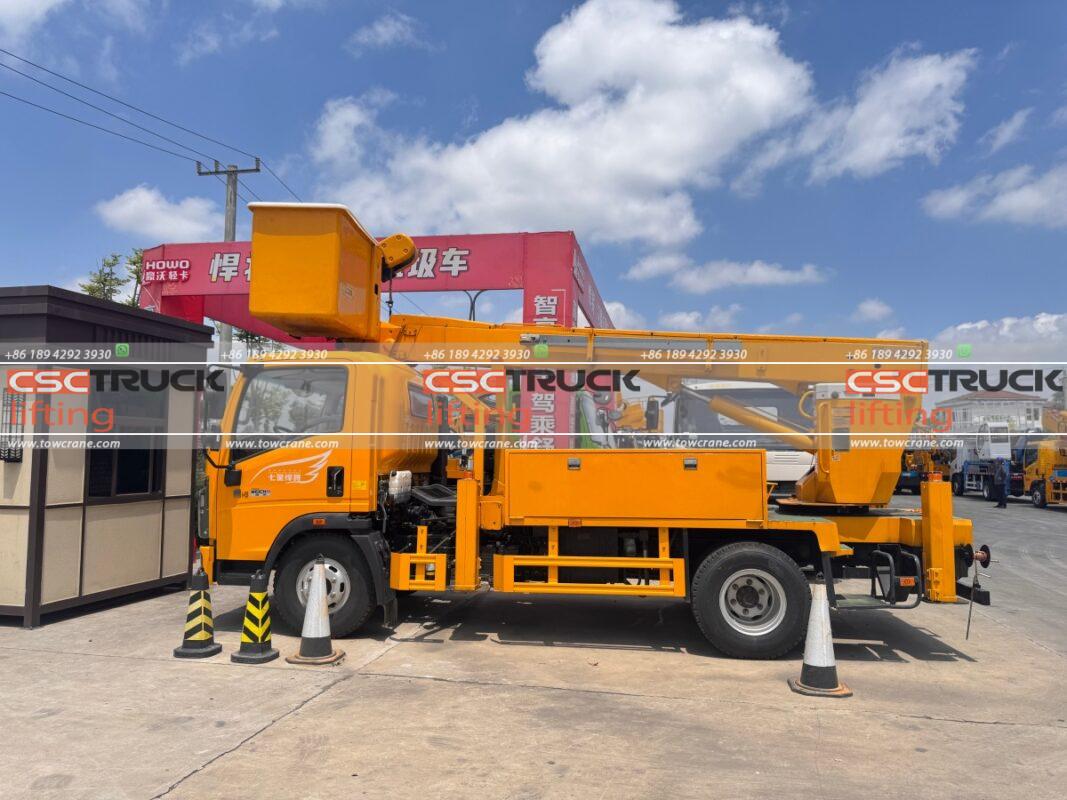
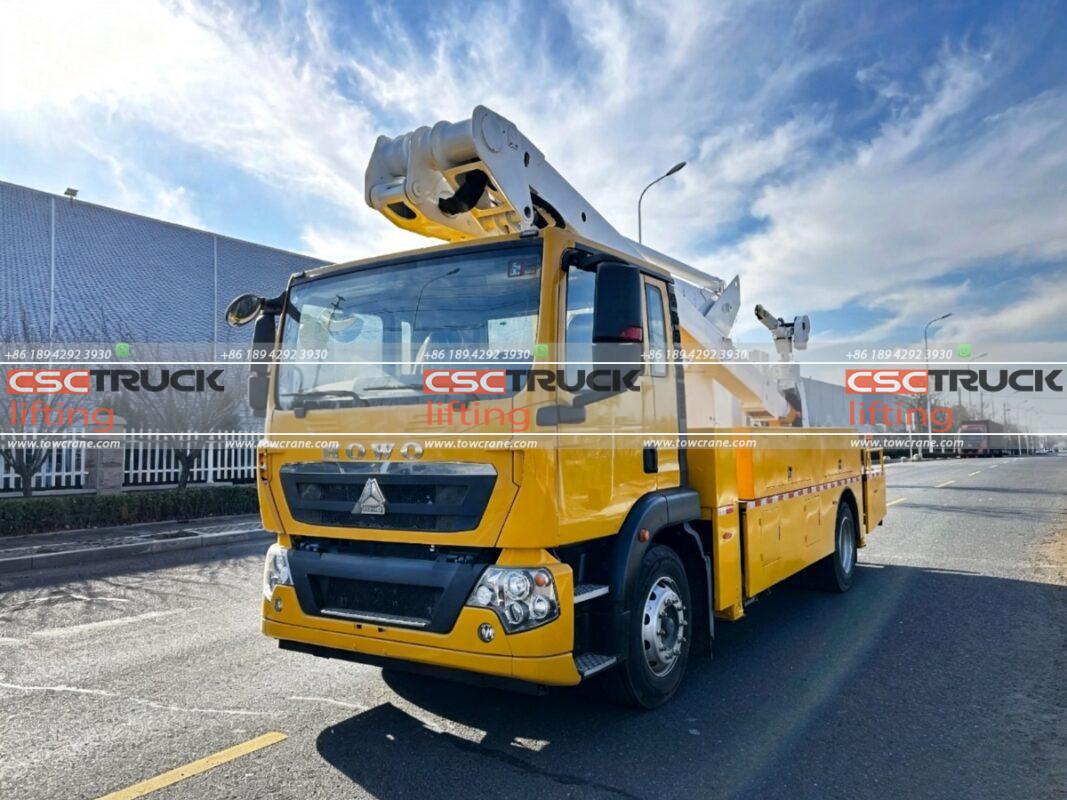
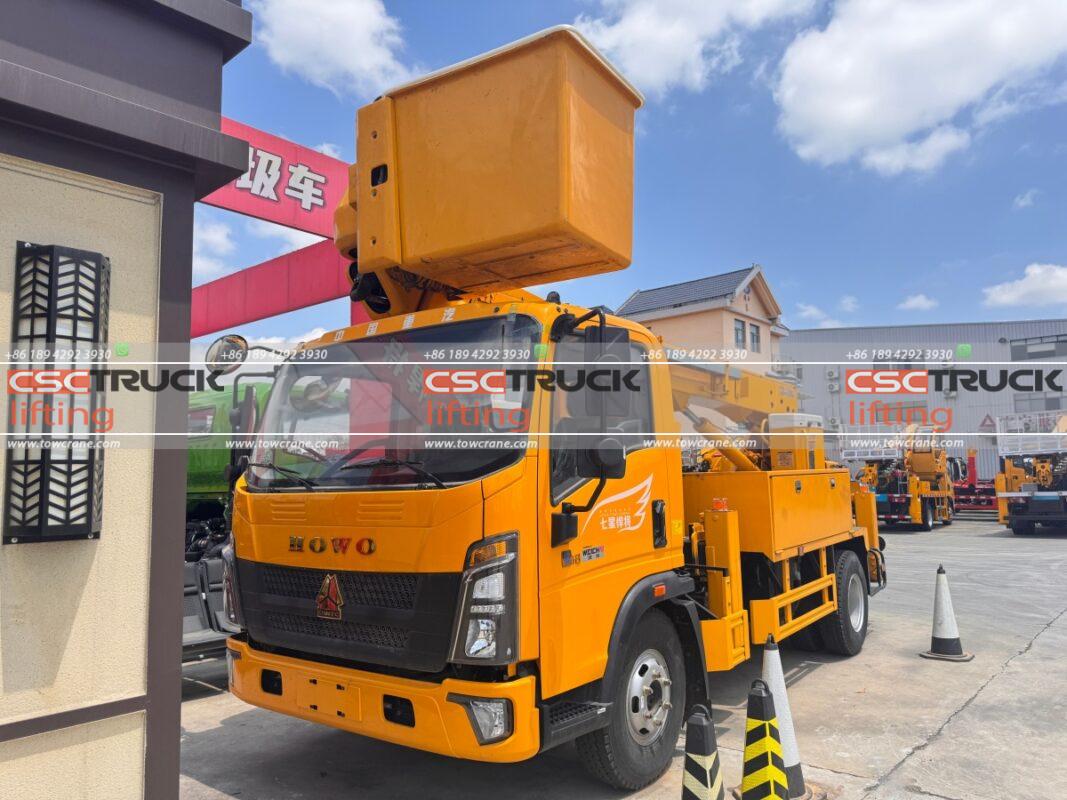
Bucket trucks, also known as aerial lift trucks or aerial work platforms, are widely used for overhead operations such as power line maintenance, telecommunications installation, streetlight repair, and utility construction. While many bucket trucks are designed simply to provide elevated access, some are specially engineered as insulated bucket trucks to protect operators working near electrical systems.
But what exactly makes a bucket truck insulated? The answer is not just the bucket material itself. Insulation involves a combination of specialized components, engineering design, testing procedures, and operating practices that help reduce the risk of electrical shock when working near energized equipment.
What Is an Insulated Bucket Truck?
An insulated bucket truck is an aerial work vehicle designed with electrical insulation features that help prevent current from passing through the equipment and reaching the operator. These trucks are mainly used by electric utilities and contractors who perform maintenance on or near energized power lines.
Unlike standard bucket trucks, which are mainly used for height access, insulated models are built to provide an additional layer of protection when workers operate close to electrical hazards.
Typical applications include:
Overhead power line maintenance;
Electrical distribution repairs;
Transformer and utility pole installation;
Streetlight servicing;
Emergency power restoration;
Telecommunications work near electrical infrastructure.
It is important to understand that insulation does not make a bucket truck completely “electrically safe” under all conditions. Instead, it reduces electrical risks when the truck is properly maintained, tested, and operated according to safety procedures.
Key Components That Make a Bucket Truck Insulated
1. Insulated Boom Sections
The most important feature of an insulated bucket truck is the insulated boom.
The boom is the main lifting structure that extends from the truck chassis to the aerial platform. In insulated models, one or more boom sections are manufactured using non-conductive materials or specially designed insulating components.
Common insulating materials include:
Fiberglass-reinforced plastic (FRP);
Composite materials;
High-strength dielectric materials.
These materials have high electrical resistance, helping prevent electrical current from traveling through the boom toward the vehicle or operator.
The insulated boom acts as a barrier between the elevated platform and the truck chassis, especially when workers are operating near energized conductors.
2. Dielectric Fiberglass Bucket
The bucket, or aerial platform, is another critical insulation component.
Insulated bucket trucks typically use a bucket made from fiberglass or other dielectric materials instead of standard metal platforms. Fiberglass provides excellent electrical resistance while maintaining strength and durability.
The bucket design usually includes:
Non-conductive walls;
Smooth fiberglass surfaces;
Reinforced structures for operator safety;
Weather-resistant coatings.
However, the bucket alone does not determine whether a truck is insulated. The entire aerial system must work together, including the boom, controls, hydraulic components, and mounting structure.
3. Insulated Upper Control System
The control system on an insulated bucket truck must also maintain electrical separation.
Controls located near the bucket often include:
Insulated control panels;
Non-conductive handles;
Protected wiring systems;
Dielectric components.
These features reduce the possibility of electrical contact between the operator and the truck’s mechanical systems.
Modern insulated bucket trucks may also include advanced control systems that allow operators to precisely position the boom while maintaining safe working distances.
4. Insulated Hydraulic Components
Hydraulic systems are necessary for boom movement, but traditional metal hydraulic components can create potential electrical pathways.
To improve insulation performance, manufacturers carefully design hydraulic routing and protection systems, including:
Insulated hydraulic lines;
Proper component separation;
Protective covers;
Non-conductive sections where required.
The goal is to prevent accidental electrical conduction through the boom structure and operating equipment.
Dielectric Testing: How Insulation Is Verified
Insulation performance cannot be judged only by appearance. Insulated bucket trucks require regular dielectric testing to confirm that their electrical resistance remains within safe limits.
During dielectric testing, specialized equipment applies a controlled electrical voltage to the aerial components while measuring current leakage.
Testing commonly evaluates:
Boom insulation performance;
Bucket dielectric strength;
Aerial system electrical resistance;
Potential current leakage.
Environmental conditions such as moisture, dirt, chemical exposure, and aging can affect insulation performance. Regular inspections help identify problems before they become safety risks.
Insulated vs Non-Insulated Bucket Trucks
The difference between insulated and non-insulated bucket trucks mainly comes down to the working environment.
Insulated Bucket Trucks
Designed for:
Electrical utility work;
Near energized power lines;
High-voltage maintenance applications.
Advantages:
Provides additional electrical protection;
Suitable for utility operations;
Reduces risk during overhead electrical work.
Non-Insulated Bucket Trucks
Designed for:
Sign installation;
Tree trimming;
Building maintenance;
General height access.
Advantages:
Lower cost;
Simpler maintenance;
Suitable where electrical hazards are not present.
A non-insulated bucket truck should never be used as a substitute for an insulated model when working near energized electrical equipment.
Common Insulation Classes for Bucket Trucks
Insulated aerial devices are generally classified according to their voltage capability.
Common categories include:
Category A
Designed for higher voltage applications and provides the highest level of insulation protection.
Category B
Provides insulation between the platform and lower boom sections for specific electrical applications.
Category C
Generally used for lower voltage environments.
The correct insulation class depends on the voltage level of the electrical system and the requirements of the job.
Maintenance Requirements for Insulated Bucket Trucks
Insulation performance depends heavily on proper maintenance.
Important maintenance practices include:
Regular Visual Inspections
Operators should check for:
Cracks in fiberglass components;
Surface damage;
Contamination;
Moisture intrusion;
Damaged insulation materials.
Cleaning of Insulated Components
Dirt, oil, and chemicals can reduce dielectric performance. Boom sections and buckets should be cleaned regularly using approved methods.
Scheduled Dielectric Testing
Periodic electrical testing ensures the insulated components continue to meet safety requirements.
Proper Storage
Extreme weather exposure, improper storage, or mechanical damage can shorten the service life of insulated components.
Why Insulated Bucket Trucks Are Important for Utility Work
For electrical workers, working at height already involves risks. When combined with energized equipment, the danger increases significantly.
An insulated bucket truck provides an additional protective barrier by:
Keeping operators separated from electrical paths;
Reducing the chance of current transmission;
Improving working confidence near power systems;
Supporting safer maintenance operations.
However, insulation is only one part of electrical safety. Proper training, personal protective equipment, work procedures, and hazard assessment remain essential.
Choosing the Right Insulated Bucket Truck
When selecting an insulated aerial lift truck, companies should consider:
Required working height;
Maximum outreach distance;
Voltage rating;
Bucket capacity;
Boom configuration;
Chassis capability;
Local safety standards.
For utility companies and contractors, choosing the correct insulated bucket truck ensures better operational efficiency while maintaining the necessary protection level for overhead electrical work.
CSCTRUCK Towcrane provides customized bucket truck solutions for utility maintenance, telecommunications, and infrastructure projects. With reliable chassis, advanced aerial systems, and professional customization options, CSCTRUCK helps customers complete elevated work safely and efficiently in demanding environments.