In modern container transportation, efficiency is no longer only about moving cargo from one location to another. The real challenge is how to load, unload, and transfer containers faster with fewer resources.
This is where the Side Lifter Crane changes traditional container handling methods.
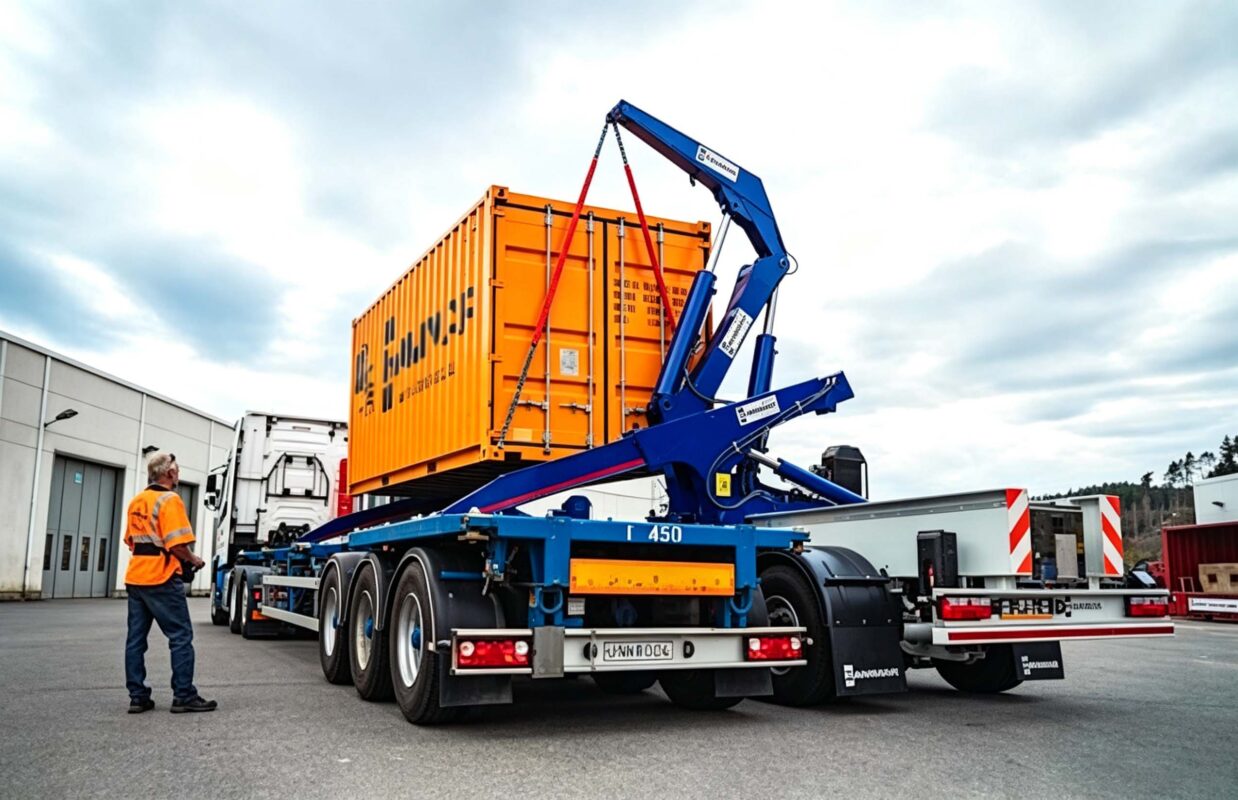
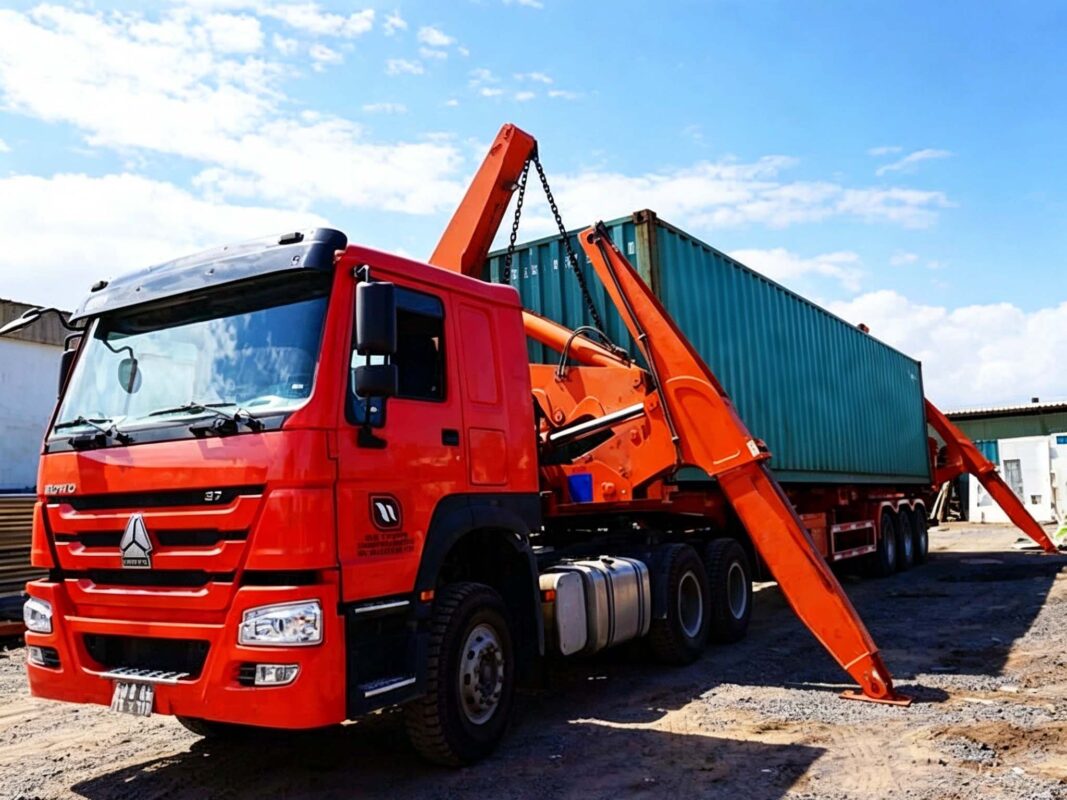
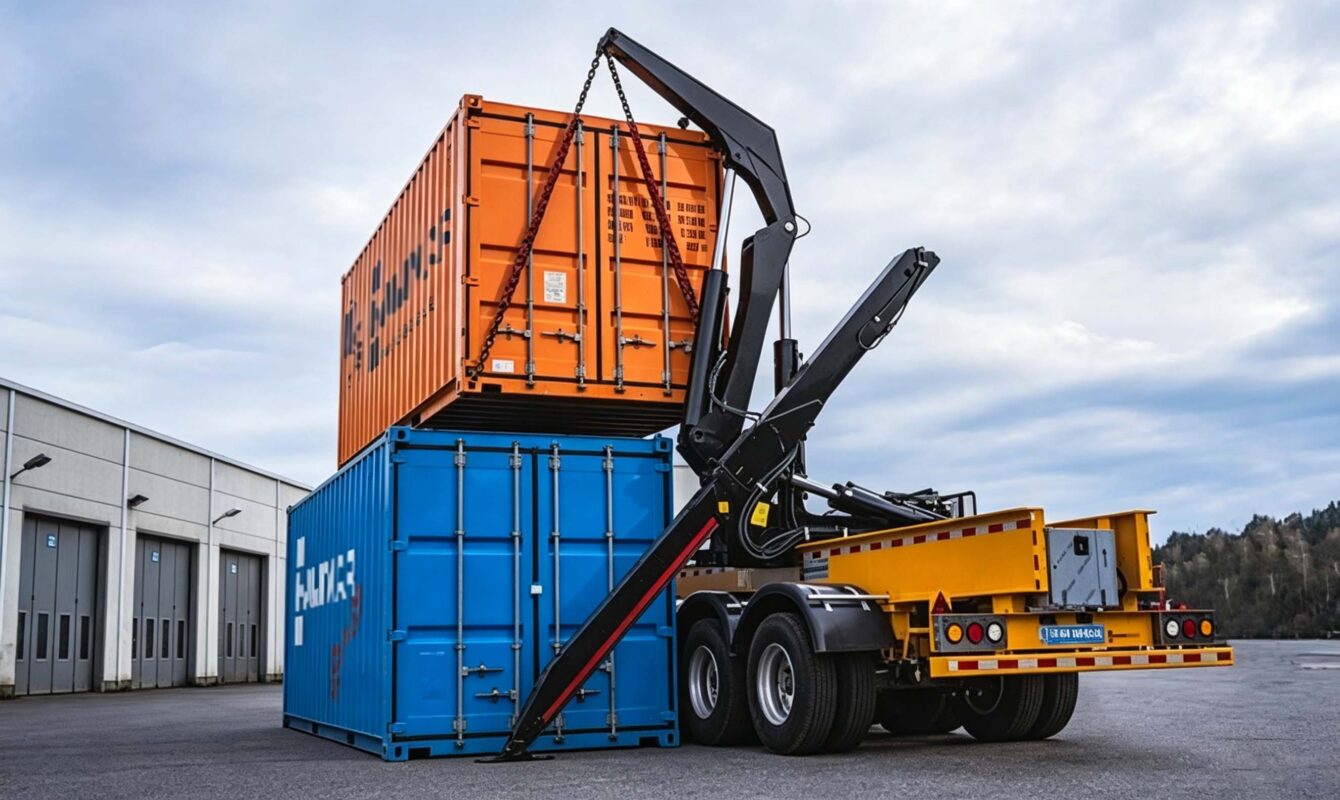
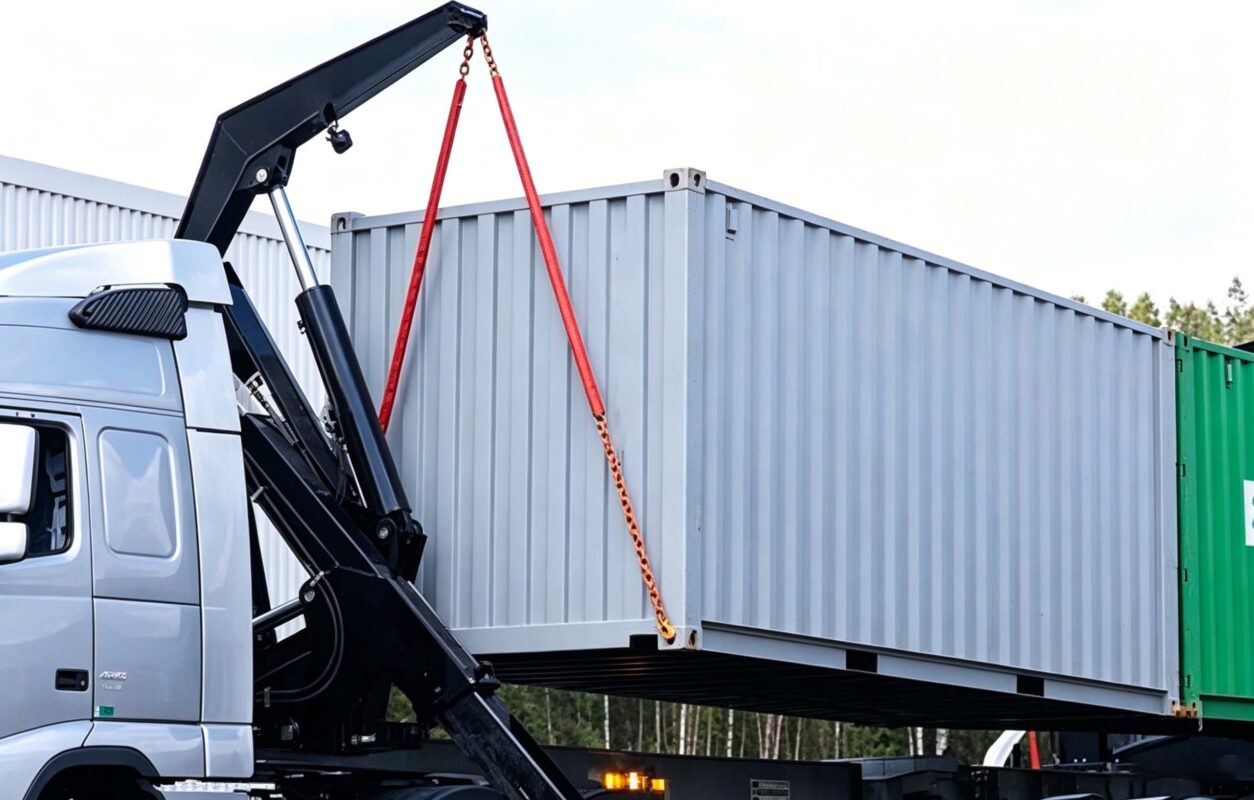
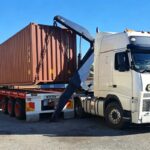
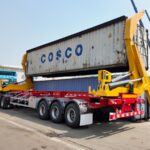
Unlike conventional container transport that requires external cranes, forklifts, or terminal equipment, a Side Lifter Truck integrates hydraulic lifting arms directly onto the vehicle. It can pick up, move, and place containers independently — creating a faster and more flexible logistics solution.
The core advantages of a Side Lifter Crane can be summarized into four key points:
Self-loading, equipment saving, high efficiency, and low site requirements.
Self-Loading Capability: One Truck Handles the Entire Operation
The biggest advantage of a Side Lifter Crane is its ability to load and unload containers without external lifting equipment.
Traditional container transport usually requires:
Mobile cranes
Reach stackers
Forklifts
Terminal lifting equipment
But a Side Lifter Truck uses powerful hydraulic arms mounted on both sides of the chassis.
The operation process is simple:
The truck positions beside the container.
Hydraulic stabilizers extend for support.
Side lifting arms grab the container.
The container is lifted and placed onto the chassis.
This allows a single operator to complete container handling directly from the truck.
The result:
Faster loading operations
Reduced waiting time
Lower dependence on external equipment
For remote locations or smaller logistics sites, this self-loading ability creates a major advantage.
Equipment Saving: Reducing Investment and Operating Costs
One of the biggest challenges in container logistics is equipment dependency.
A traditional system may require multiple machines:
A truck for transportation
A crane for loading
A forklift for positioning
A Side Lifter Crane combines transportation and lifting functions into one vehicle.
This means companies can reduce:
Equipment purchase costs
Maintenance expenses
Operator requirements
Site management complexity
For logistics companies handling frequent container movements, one Side Loader Truck can replace several separate machines.
This improves overall fleet efficiency while reducing long-term operating costs.
High Efficiency: Faster Container Handling and Better Utilization
Time is a critical factor in container transportation.
Delays caused by waiting for cranes or loading equipment can increase logistics costs.
A Side Lifter System improves efficiency by allowing direct container handling.
Key benefits include:
Faster Loading and Unloading
The truck can complete container exchange operations quickly without waiting for additional machines.
Improved Route Flexibility
Drivers can deliver containers directly to:
Construction sites
Warehouses
Factories
Remote locations
Higher Vehicle Utilization
Because loading equipment is always carried with the truck, the vehicle spends less time waiting and more time working.
For high-frequency container transport operations, this can significantly improve productivity.
Low Site Requirements: Working Where Traditional Equipment Cannot
Another major advantage of the Side Lifter Crane is its ability to operate in limited spaces.
Traditional cranes often require:
Large operating areas
Stable ground conditions
Additional setup time
However, the Side Loader Truck only needs enough space beside the container.
This makes it suitable for:
Urban areas
Small warehouses
Construction sites
Narrow roads
Remote industrial locations
The side-loading design allows containers to be placed precisely without requiring large open working zones.
Side Lifter Crane vs Traditional Container Handling
Feature
Side Lifter Crane
Traditional Crane + Truck
Loading method
Self-loading
Requires external equipment
Operators needed
Fewer
More workers
Setup time
Minimal
Longer preparation
Working space
Small
Large area required
Flexibility
High
Limited
Equipment cost
Lower overall
Higher
Where Are Side Lifter Trucks Commonly Used?
The versatility of the Side Lifter Truck makes it suitable for many industries.
Container Logistics
For:
Port container delivery
Depot transfers
Short-distance container transport
Construction Industry
For:
Site containers
Temporary offices
Material storage units
Industrial Applications
For:
Factory container movement
Warehouse operations
Special cargo transport
Remote Projects
For:
Mining areas
Infrastructure projects
Locations without lifting facilities
The Future of Side Lifter Technology
Modern Side Lifter Cranes are becoming more advanced with:
Remote control operation
Smart hydraulic systems
Automatic stabilization technology
Improved safety monitoring
These improvements make container handling safer, faster, and easier.
Conclusion
The success of the Side Lifter Crane comes from solving a simple but important logistics problem:
How can containers be moved efficiently without relying on large external equipment?
By combining lifting and transportation into one vehicle, the Side Loader Truck delivers four major advantages:
Self-loading capability
Reduced equipment costs
Higher operational efficiency
Lower site requirements
For modern container logistics, a side lifter is not just a transport vehicle — it is a complete mobile container handling solution.