As global trade continues to expand, intermodal container logistics is facing increasing demands for faster handling, lower operating costs, and greater flexibility. Traditional container handling methods often depend on large infrastructure such as port gantry cranes, reach stackers, and straddle carriers. While these systems work efficiently in major ports and terminals, they are often impractical for inland areas, commercial sites, and locations without dedicated lifting equipment.
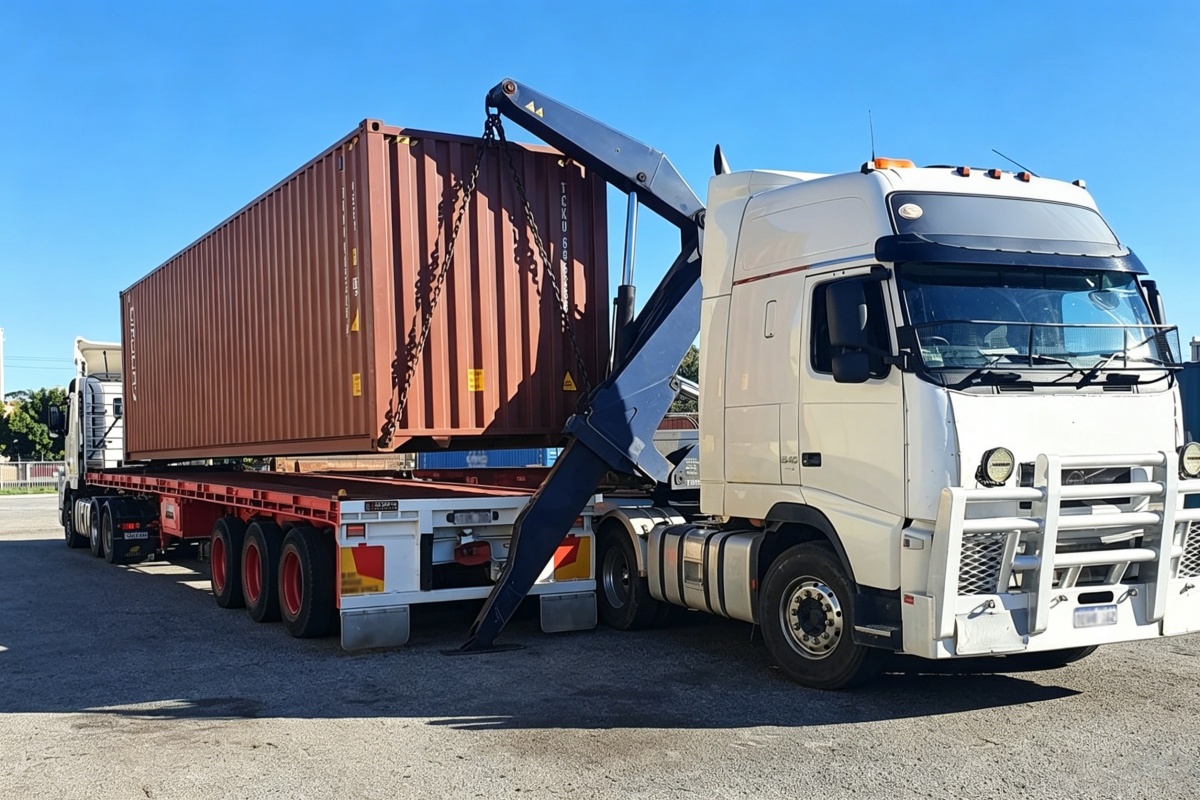
This is where side lifter cranes are changing the way containers are transported and handled. With their unique self-loading and self-unloading capability, sidelifts allow containers to be transferred directly from trucks to the ground, barges, rail platforms, or storage areas without requiring external lifting machinery.
The Challenge of Traditional Container Handling
In conventional container logistics, loading and unloading usually require specialized equipment such as:
Port cranes
Reach stackers
Forklifts
Terminal handling machines
These machines require dedicated operating areas and significant infrastructure investment.
For example, when a container needs to be delivered to an inland warehouse, construction site, or commercial location, additional lifting equipment may be required just to remove the container from the trailer.
This creates several challenges:
Higher equipment costs
Longer handling times
Limited accessibility
Dependence on terminal facilities
For areas without large logistics infrastructure, traditional container handling methods can reduce efficiency and increase operational complexity.
Self-Loading Capability: The Core Advantage of Sidelifters
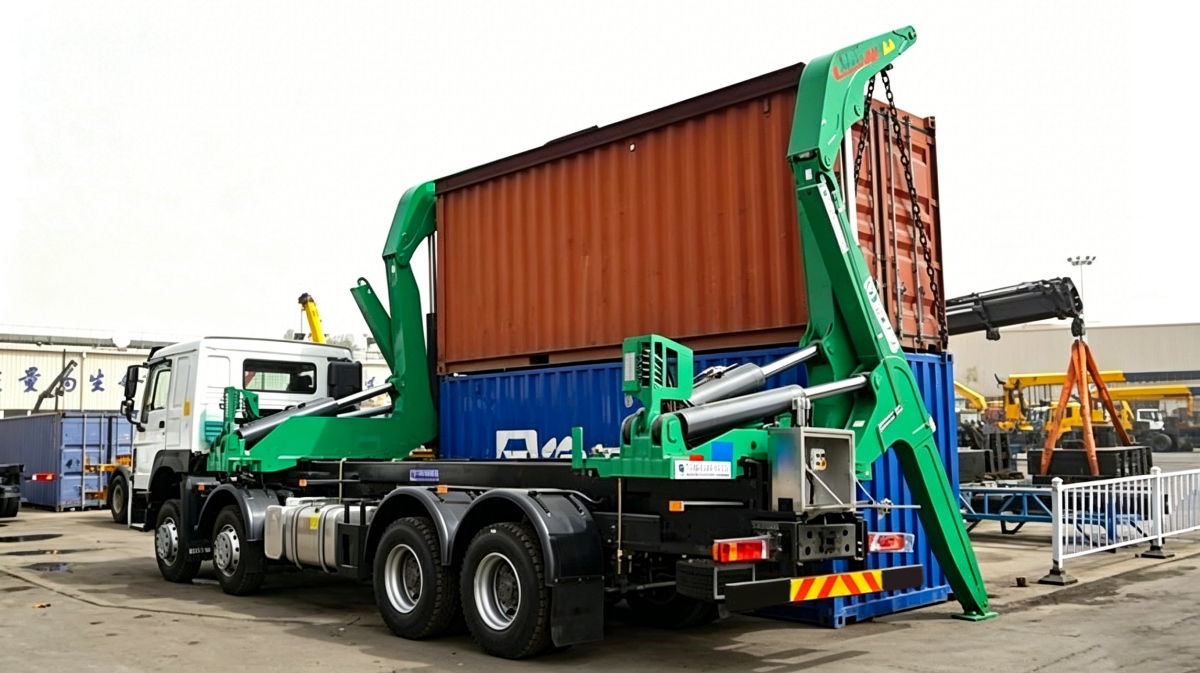
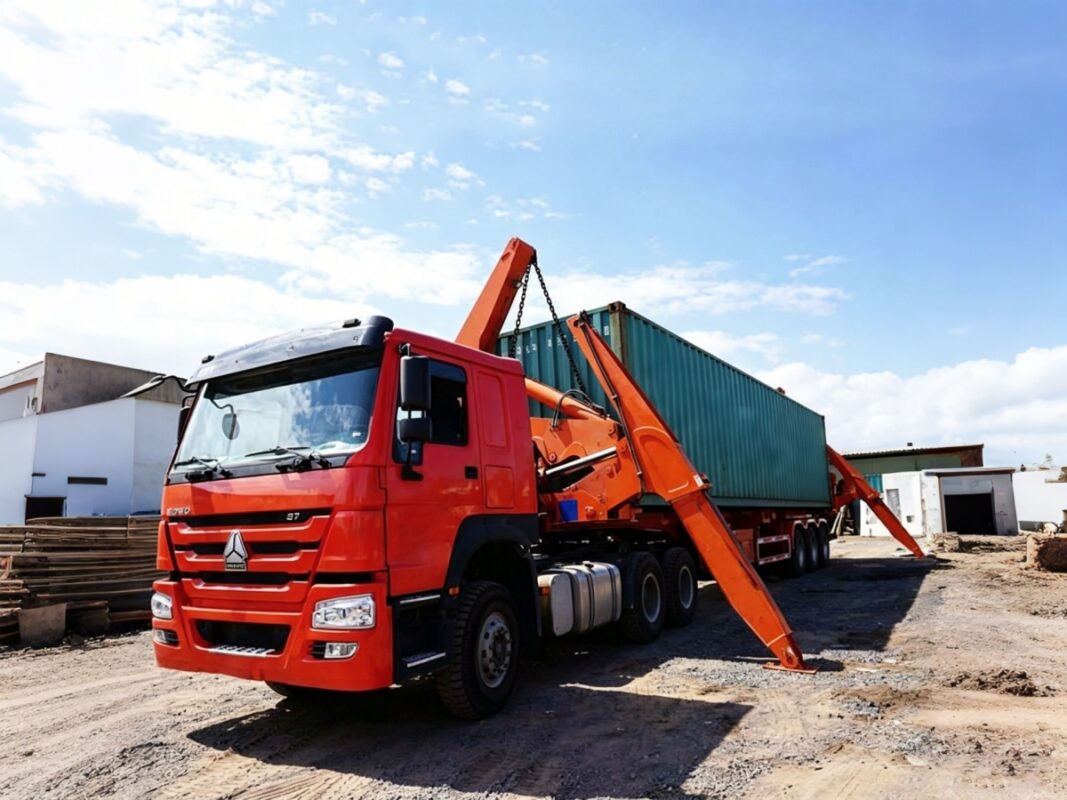
A side lifter crane integrates hydraulic lifting arms directly onto the vehicle chassis, allowing the truck to load and unload containers independently.
Unlike traditional container transport vehicles, sidelifts can:
Pick up containers from the ground
Transfer containers directly from trailers
Place containers onto storage areas
Load containers onto barges or rail platforms
This self-sufficient operation eliminates the need for additional lifting equipment in many situations.
For logistics companies, this means faster operations, fewer machines, and greater flexibility.
Expanding Container Logistics Beyond Ports
One of the biggest advantages of side lifter cranes is their ability to operate in locations where traditional container infrastructure is unavailable.
They are especially valuable for:
Inland container delivery
Remote industrial areas
Construction projects
Commercial distribution centers
Agricultural operations
A container can be transported directly from the logistics hub to the final destination and unloaded without waiting for cranes or terminal equipment.
This makes sidelifters an ideal solution for improving the “last-mile” and “middle-mile” efficiency of container transportation.
Increasing Barge Capacity Through Double-Stacking
Another important application of side lifter crane technology is supporting container transportation by barge.
With the ability to precisely position containers, sidelifters can help load containers in optimized arrangements, including double stacking on barges.
This can significantly increase barge transportation efficiency by allowing more containers to be carried in the same voyage.
Benefits include:
Increased cargo capacity
Reduced transportation frequency
Lower logistics costs
Improved waterway utilization
For regions developing inland waterway logistics, sidelifters provide an effective connection between road transportation and marine freight networks.
Improving Flexibility in Commercial Container Delivery
Modern businesses increasingly use containers for more than shipping. Containers are now widely used as:
Mobile storage units
Temporary offices
Retail spaces
Construction facilities
A container side loader crane allows companies to place containers exactly where they are needed, even in locations without cranes.
This is especially useful for:
Urban commercial areas
Temporary project sites
Warehousing operations
Event infrastructure
The ability to quickly position containers provides businesses with greater operational flexibility.
A More Efficient Solution for Modern Freight Networks
The growth of global logistics requires equipment that can adapt to different environments.
Compared with traditional container handling systems, side lifter cranes offer several advantages:
Independent loading and unloading
Reduced reliance on fixed infrastructure
Faster container transfer
Lower operational complexity
Better accessibility
They bridge the gap between major logistics hubs and areas where traditional container equipment cannot easily operate.
Conclusion
Side lifter cranes are revolutionizing intermodal container logistics by providing a flexible and efficient alternative to traditional container handling methods.
With self-loading capability, independent operation, and the ability to support road, rail, and waterway transportation, these side lifter cranes are helping businesses and logistics operators improve efficiency in both developed and emerging markets.
From inland distribution centers to commercial sites and remote industrial areas, sidelifters are becoming an essential tool for building more flexible, cost-effective, and accessible container transportation networks.