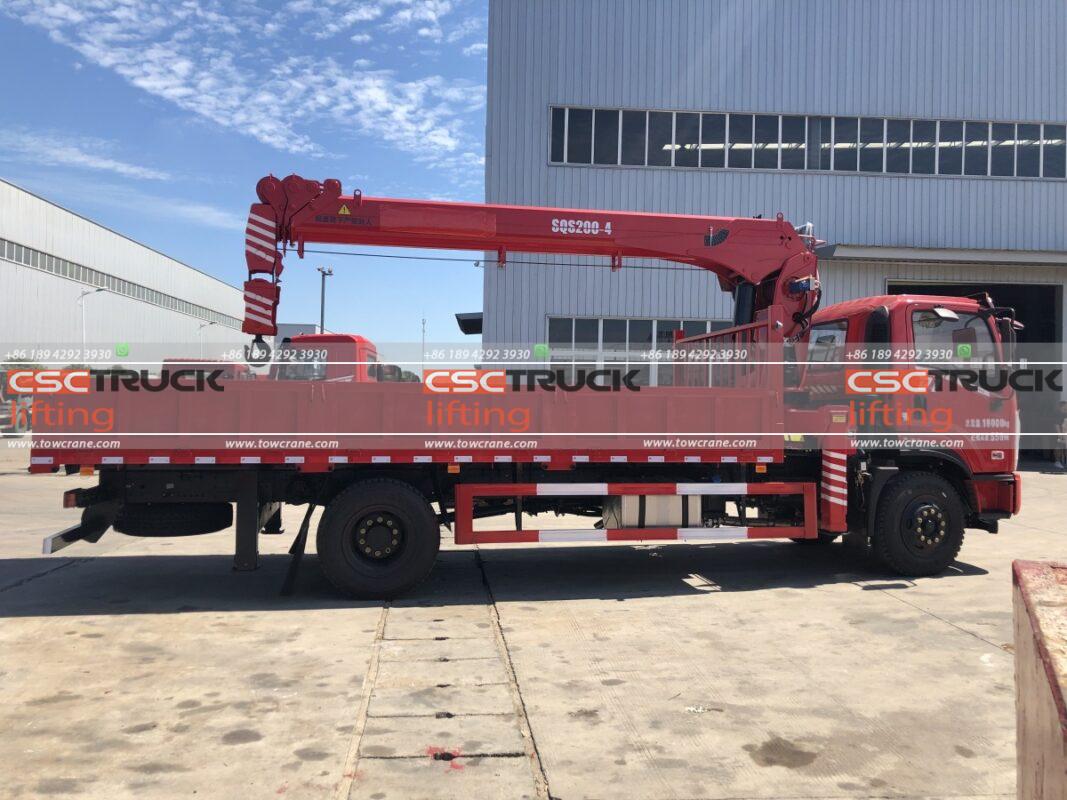
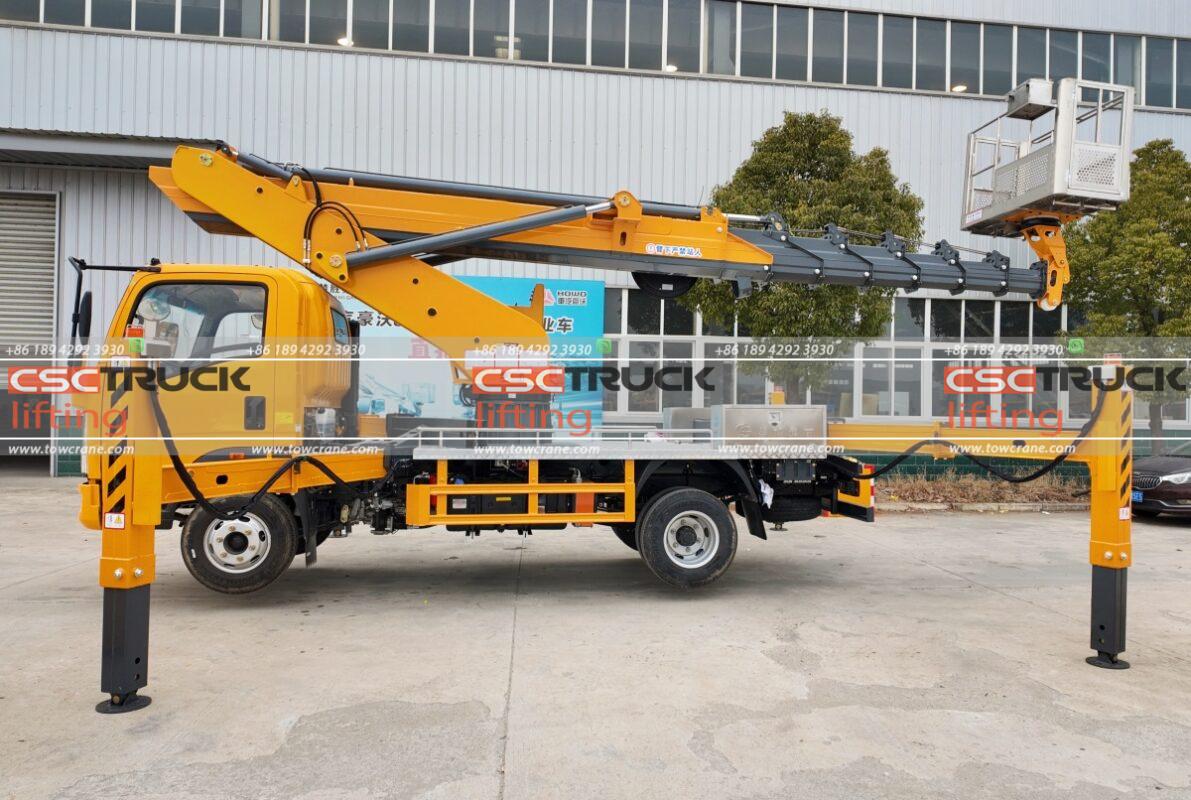
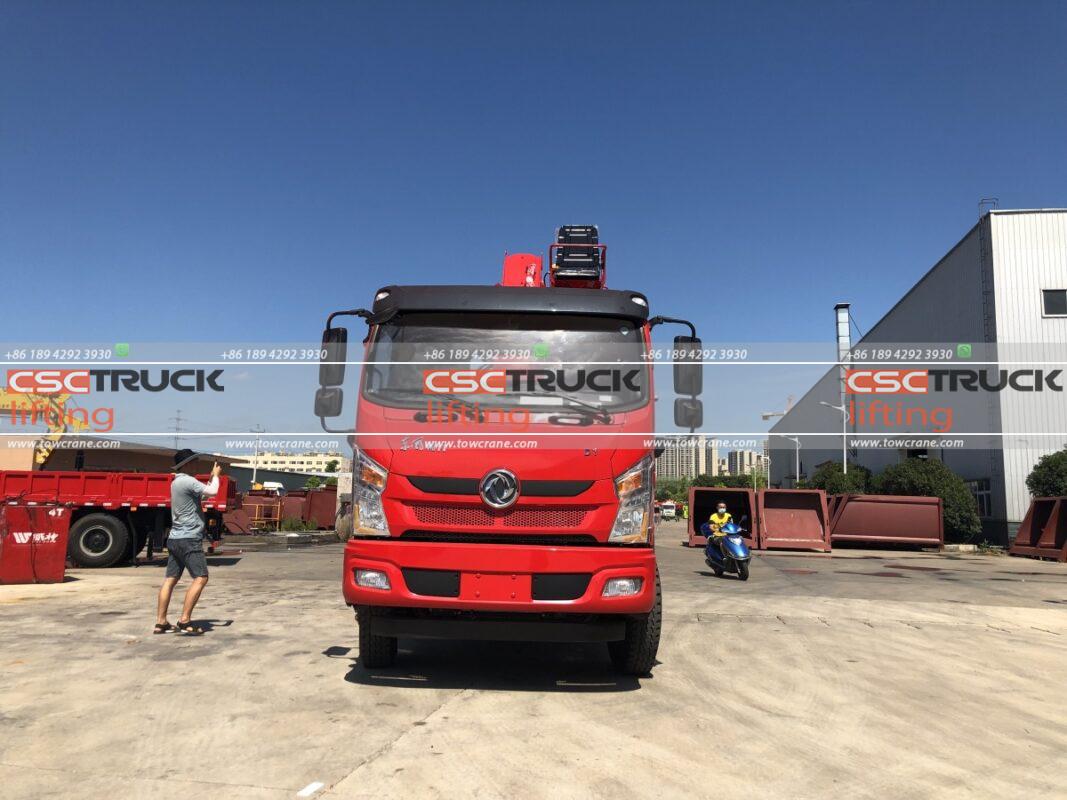
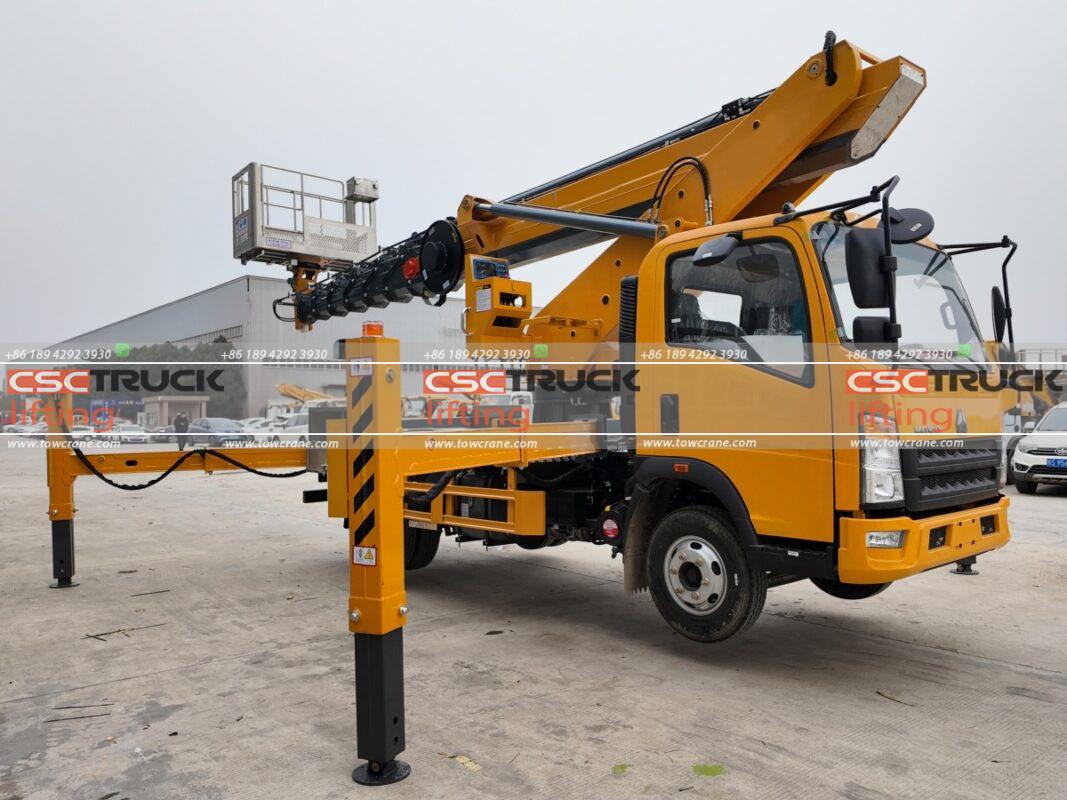
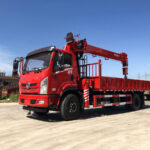
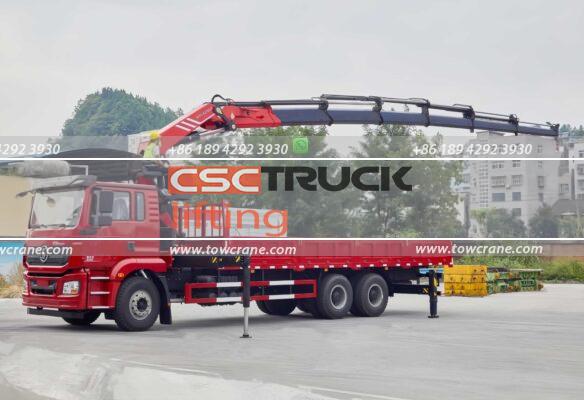
A telescopic boom is one of the most important innovations in modern lifting equipment. Whether installed on a boom truck, truck-mounted crane, mobile crane, aerial work platform, or telehandler, a telescopic boom allows operators to lift loads to significant heights and distances while maintaining excellent stability and control.
Unlike a lattice boom, which is assembled from multiple structural sections, or a knuckle boom, which folds using articulated joints, a telescopic boom extends and retracts in a straight line through a series of nested boom sections. This design offers an excellent combination of compact transportation dimensions, fast deployment, long working reach, and reliable lifting performance.
So, how exactly does a telescopic boom work? Let’s take a closer look at its structure, operating principle, and the technology that makes it one of the most versatile lifting systems available today.
What Is a Telescopic Boom?
A telescopic boom is a multi-section lifting arm made from several hollow steel sections that slide inside one another, much like the tubes of a telescope. Each section is carefully engineered to maximize strength while minimizing weight.
When the operator extends the boom, the inner sections slide outward one after another, increasing both the lifting height and horizontal working radius. When the work is complete, the sections retract back into the base boom, allowing the machine to return to a compact transport configuration.
Depending on the equipment, a telescopic boom may contain anywhere from two to eight boom sections. Larger cranes typically use additional sections to achieve greater lifting heights without significantly increasing the vehicle’s transport length.
Main Components of a Telescopic Boom
Although manufacturers use different engineering designs, the basic components of a telescopic boom are generally similar.
Boom Sections
The boom itself consists of several nested sections manufactured from high-strength steel. These sections are usually rectangular or hexagonal to provide excellent resistance to bending and twisting during lifting operations.
The outermost section, known as the base boom, is fixed to the crane or vehicle. The remaining sections slide smoothly inside each other during extension and retraction.
Hydraulic Cylinders
Hydraulic cylinders provide the force that moves the boom sections.
A hydraulic pump generates pressurized oil, which flows into the cylinders. As pressure builds, the piston extends, pushing one or more boom sections outward. Reversing the hydraulic flow retracts the piston, pulling the boom back into its compact position.
Hydraulic power enables the boom to extend smoothly while handling heavy loads with precise control.
Extension Mechanism
Different telescopic boom manufacturers use different extension systems to synchronize the movement of multiple boom sections.
Common systems include:
Single hydraulic cylinder systems
Multiple hydraulic cylinder systems
Hydraulic rope synchronization systems
Chain-driven extension systems
Regardless of the design, the goal is the same: ensuring every boom section extends and retracts in the correct sequence while maintaining smooth movement and structural stability.
Wear Pads and Guide Blocks
Between each boom section are wear pads and guide blocks made from durable low-friction materials.
These components reduce friction, maintain proper alignment, and distribute loads evenly across the boom structure. Without them, metal-to-metal contact would quickly damage the boom sections and reduce lifting accuracy.
Because wear pads are consumable components, they should be inspected regularly and replaced when necessary.
How Does a Telescopic Boom Extend?
The extension process begins when the operator activates the hydraulic control system.
Hydraulic oil is pumped into the extension cylinder, causing the first movable boom section to slide outward. Once it reaches a predetermined position, the extension mechanism transfers the hydraulic force to the next boom section, which then extends in sequence.
This process continues until the required boom length has been reached.
Modern telescopic booms are designed to extend smoothly without sudden movement, allowing operators to position loads accurately even when working at maximum reach.
When the operator retracts the boom, the sequence is simply reversed. The outermost movable section retracts first, followed by the remaining sections until the boom is fully retracted for transport.
How Does the Boom Lift Heavy Loads?
Extending the boom is only one part of the lifting process. The crane must also safely support the load throughout the operation.
Several systems work together to make this possible.
The boom angle is adjusted by large hydraulic cylinders that raise or lower the boom depending on the required lifting position.
Hydraulic outriggers extend from the truck or crane chassis before lifting begins. These outriggers transfer the load from the vehicle suspension directly to the ground, greatly improving stability and reducing the risk of overturning.
At the same time, the crane’s slewing mechanism rotates the boom horizontally so operators can position the load without moving the vehicle.
Modern telescopic cranes also incorporate load moment indicators (LMI) or safe load indicators (SLI). These systems continuously calculate lifting capacity based on boom length, boom angle, working radius, and load weight.
Advantages of Telescopic Booms
One of the greatest advantages of a telescopic boom is its versatility.
Unlike lattice boom cranes that require assembly before operation, telescopic booms can be deployed within minutes. This significantly reduces setup time and improves jobsite productivity.
Additional advantages include:
Compact transport dimensions
Fast deployment
Long vertical reach
Large horizontal working radius
Excellent lifting precision
Suitable for confined work areas
Wide range of lifting capacities
Lower transportation costs than lattice boom cranes
Common Applications
Telescopic boom equipment is commonly found in:
Construction projects
Building material delivery
Utility line installation
Bridge construction and maintenance
Telecommunications
Wind energy projects
Oil and gas operations
Port cargo handling
Industrial equipment installation
Municipal engineering
Emergency rescue and disaster response
Because one machine can perform many different lifting tasks, telescopic boom equipment offers excellent flexibility for contractors and fleet operators.
Maintenance Tips for Long-Term Performance
Like any hydraulic lifting system, a telescopic boom requires regular maintenance to ensure safe and reliable operation.
Operators should routinely inspect:
Hydraulic cylinders
Hydraulic hoses
Boom sections
Wear pads
Guide rollers
Hydraulic oil quality
Extension synchronization system
Structural welds
Pins and bushings
Wire ropes or lifting hooks (where applicable)
Routine lubrication, hydraulic oil replacement, and preventive inspections help minimize downtime while extending the service life of the equipment.
Following the manufacturer’s recommended maintenance schedule also improves lifting performance and reduces long-term operating costs.
Looking for Telescopic Boom Equipment?
CSCTRUCK Towcrane manufactures a comprehensive range of telescopic boom trucks, telescopic aerial lift trucks, and other specialized lifting equipment for construction, municipal engineering, utilities, logistics, and industrial applications. Designed for durability, efficiency, and operator safety, our telescopic boom solutions can be customized with various lifting capacities, boom lengths, and truck chassis to meet your specific project requirements. Whether you need a compact lifting solution for urban construction or a heavy-duty crane for demanding industrial projects, CSCTRUCK provides reliable equipment built to deliver outstanding performance in the field.