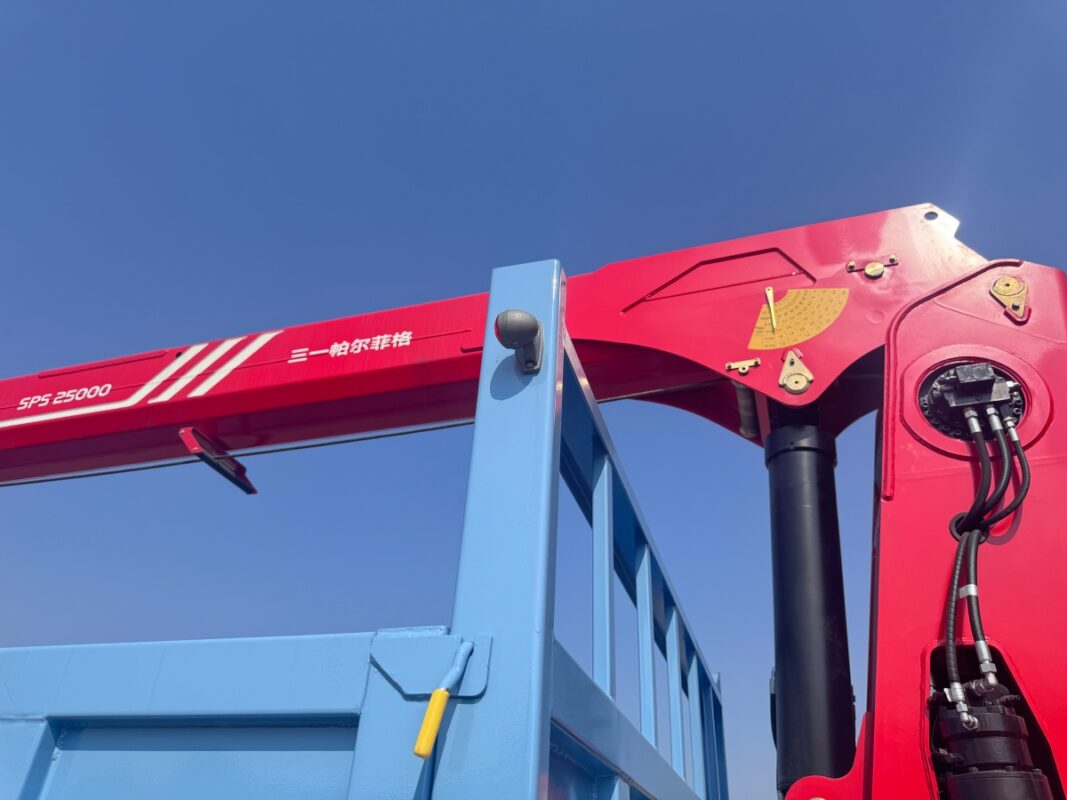
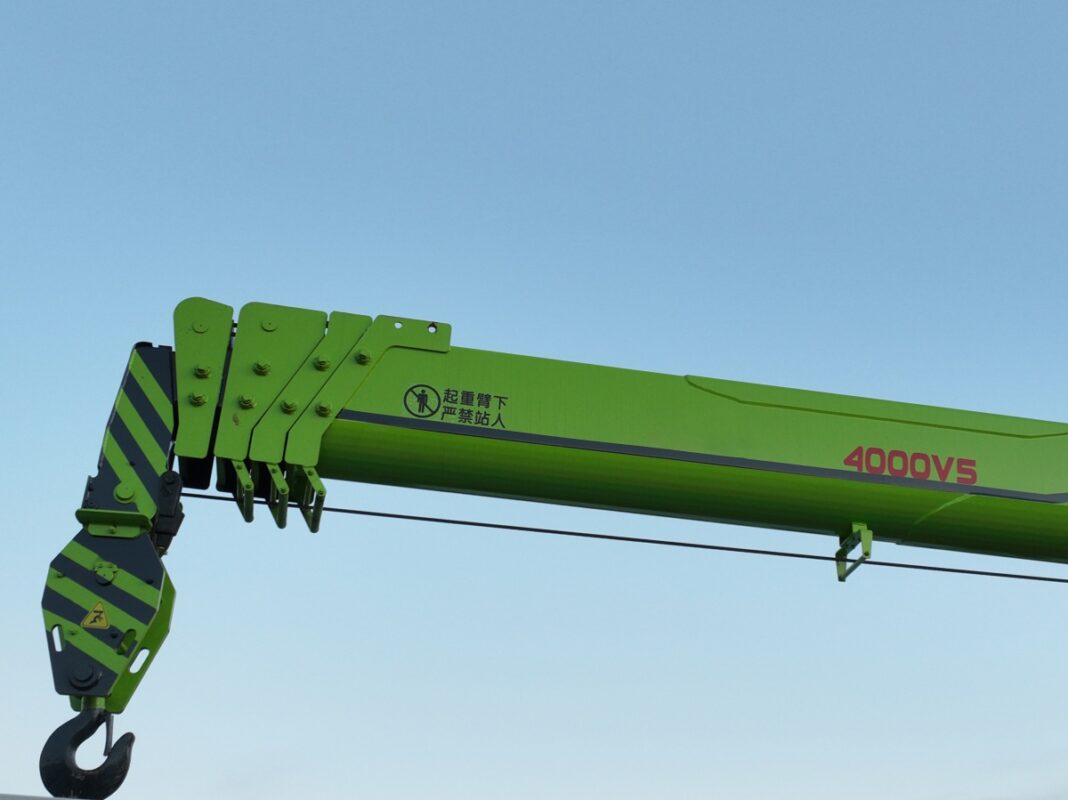
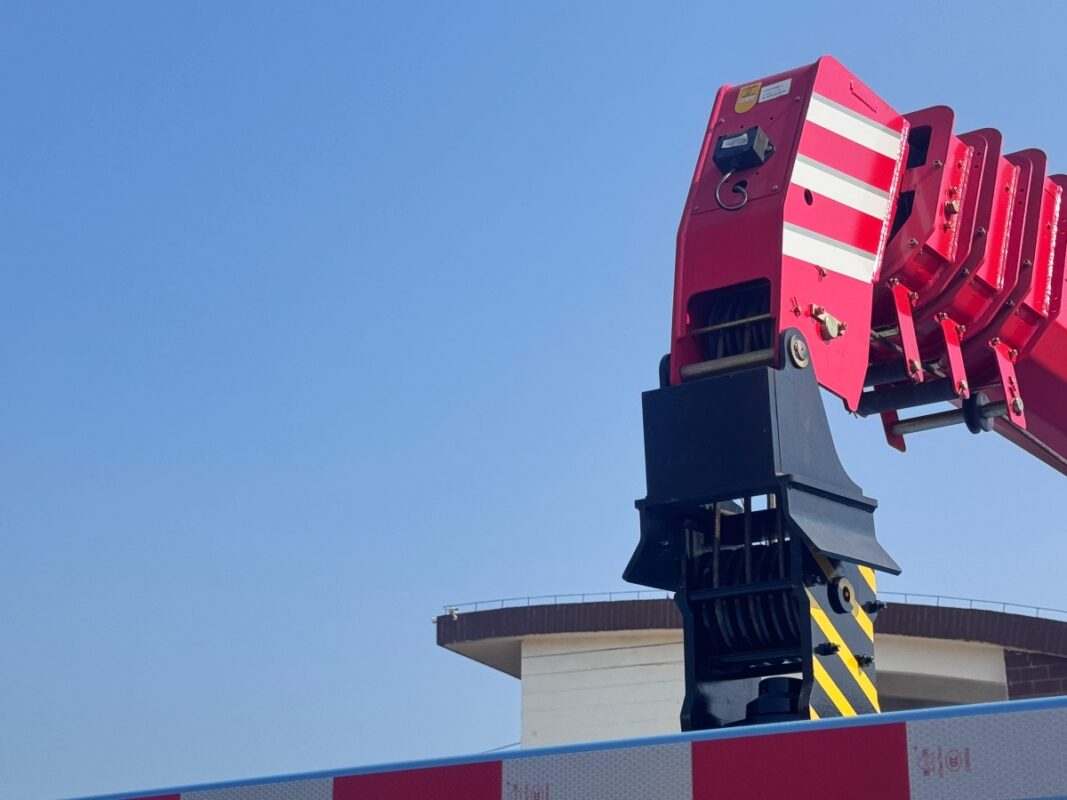
A telescopic boom crane is designed to lift heavy loads while reaching impressive heights and working distances. But have you ever wondered how the boom actually extends?
Unlike a fixed boom, a telescopic boom consists of multiple nested sections that slide smoothly in and out of one another. Powered by a hydraulic system and guided by an extension mechanism, the boom can quickly adapt to different lifting tasks while maintaining strength and stability.
In this article, we’ll explain how a telescopic boom works, what happens inside the boom during extension, and why a well-designed extension system makes lifting safer, smoother, and more efficient.
1. The Boom Is Made of Multiple Nested Sections
A telescopic boom is built from several high-strength steel boom sections that fit inside each other like the sections of a telescope.
Typically, the boom consists of:
Base boom (first section)
Second boom section
Third boom section
Fourth boom section (or additional sections on larger cranes)
When fully retracted, all boom sections remain nested together, giving the crane a compact transport size. During operation, the sections extend one by one to achieve the required lifting height and working radius.
2. Hydraulic Cylinders Provide the Driving Force
The movement of the boom begins with a hydraulic cylinder mounted inside the boom.
When the operator moves the control lever, hydraulic oil is pumped into the cylinder, generating a powerful linear force that pushes the boom outward. Reversing the hydraulic flow retracts the boom smoothly back into its original position.
Hydraulic systems provide several advantages:
Smooth and precise movement
High lifting force
Fast extension and retraction
Stable operation under heavy loads
Without hydraulic power, modern telescopic booms simply wouldn’t be possible.
3. Extension Cables Synchronize Every Boom Section
While the hydraulic cylinder pushes the first extending section, the remaining boom sections don’t extend randomly.
Instead, a carefully designed wire rope and pulley synchronization system coordinates the movement of each section.
As the second boom extends, the steel cables guide the third section to extend automatically, followed by the fourth section. During retraction, the sequence reverses, ensuring that every boom section returns smoothly into the main boom.
This synchronized movement offers several benefits:
Even load distribution
Smooth extension without jerking
Accurate boom positioning
Reduced wear on boom sections
The result is a boom that extends farther while remaining stable throughout the lifting operation.
4. Why Doesn’t the Boom Shake?
One common question is:
If the boom extends so far, why doesn’t it wobble?
The answer lies in precision engineering.
Modern telescopic booms are designed with:
High-strength steel boom sections
Precision-machined slide pads
Tight manufacturing tolerances
Optimized boom cross-section design
Balanced hydraulic control
These features minimize side-to-side movement, reduce friction between boom sections, and ensure smooth operation even when lifting heavy loads at long working radii.
5. Safety Systems Keep Every Movement Under Control
Boom extension isn’t controlled by hydraulics alone.
Modern telescopic cranes are equipped with multiple safety systems, including:
Hydraulic holding valves
Load holding valves
Overload protection
Boom angle sensors
Load moment indicators (LMI)
These systems continuously monitor the crane’s operating condition and help prevent unsafe lifting situations, protecting both the operator and the equipment.
6. Why the Extension System Matters
A telescopic boom isn’t judged only by how far it can reach—it’s also measured by how smoothly, accurately, and safely it extends.
A well-designed extension system provides:
Faster job-site operation
Better lifting precision
Greater stability at long reach
Lower maintenance requirements
Longer boom service life
These advantages become especially important in construction, utility work, infrastructure maintenance, and equipment installation, where cranes operate in confined spaces and changing working conditions.
Conclusion
The impressive reach of a telescopic boom is the result of carefully engineered mechanics working together. High-strength nested boom sections, powerful hydraulic cylinders, synchronized wire rope systems, and advanced safety controls allow the boom to extend smoothly while maintaining excellent stability and lifting performance.
Understanding how the extension system works not only helps operators use the crane more effectively but also helps buyers evaluate the quality and reliability of different telescopic boom designs.
Looking for a Reliable Telescopic Boom Crane? CSCTRUCKTowcrane offers a wide range of telescopic boom cranes with customizable lifting capacities, boom lengths, hydraulic systems, and control options. Built for durability, precision, and safe operation, our cranes are designed to meet the demands of construction, utility, logistics, and industrial lifting applications. Contact CSCTRUCK today to find the telescopic boom crane that best fits your lifting requirements.