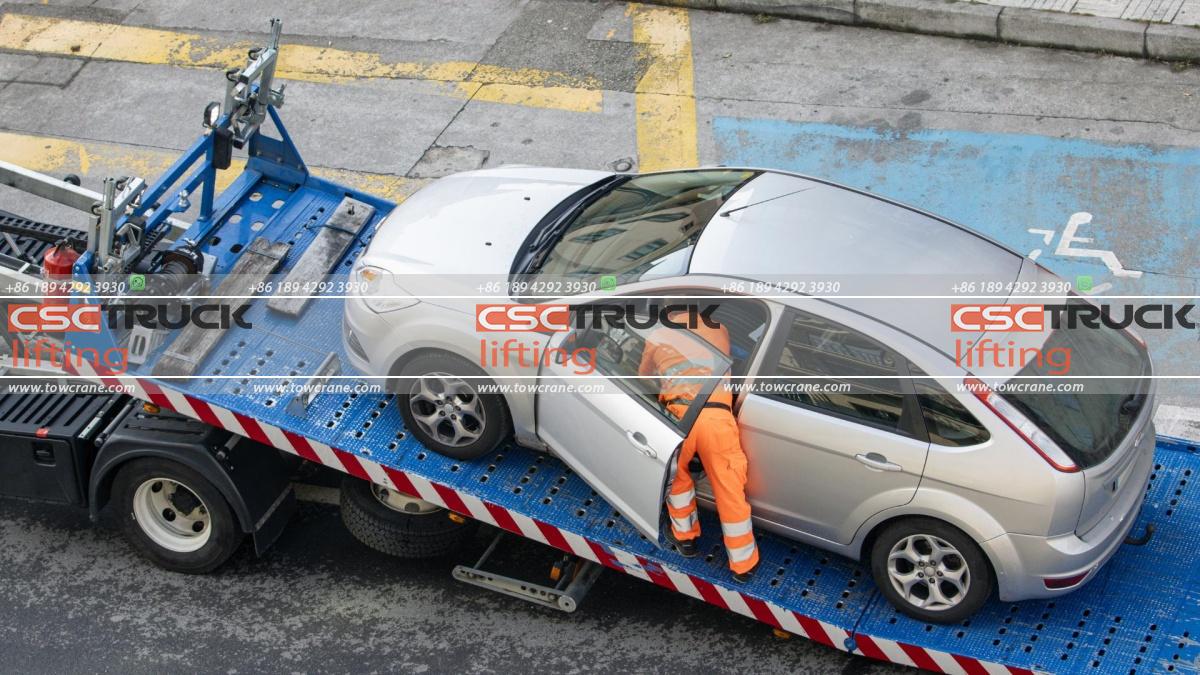
A tow truck winch is one of the most important components in vehicle recovery. Whether a truck needs to pull a disabled car onto a flatbed, recover a heavy commercial vehicle from a roadside accident, or move a vehicle out of a difficult position, the winch provides the pulling force needed to complete the job.
Although a winch may look relatively simple from the outside, it combines several mechanical and hydraulic components to generate controlled pulling power. Understanding how a tow truck winch works can help operators choose the right equipment, use it safely, and maintain it properly.
What Is a Tow Truck Winch?
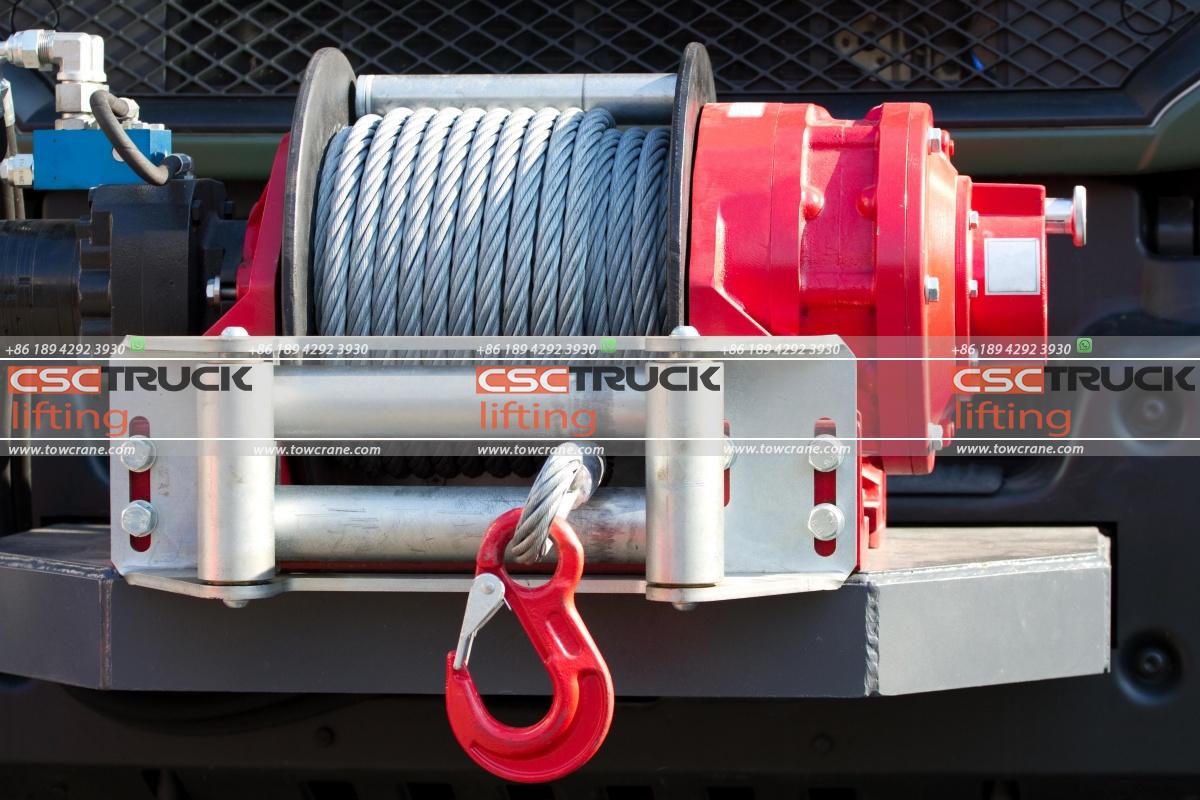
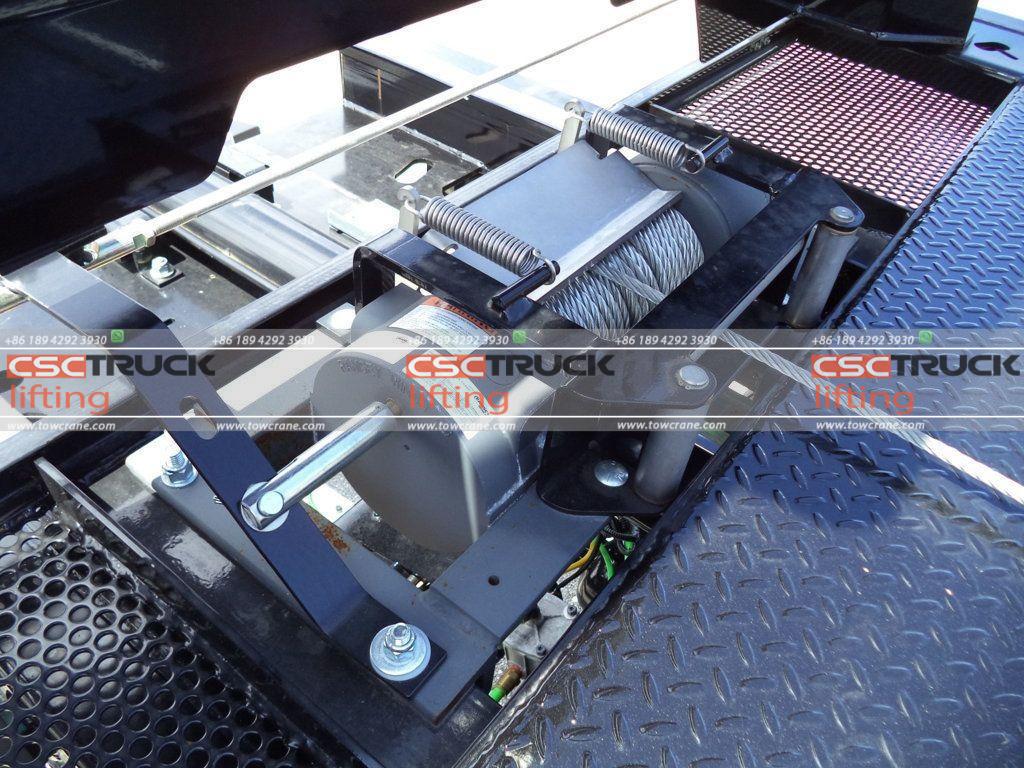
A tow truck winch is a mechanical device used to pull vehicles toward the recovery truck. It normally consists of a drum, wire rope or synthetic rope, motor, gearbox, fairlead, and control system.
When the winch is activated, the motor rotates the drum. As the drum turns, the rope is wound around it, gradually pulling the disabled vehicle toward the tow truck.
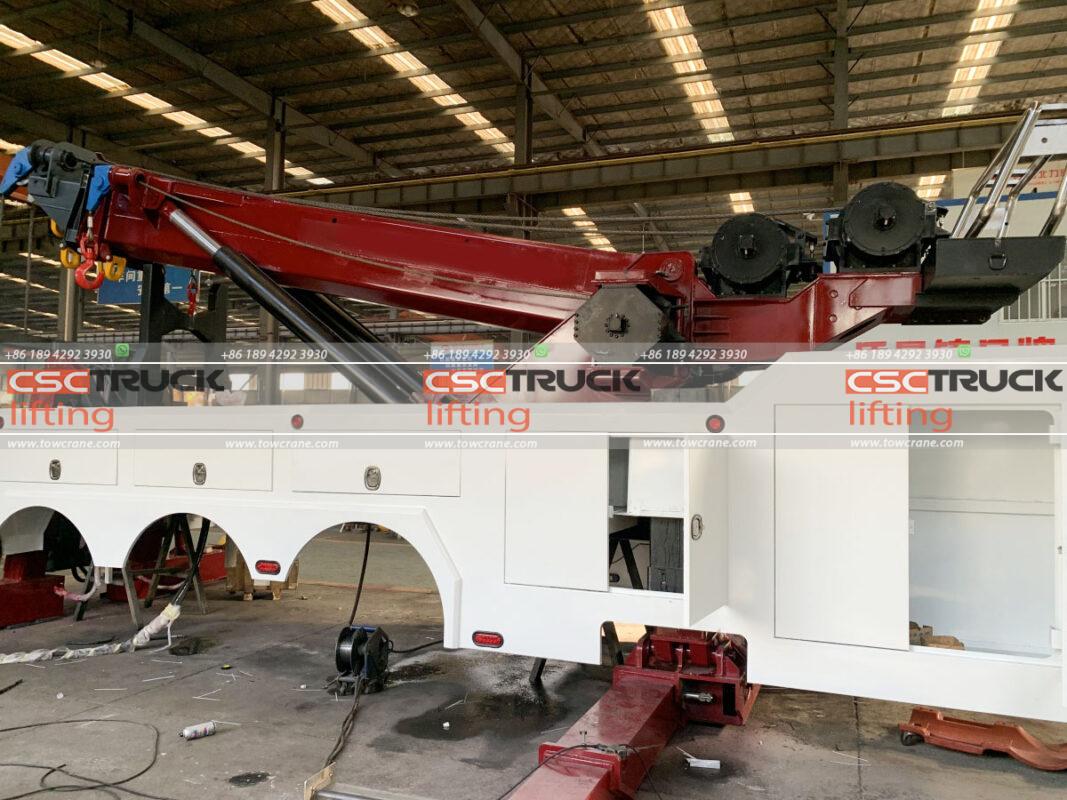
For example, a light-duty tow truck may use a relatively compact winch for passenger cars, while a heavy-duty recovery truck requires much greater pulling capacity for buses, trucks, trailers, and construction vehicles.
How Does a Tow Truck Winch Work?
The basic working principle is straightforward: the motor generates rotational power, the gearbox increases usable torque, and the drum converts this rotation into pulling force.
The process generally works as follows:
1. The winch motor is activated
When the operator operates the winch control, power is supplied to the winch motor. Depending on the tow truck design, the winch may be powered hydraulically or electrically.
Heavy-duty recovery trucks commonly use hydraulic winches because hydraulic systems can provide high torque and reliable performance during demanding recovery operations.
2. The motor rotates the drum
The motor transfers rotational power through a gearbox to the winch drum. The drum is the cylindrical component around which the wire rope is wound.
As the drum rotates in the correct direction, it pulls the rope inward.
3. The rope pulls the disabled vehicle
The end of the rope is connected to the vehicle using appropriate recovery equipment, such as a hook, shackle, or recovery chain.
As the rope is wound onto the drum, the distance between the tow truck and the disabled vehicle decreases, allowing the vehicle to move toward the recovery truck.
4. The operator controls the pulling speed
The winch does not simply pull continuously at maximum speed. The operator can control the winch according to the recovery situation.
Slow, controlled pulling is especially important when loading a damaged vehicle onto a flatbed or recovering a vehicle from an unstable position.
What Are the Main Components of a Tow Truck Winch?
A typical tow truck winch system contains several components that work together.
Winch Drum
The drum stores the wire rope or synthetic rope. Its diameter and width influence rope capacity and winch performance.
Winch Motor
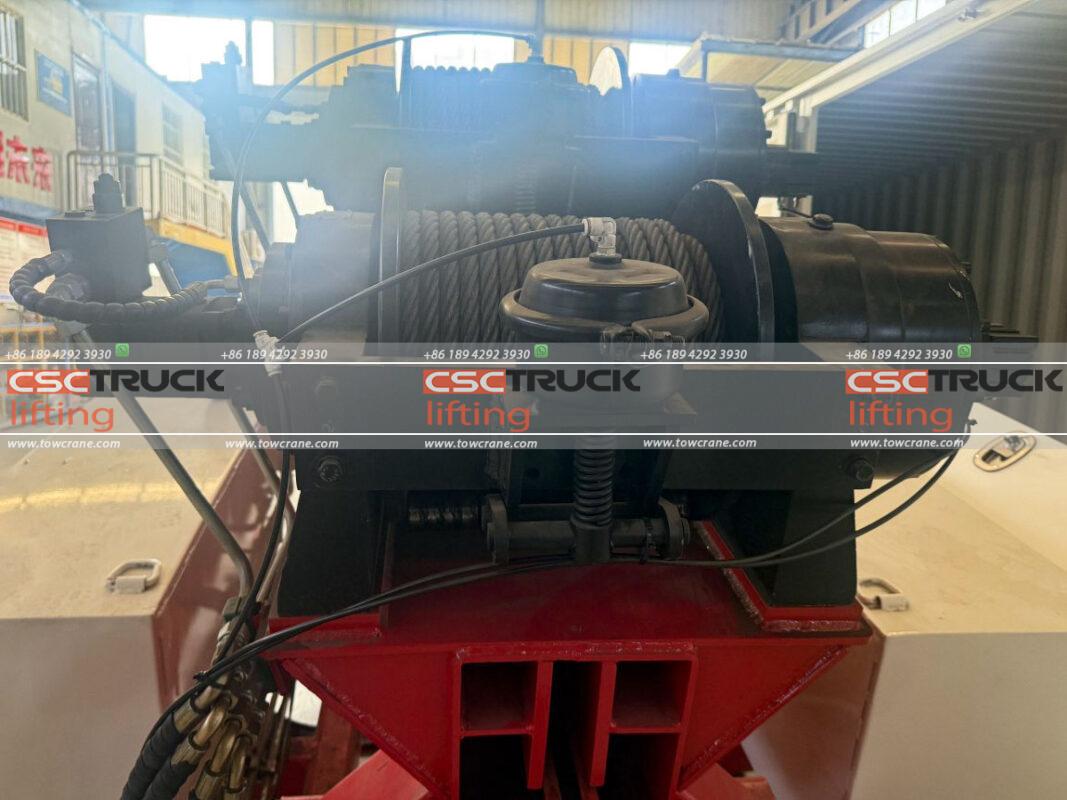
The motor provides the power needed to rotate the drum. Hydraulic motors are widely used on heavy-duty tow trucks because they can generate substantial torque.
Gearbox
The gearbox transfers motor power to the drum while increasing torque and reducing rotational speed. This allows the winch to generate strong pulling force.
Wire Rope
The rope connects the winch to the vehicle being recovered. Steel wire rope is commonly used for heavy-duty applications because of its strength and durability.
Fairlead
The fairlead guides the rope onto and off the drum. It helps reduce friction and prevents the rope from becoming improperly positioned during operation.
Control System
The operator uses the control system to start, stop, extend, and retract the winch. Some modern recovery trucks also integrate winch controls with the hydraulic system and remote-control equipment.
How Does a Hydraulic Tow Truck Winch Work?
A hydraulic tow truck winch uses pressurized hydraulic oil to drive a hydraulic motor.
The truck’s engine powers a hydraulic pump, often through a PTO (Power Take-Off). The pump pressurizes hydraulic oil and sends it through hydraulic lines to the winch motor.
The hydraulic motor converts the energy of the pressurized oil into mechanical rotation. This rotation passes through the gearbox and turns the winch drum.
This arrangement allows the winch to produce high pulling force while giving the operator precise control.
Hydraulic winches are particularly useful for heavy-duty towing and recovery because they can operate continuously and integrate naturally with other hydraulic equipment on the truck.
Why Does Winch Capacity Matter?
One of the most important specifications when selecting a tow truck winch is its pulling capacity.
Winch capacity indicates how much pulling force the winch can generate under specified conditions. However, the actual pulling force available at the rope can vary depending on factors such as the amount of rope remaining on the drum, rope angle, vehicle weight, ground conditions, and whether a snatch block is used.
For example, pulling a vehicle on level pavement is generally easier than recovering the same vehicle from mud, a ditch, or an incline.
This is why operators should not select a winch based solely on the vehicle’s gross weight. The recovery environment and required safety margin also need to be considered.
How Does a Snatch Block Increase Pulling Power?
A snatch block can be used when additional pulling force is required.
Instead of connecting the winch rope directly to the disabled vehicle, the rope passes through a pulley mounted on the snatch block and then returns toward the recovery truck or another anchor point.
This creates a mechanical advantage. In a typical two-part line configuration, the winch can exert approximately twice the pulling force on the load, although the actual result depends on friction and the specific rigging arrangement.
The trade-off is that the vehicle moves more slowly and requires more rope.
For heavy recovery operations, this technique can make it easier to move a vehicle that is stuck, heavily damaged, or positioned on difficult terrain.
How Is a Winch Used to Load a Vehicle onto a Flatbed?
On a flatbed tow truck, the winch plays a critical role when the vehicle cannot drive onto the platform on its own.
First, the operator positions the flatbed and deploys the winch rope. The rope is then connected to an appropriate recovery point on the disabled vehicle.
The operator gradually engages the winch, pulling the vehicle toward the rear of the platform. As the vehicle reaches the loading ramps, the winch continues pulling until the vehicle is positioned correctly on the flatbed.
Once the vehicle is fully loaded, it must be secured using appropriate tie-down equipment before transportation.
This controlled process allows a non-running or damaged vehicle to be transported without relying on its own engine or drivetrain.
What Affects Tow Truck Winch Performance?
Several factors can influence winch performance.
Rope Layers on the Drum: The pulling force can change as additional layers of rope build up on the drum.
Recovery Angle: A straight pulling direction is generally more efficient than an extreme side angle.
Ground Conditions: Mud, sand, snow, and steep slopes can significantly increase resistance.
Hydraulic Pressure and Flow: On hydraulic winches, the hydraulic system must provide suitable pressure and flow for the winch motor.
Rope Condition: Damaged, corroded, kinked, or excessively worn wire rope can compromise recovery performance and safety.
For this reason, proper winch selection should consider the complete recovery application rather than looking at winch capacity alone.
Reliable Winch Systems for Heavy-Duty Recovery
A tow truck’s winch is more than simply a cable-pulling device. It is a key part of the entire recovery system, converting engine or hydraulic power into controlled pulling force.
From loading disabled cars onto flatbeds to recovering heavy commercial vehicles after accidents, the correct tow truck winch can significantly improve recovery efficiency and operational flexibility.
For businesses that require professional vehicle recovery equipment, CSCTRUCK Towcrane offers a range of tow trucks and heavy-duty recovery solutions equipped for demanding roadside and commercial vehicle recovery applications.