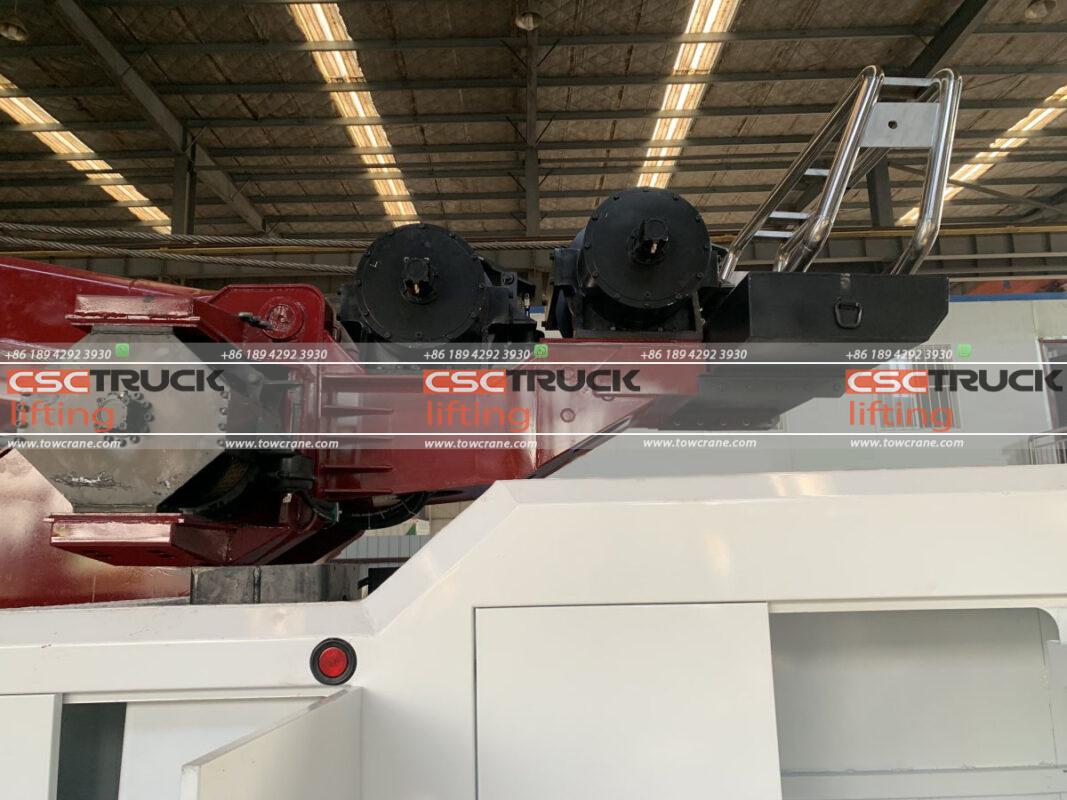
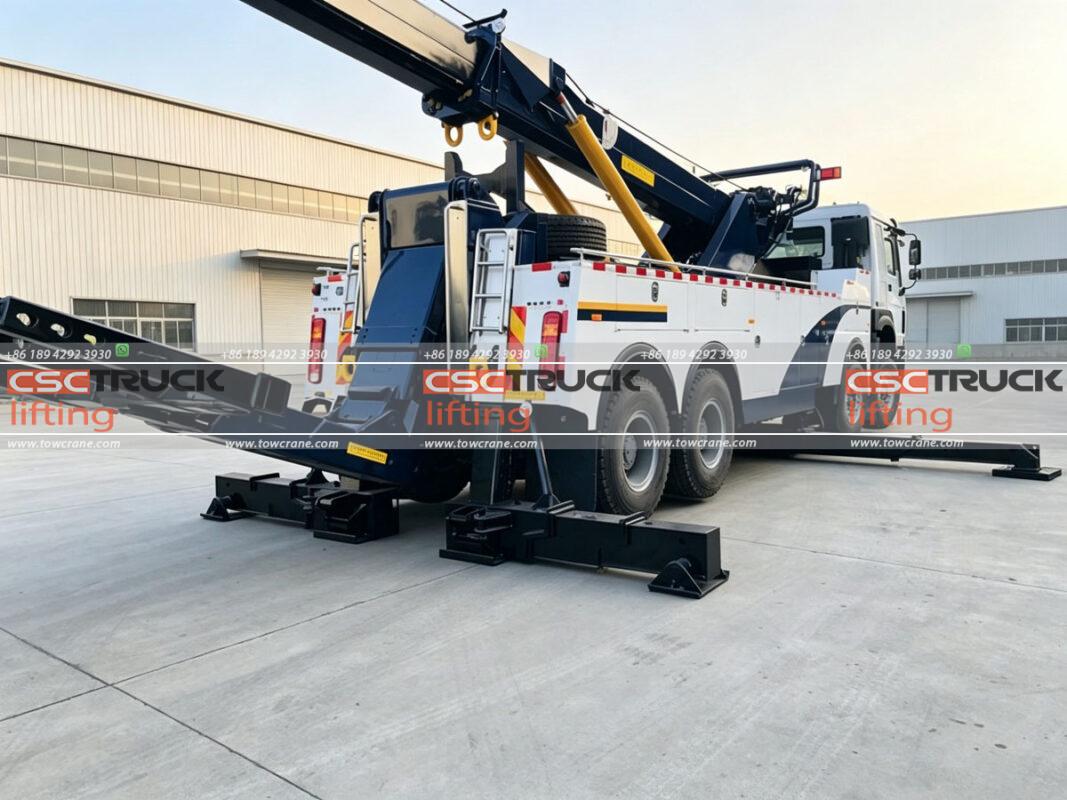
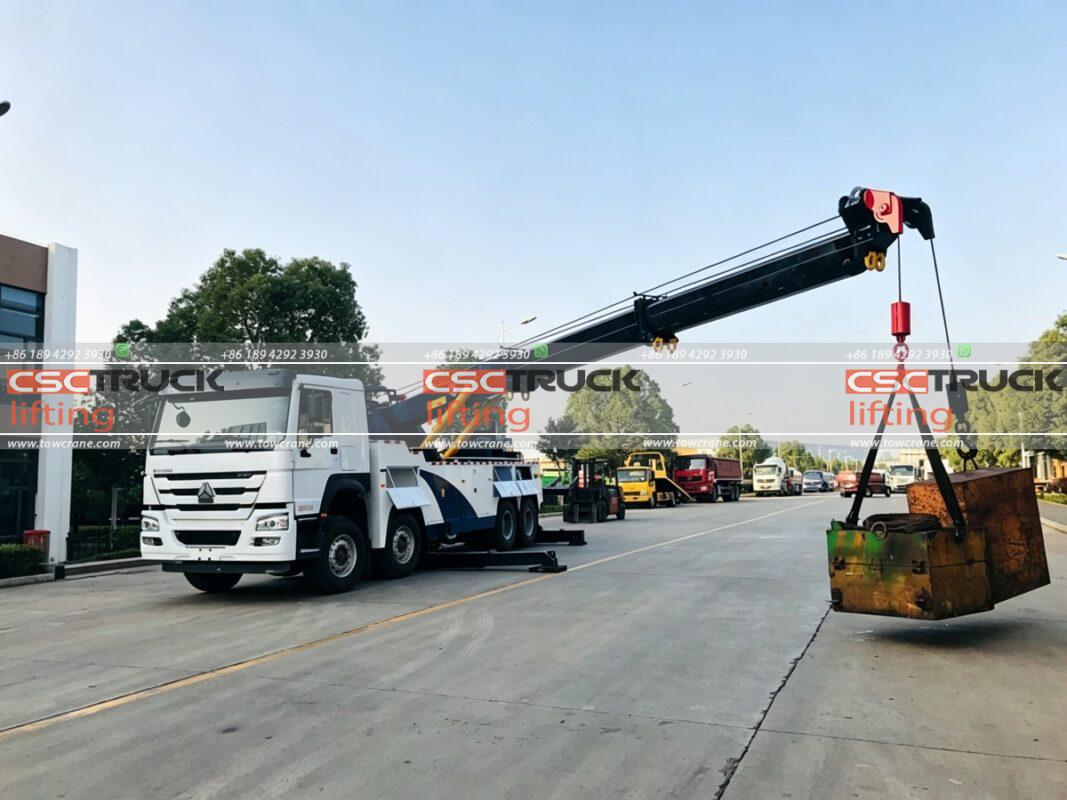
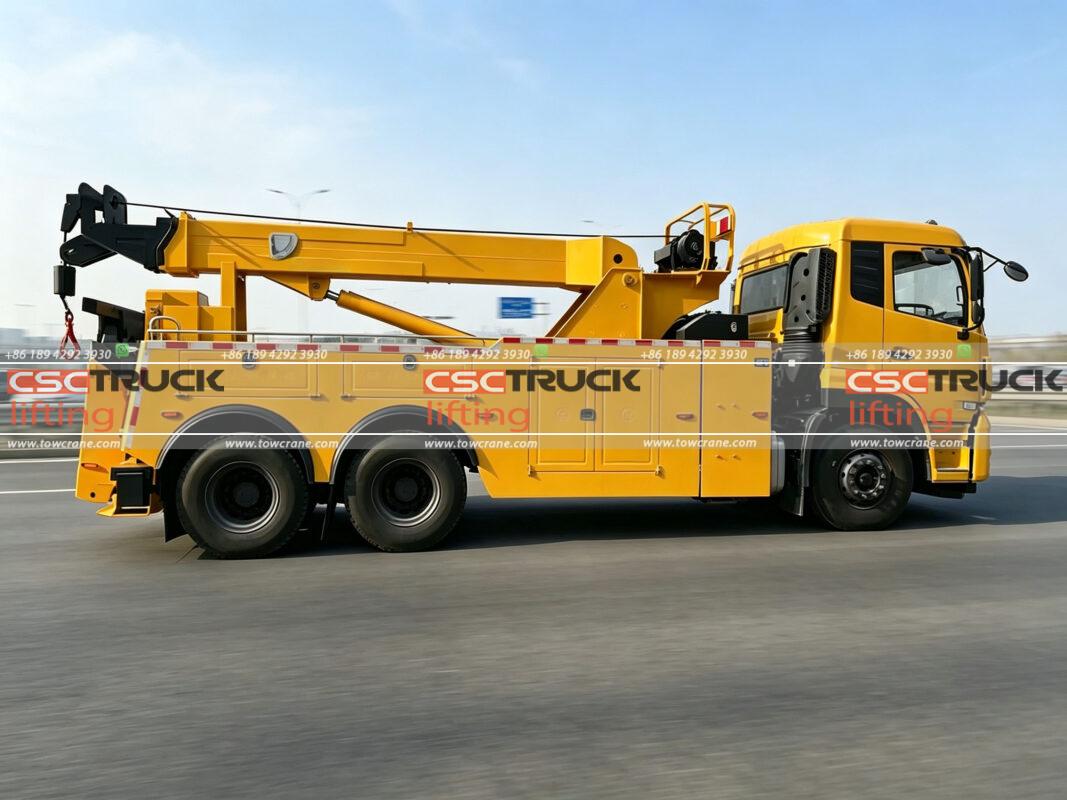
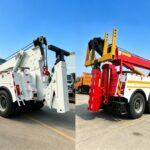
A rotator tow truck is designed for heavy-duty vehicle recovery jobs where conventional tow trucks may not have enough lifting capacity, boom reach, or pulling power. Among its most important components are the dual winches mounted on the recovery superstructure.
Unlike a single-winch system, a dual winch rotator tow truck uses two independent winches to provide greater pulling flexibility and better control during difficult recovery operations. The winches can work separately or together, depending on the weight, position, and recovery angle of the vehicle.
Understanding how dual winches work can help fleet operators, recovery companies, and towing professionals choose the right heavy-duty rotator tow truck for challenging roadside and accident recovery applications.
What Is a Dual-Winch System on a Rotator Tow Truck?
A dual-winch system consists of two hydraulic winches, usually installed on the rear recovery body or integrated with the rotating boom structure. Each winch has its own wire rope, drum, hydraulic drive, and control system.
The basic purpose of a winch is to generate pulling force. A steel wire rope is attached to the disabled vehicle using appropriate recovery equipment, and the winch drum rotates to wind the rope back onto the drum. As the rope is retracted, the vehicle is pulled toward the tow truck or repositioned for lifting.
With two winches available, operators have more options than with a single-line recovery system.
For example, one winch can pull a vehicle while the other stabilizes or controls its position. Alternatively, both winches can be used together to increase the available pulling force when the recovery situation requires greater capacity.
This makes dual winches particularly useful for heavy trucks, buses, trailers, construction equipment, and overturned commercial vehicles.
How Does the Dual-Winch System Work?
The operation starts with positioning the rotator tow truck as close as practical to the recovery scene. The truck’s hydraulic stabilizers are then deployed to create a stable working platform.
After the boom and recovery equipment are positioned, the operator pays out one or both wire ropes toward the disabled vehicle. Depending on the recovery configuration, the cables may be connected directly to the vehicle’s recovery points or routed through snatch blocks and pulleys.
The hydraulic system powers each winch. When the operator activates a winch, hydraulic oil flows through the hydraulic motor, causing the winch drum to rotate. The drum winds the steel cable inward and generates the pulling force required to move the vehicle.
Because the two winches are independently controllable, the operator can adjust their operation according to the recovery situation.
For example, if a truck has slid sideways into a ditch, one winch may provide the primary pulling force while the second winch helps control the vehicle’s direction. This can reduce unwanted movement and make the recovery process more controlled.
Why Use Two Winches Instead of One?
The biggest advantage of dual winches on a rotator tow truck is flexibility.
A single winch can provide substantial pulling power, but recovery situations are rarely simple. Heavy vehicles may be located at unusual angles, partially overturned, or trapped in mud, ditches, or roadside barriers.
Two winches allow operators to approach these situations from different angles.
Another advantage is load distribution. When both winches are correctly configured and operated within their rated capacities, the recovery force can be distributed between two cable systems rather than relying entirely on one winch.
This can be especially useful when recovering heavy commercial vehicles.
Dual winches also improve vehicle positioning. Instead of simply pulling a vehicle straight toward the recovery truck, operators can use different cable directions to help control the vehicle’s movement.
This is one reason why dual-winch configurations are common on professional rotator recovery trucks used for complex accident recovery.
How Do the Two Winches Work Together?
The two winches do not necessarily have to operate at exactly the same speed or perform exactly the same function.
In a straightforward recovery, both winches may be connected to the disabled vehicle and operated together. The operator must carefully monitor cable tension and ensure that the forces remain within the rated limits of the equipment.
In a more complicated recovery, the winches can perform different roles.
One winch may act as the main pulling winch, while the second provides a secondary pulling or stabilizing force. For example, when recovering an overturned trailer, the first winch may pull the vehicle toward the rotator while the second winch helps control lateral movement.
The operator can also use different cable angles to influence the direction in which the vehicle moves.
This independent control is one of the most valuable features of a dual-winch system.
What Role Does the Rotator Boom Play?
The winches and the rotator boom work together, but they perform different jobs.
The winches primarily provide pulling force through the wire ropes, while the rotator boom provides lifting, positioning, and recovery reach.
A rotator boom can rotate horizontally, allowing the operator to position the recovery point around the disabled vehicle. This is particularly valuable when the recovery truck cannot be positioned directly in front of or behind the vehicle.
For example, a damaged truck may be lying across a road or partially outside the roadway. The rotator boom can be rotated toward the vehicle, while the dual winches provide the pulling force needed to reposition it.
This combination gives a rotator tow truck significantly greater versatility than a conventional wrecker.
What Types of Vehicles Can Dual Winches Recover?
Dual-winch rotator tow trucks are especially suitable for heavy commercial vehicle recovery.
Typical applications include recovering:
Heavy-duty trucks
Tractor-trailers
Buses
Tanker trucks
Construction machinery
Dump trucks
Delivery trucks
Vehicles involved in rollover accidents
They are also useful for vehicles stuck in difficult terrain, such as muddy construction sites, roadside ditches, or uneven industrial areas.
For extremely heavy or unstable vehicles, the recovery plan must be based on the actual vehicle weight, center of gravity, attachment points, terrain, and equipment ratings rather than simply relying on the combined nominal winch capacity.
What Are the Main Advantages of Dual Winches?
The benefits of a dual-winch configuration go beyond simply having two winches.
Higher recovery flexibility is perhaps the most important advantage. Two independent cable systems allow operators to adapt the recovery setup to different vehicle positions.
Better directional control is another major benefit. By using different attachment points and cable directions, operators can better control how a vehicle moves during recovery.
The system can also provide additional pulling capability when both winches are properly configured for a suitable recovery task.
Finally, dual winches can improve operational efficiency. A professional recovery crew can use one winch for a primary task and the second for a secondary task without repeatedly repositioning the recovery equipment.
Choosing a Rotator Tow Truck with Dual Winches
For companies involved in highway recovery, accident response, municipal rescue, or heavy commercial towing, a rotator tow truck with dual winches can provide a valuable combination of pulling power, positioning flexibility, and recovery control.
When selecting a truck, it is important to look beyond the headline winch capacity. Consider the number and capacity of winches, boom lifting capacity, boom reach, rotation range, hydraulic system, chassis configuration, stabilizer design, wire rope specifications, and overall recovery capacity.
A properly matched recovery truck can handle a much wider range of difficult recovery situations while improving operational efficiency.
For professional heavy-duty recovery companies, dual winches combined with a 360-degree rotator boom provide a powerful and versatile recovery solution. The two systems complement each other: the winches generate controlled pulling force, while the rotator boom determines where that force can be applied. This combination is what makes modern rotator tow trucks capable of tackling some of the most demanding vehicle recovery jobs.
CSCTRUCK Towcrane offers heavy-duty rotator tow trucks with dual winches, designed to provide powerful, flexible, and reliable solutions for demanding vehicle recovery operations.