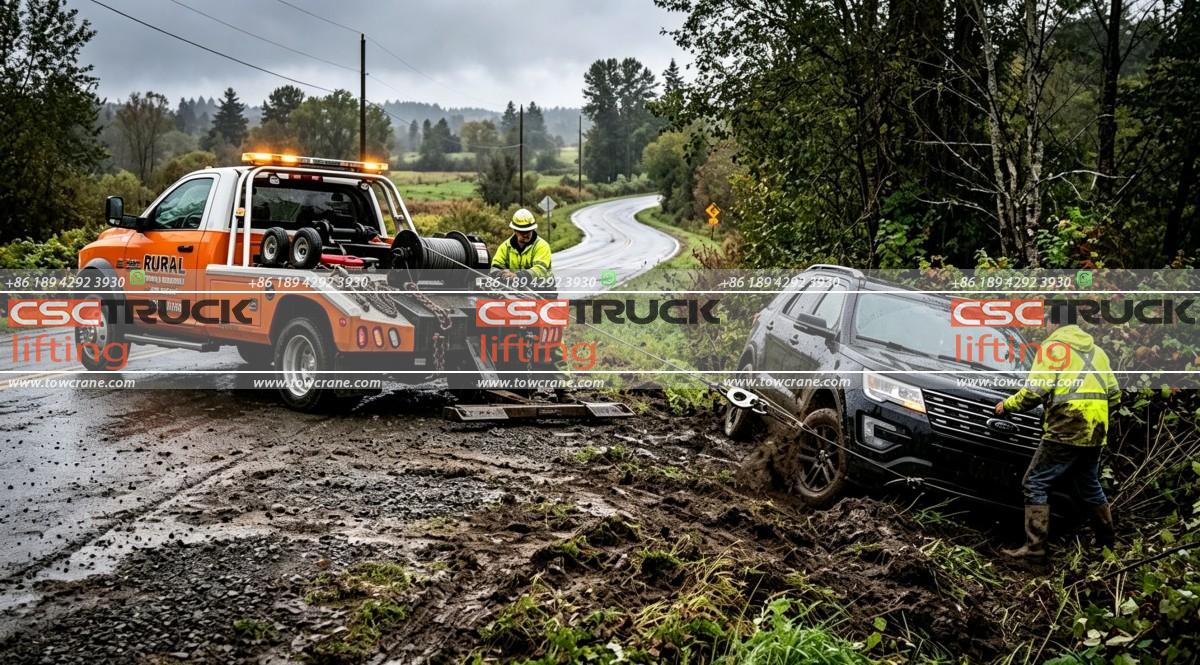
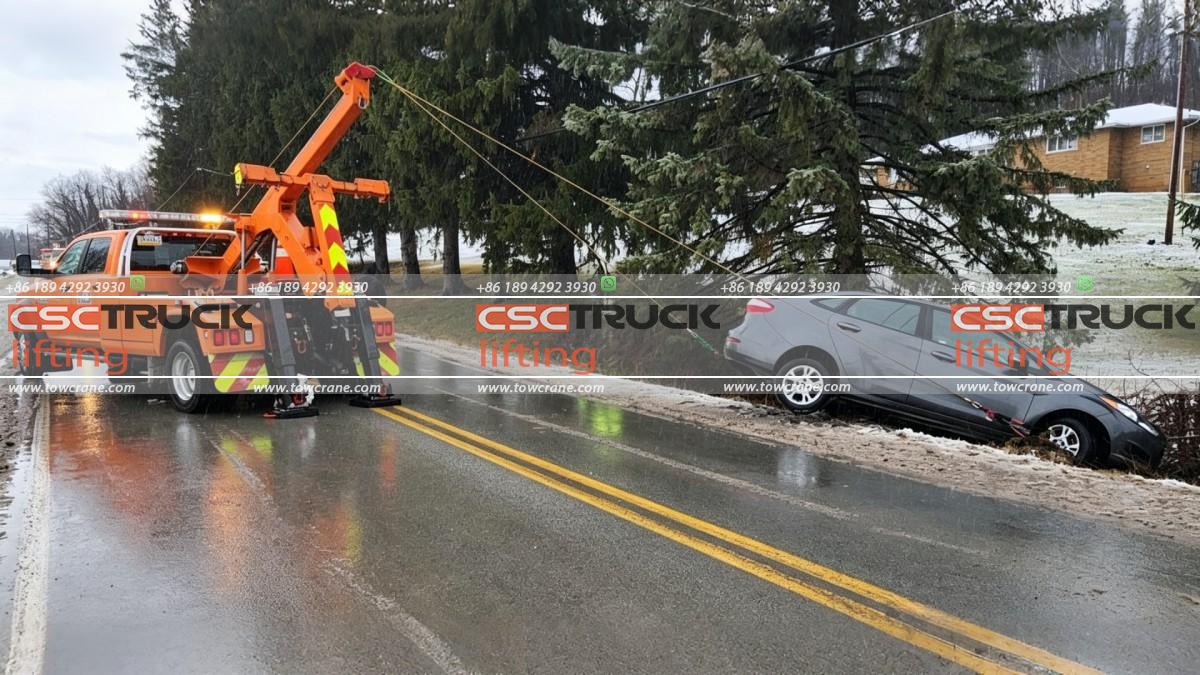
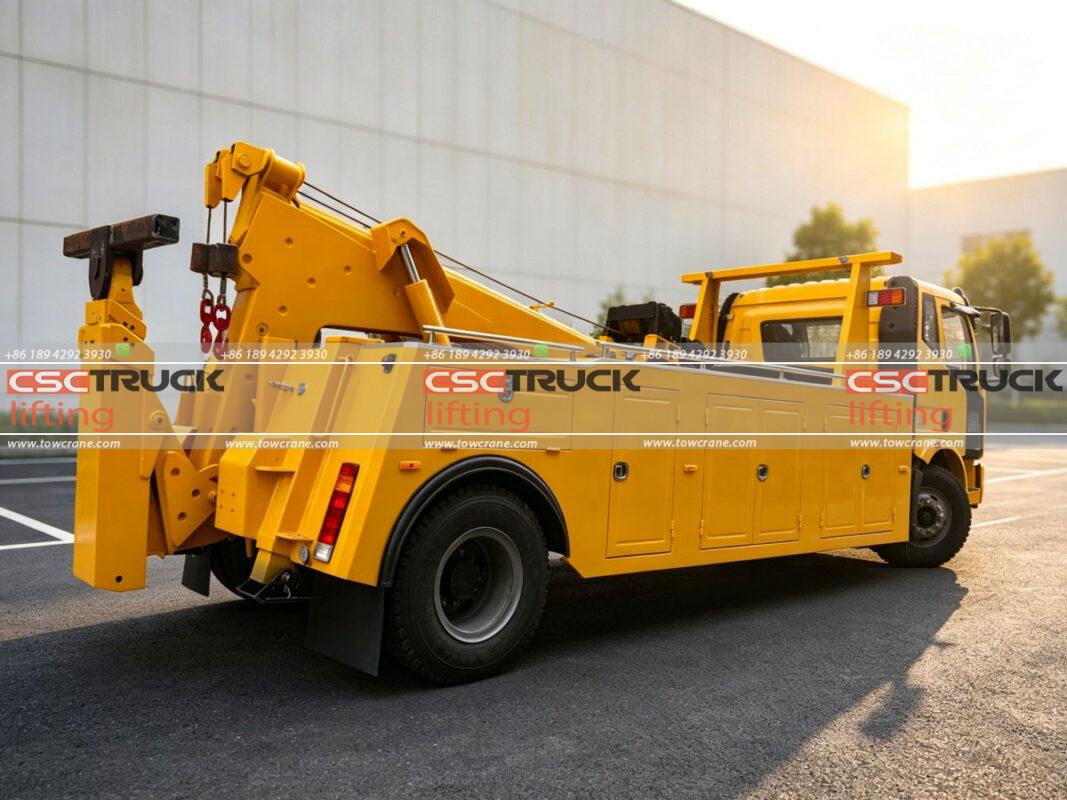
When a car, truck, or other vehicle slides into a ditch, simply towing it forward is often not enough. The vehicle may be sitting at an awkward angle, partially buried in soft ground, or blocked by the ditch itself. In these situations, a wrecker tow truck uses a combination of a recovery boom, winch, wire rope, hydraulic system, and stabilizing equipment to gradually pull the vehicle back onto stable ground.
Unlike ordinary towing, ditch recovery is a controlled recovery operation. The wrecker tow truck must first establish a stable position, determine the best pulling direction, connect the recovery equipment correctly, and then apply controlled winching force. The boom can also provide a lifting component, helping the disabled vehicle overcome uneven terrain and obstacles during recovery.
1. Assessing the Vehicle and Ditch
Before starting the recovery, the operator needs to evaluate the position and condition of the vehicle.
Important factors include the vehicle’s weight, direction of travel, wheel position, ground conditions, depth of the ditch, slope angle, and possible obstacles around the vehicle. A vehicle that has simply slipped onto a roadside slope may require a relatively straightforward winching operation, while an overturned truck or heavily loaded commercial vehicle may require a heavy-duty wrecker with significantly greater recovery capability.
The operator also needs to determine where the recovery vehicle can be positioned safely. A direct pulling line is generally preferred because it improves pulling efficiency and reduces unnecessary side loading on the recovery equipment. Manufacturer operating guidance specifically recommends aligning the recovery vehicle with the direction of the intended pull whenever possible.
2. Positioning the Wrecker Tow Truck
Once the recovery plan is established, the wrecker tow truck is positioned on firm and reasonably level ground.
The goal is to create a stable platform from which the winch can pull. The recovery truck’s brakes are applied, and stabilizers, outriggers, or rear spades may be used depending on the vehicle configuration and recovery conditions.
For heavy recovery work, stabilization is particularly important. The pulling force generated by the winch must be transferred through the recovery vehicle and into the ground. If the recovery truck begins to slide or lift during the operation, the recovery setup needs to be reassessed rather than simply increasing winch force.
3. Extending the Recovery Boom
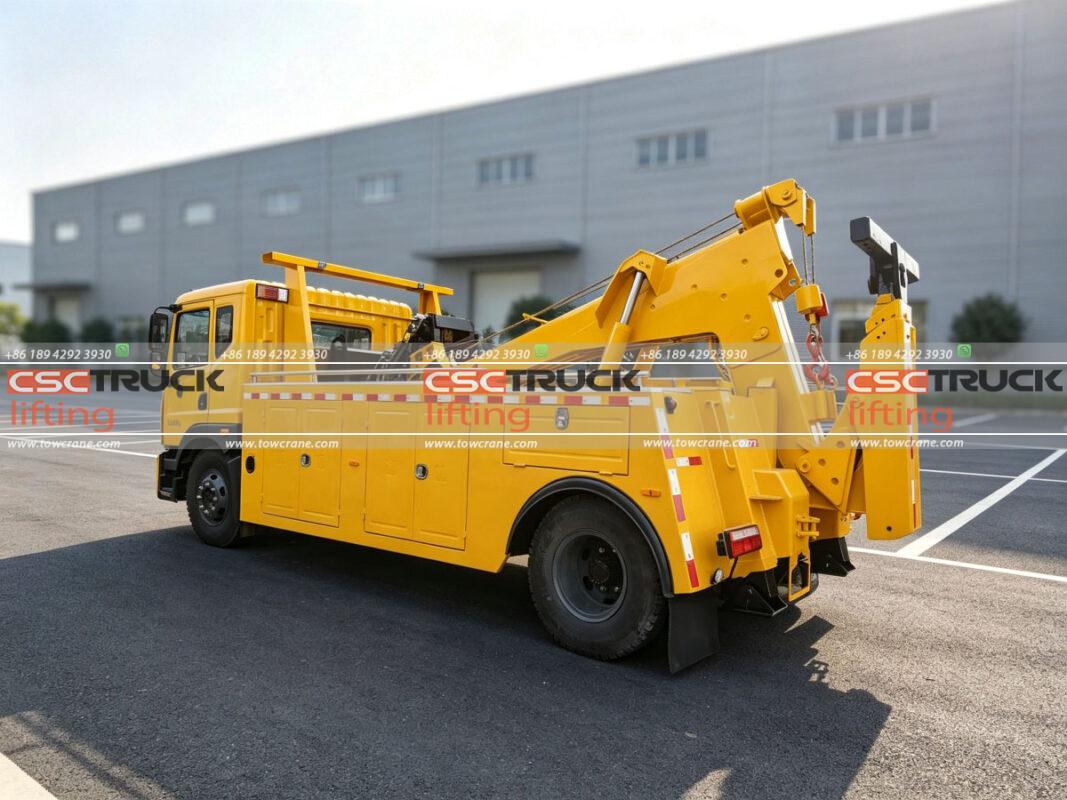
The next step is to position the recovery boom over or toward the disabled vehicle.
The boom provides an elevated attachment point for the winch cable. This is particularly useful in ditch recovery because the operator may need to pull the vehicle upward as well as forward.
A recovery boom can therefore perform more than a simple horizontal pull. By routing the winch cable through sheaves at the end of the boom, the system can generate a lifting component while pulling the vehicle toward the recovery truck. This can help the vehicle climb over uneven ground, rocks, or other obstacles.
For example, if a truck is sitting several feet below road level, a low horizontal pull may cause the vehicle’s tires to remain trapped against the ditch edge. Raising the cable attachment point can provide a more favorable recovery angle and help lift the vehicle as it moves toward the road.
4. Connecting the Winch Cable
After positioning the boom, the operator extends the winch cable to the disabled vehicle and attaches it to an appropriate recovery point.
The attachment method depends on the vehicle and recovery situation. Recovery equipment may include hooks, chains, slings, snatch blocks, or other approved accessories.
The cable should be routed to maintain the intended direction of pull. The operator also needs to consider the working load limit of the wire rope and all connected recovery components.
For difficult recoveries, a snatch block can be used to change the direction of the cable or create a mechanical advantage. However, the entire rigging arrangement must remain within the rated capacity of the equipment.
5. Applying Controlled Winching Force
Once the vehicle is securely connected, the wrecker truck winch begins pulling the vehicle toward the recovery vehicle.
The operator normally applies force gradually rather than immediately using maximum winch capacity. Controlled pulling allows the operator to monitor how the vehicle, cable, boom, and ground are responding.
As the vehicle starts moving, the recovery angle may change. The vehicle may initially need to move upward, then forward, and finally back onto the road surface. The operator may need to stop, reposition the boom, adjust the cable, or change the pulling direction during different stages of the recovery.
This is one of the major advantages of a properly designed wrecker tow truck: its recovery boom and hydraulic systems allow the operator to control the position and direction of the recovery force.
6. Using the Boom to Lift and Pull
For a vehicle deeply positioned in a ditch, pulling alone may not be enough.
The wrecker boom can help lift the vehicle while the winch pulls it toward the road. This combined lifting-and-pulling action can reduce the resistance caused by the ditch edge.
As the vehicle gets closer to the recovery truck, the geometry of the recovery system changes. Boom position, cable angle, and vehicle position all affect the available lifting and pulling forces. Manufacturer guidance notes that boom recovery capacity changes with boom extension and working angle, which is why operators must follow the applicable load chart rather than treating the boom’s maximum rating as constant.
For heavier vehicles, this controlled combination of lifting and pulling becomes especially important. Modern heavy-duty wreckers can be equipped with high-capacity recovery booms and powerful winches designed for demanding vehicle recovery operations.
7. Bringing the Vehicle Back onto the Road
As the vehicle reaches the edge of the ditch, the operator carefully controls the final stage of the recovery.
The vehicle may need to climb over the ditch edge or transition from a steep angle to a level road surface. Sudden movement at this stage can create additional stress, so controlled winching and careful positioning remain important.
Once the vehicle is safely back on stable ground, the recovery equipment can be disconnected or the vehicle can be secured for towing.
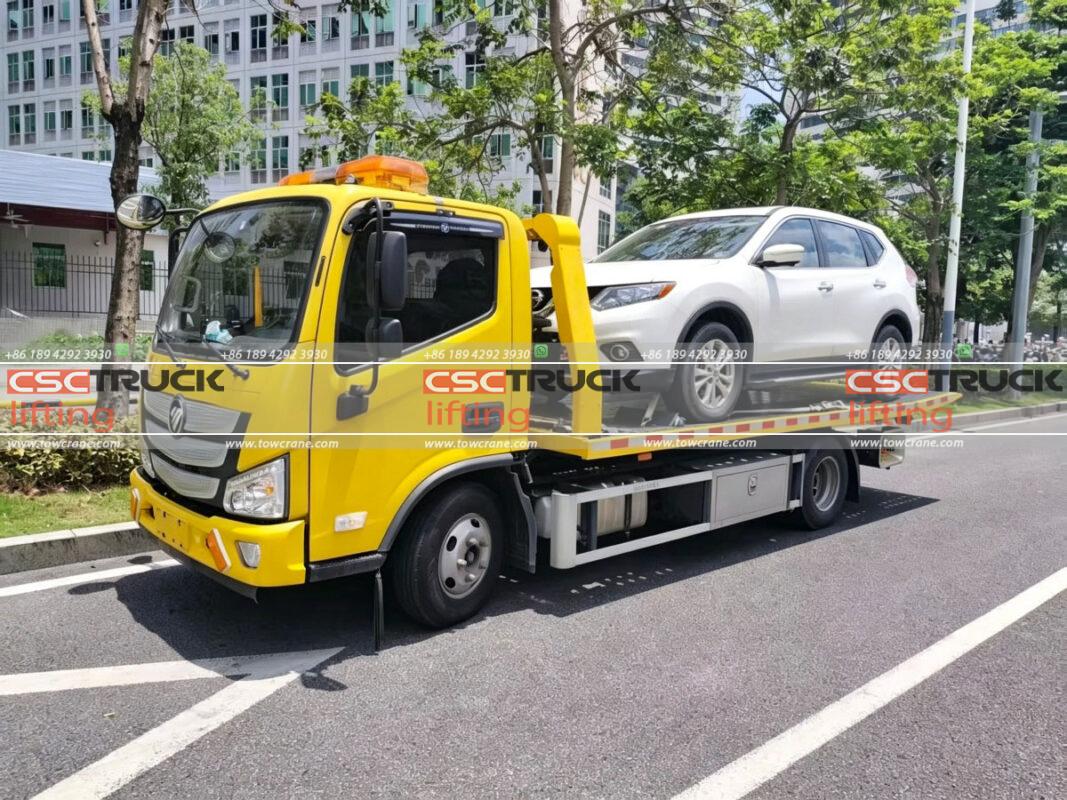
For vehicles that are still operational but have one axle or end of the vehicle in a difficult position, an underlift may also be used after the initial recovery. Integrated wreckers combine recovery equipment with towing equipment, allowing them to transition from recovery to towing without requiring a separate vehicle.
Why Is a Wrecker Tow Truck Effective for Ditch Recovery?
The main advantage of a wrecker tow truck is its ability to apply controlled recovery force from different positions.
A conventional tow vehicle may be able to pull a disabled vehicle along a relatively simple path, but ditch recovery often requires lifting, pulling, repositioning, and stabilization at the same time.
A properly equipped wrecker can combine:
A hydraulic recovery boom for positioning and lifting
A high-capacity winch for controlled pulling
Wire rope and recovery accessories for connecting to the vehicle
Outriggers or stabilizers for recovery stability
An underlift for subsequent towing
Hydraulic controls for precise operation
This combination makes wreckers suitable for everything from roadside vehicle recovery to demanding commercial truck and trailer recovery.
Safety Considerations During Ditch Recovery
Ditch recovery can involve significant stored energy, unstable ground, and unpredictable vehicle movement. Operators should always follow the manufacturer’s operating instructions and use equipment within its rated working limits.
The recovery truck should be properly stabilized, the pulling direction should be considered carefully, and personnel should remain clear of hazardous zones around the cable and vehicle. The wire rope should never be overloaded, and the winch clutch should not be disengaged while the cable is under load.
For heavy recovery operations, load charts and the capacities of the boom, winch, wire rope, rigging accessories, and chassis all need to be considered together.
CSCTRUCK Wrecker Tow Truck Solutions
From roadside accidents to commercial vehicle recovery, a wrecker tow truck provides the lifting and pulling capability needed to recover vehicles from challenging positions.
CSCTRUCK Towcrane offers integrated wreckers, heavy-duty wreckers, and rotator tow trucks for different vehicle recovery requirements. Depending on the application, the recovery vehicle can be configured with different boom capacities, winch systems, underlifts, hydraulic controls, and chassis configurations.
For contractors, towing companies, and fleet operators handling difficult recovery jobs, choosing the right wrecker tow truck can make vehicle recovery more controlled, efficient, and versatile.