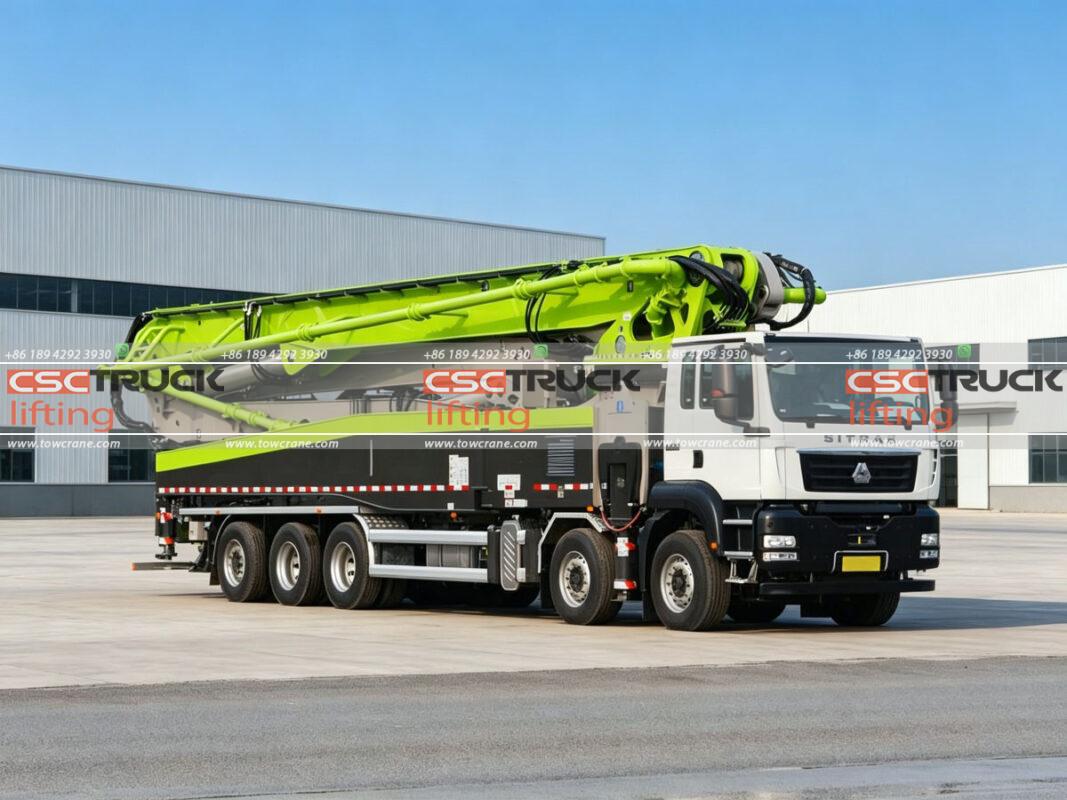
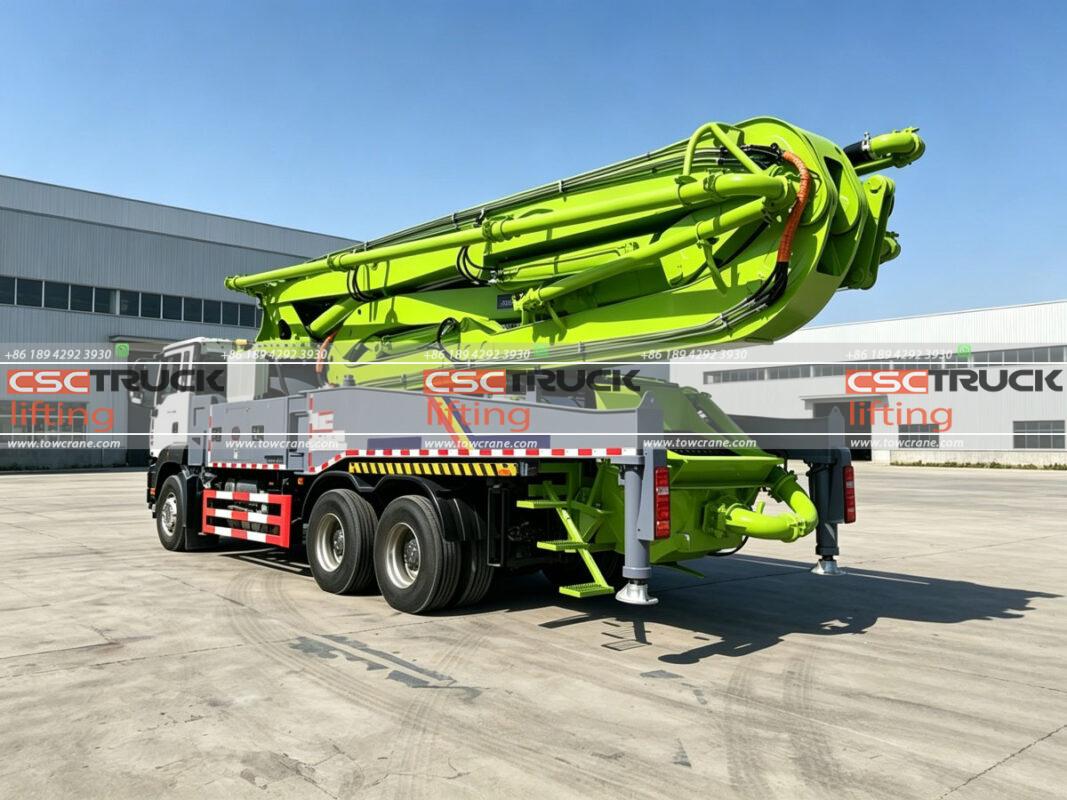
A concrete pump truck is a specialized construction vehicle designed to transport fresh concrete from a mixer to a specific pouring location. Unlike traditional concrete placement methods, it uses a mechanical pumping system and an extendable boom to deliver concrete over long distances, to high elevations, or into areas that are difficult for conventional equipment to access.
A modern concrete pump truck combines a truck chassis, concrete pumping system, hydraulic system, boom assembly, delivery pipeline, and control system. Each component performs a specific function, while all systems work together to provide continuous and precise concrete placement.
Understanding these main components can help construction companies select the right equipment and operate it more efficiently.
Truck Chassis
The truck chassis is the foundation of the entire concrete pump truck. It supports the pumping equipment, hydraulic components, boom, concrete hopper, and other superstructure components.
A heavy-duty commercial truck chassis is normally selected according to the required pump capacity, boom length, gross vehicle weight, and operating environment. The chassis also provides the engine power needed to drive the vehicle and operate the auxiliary equipment.
For construction projects, chassis reliability is particularly important because concrete pump trucks often travel between different job sites and operate under demanding conditions.
Concrete Hopper
The concrete hopper is the receiving point for fresh concrete delivered by a concrete mixer truck.
When the mixer truck discharges concrete, the material enters the hopper. A grate is normally installed above the hopper to prevent oversized aggregates or foreign objects from entering the pumping system.
Inside the hopper, an agitator continuously moves the concrete to reduce segregation and maintain a relatively uniform mixture. This helps ensure that concrete can enter the pumping cylinders smoothly.
The hopper therefore acts as the connection between the concrete supply vehicle and the pumping mechanism.
Concrete Pumping System
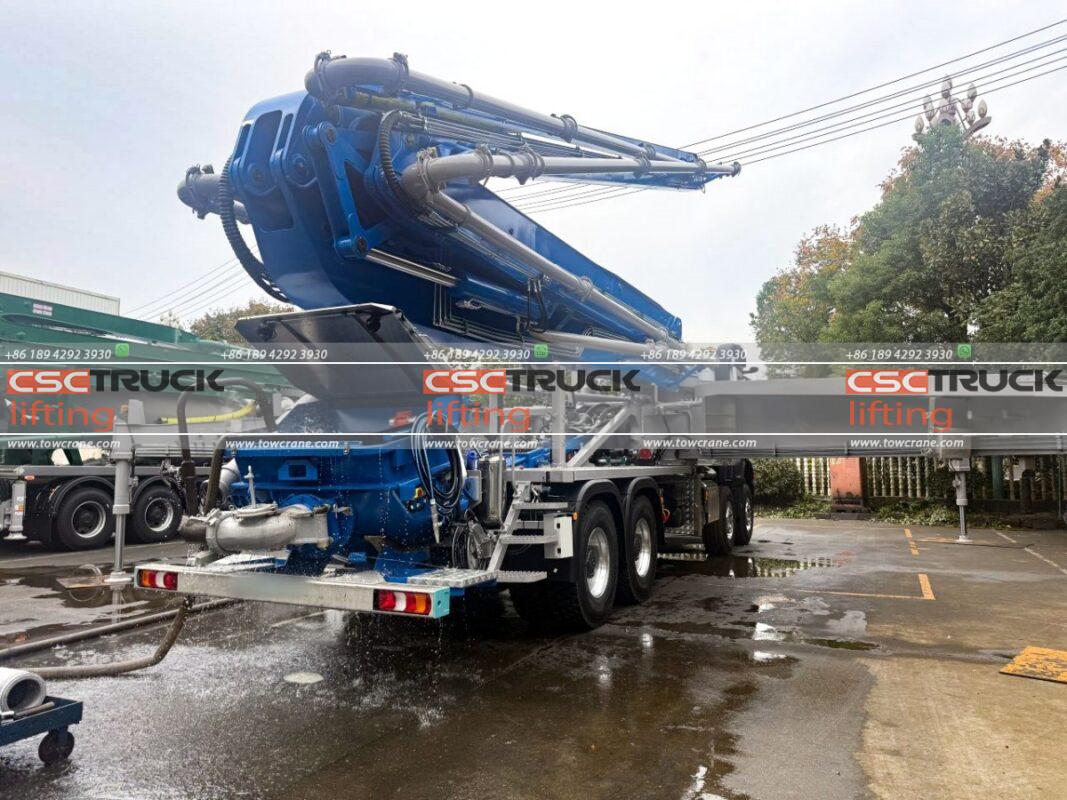
The concrete pumping system is the heart of the vehicle. Its primary function is to push fresh concrete from the hopper through the delivery pipeline and toward the final placement point.
Most truck-mounted concrete pumps use a two-cylinder pumping mechanism. While one cylinder draws concrete from the hopper, the other pushes concrete into the delivery line. The cylinders alternate their movements to create a continuous flow.
The pumping system normally includes:
Pumping cylinders
Concrete pistons
S-valve or similar switching valve
Hydraulic cylinders
Concrete outlet
Lubrication and wear components
The design of these components directly affects pumping pressure, delivery capacity, and operating reliability.
Hydraulic System
The hydraulic system provides the power needed to operate the pumping mechanism and boom.
Hydraulic pumps convert engine power into hydraulic energy, which is then transmitted through hydraulic valves, cylinders, and pipelines. This system controls the movement of the pumping cylinders as well as the extension, folding, and positioning of the boom.
Hydraulic systems are widely used because they can generate high force while allowing smooth and precise control.
A reliable hydraulic system is essential for maintaining stable pumping performance and accurate boom positioning, particularly when the truck is working at considerable height or reach.
Concrete Boom
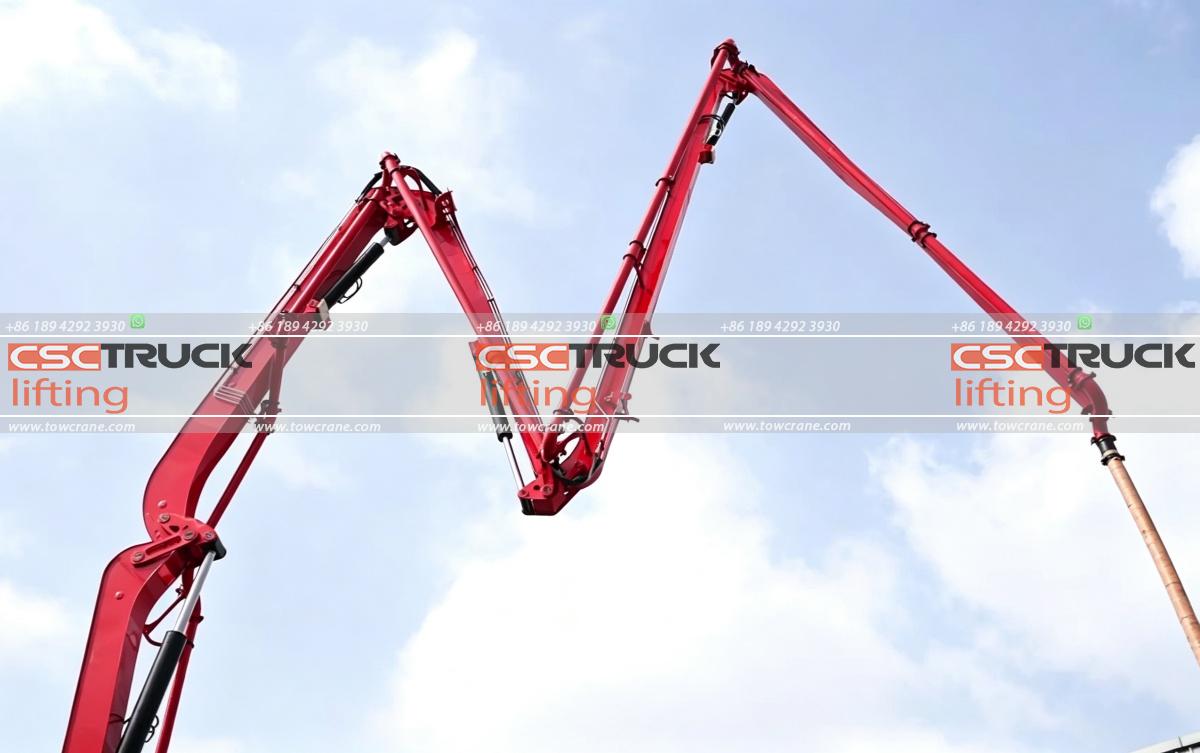
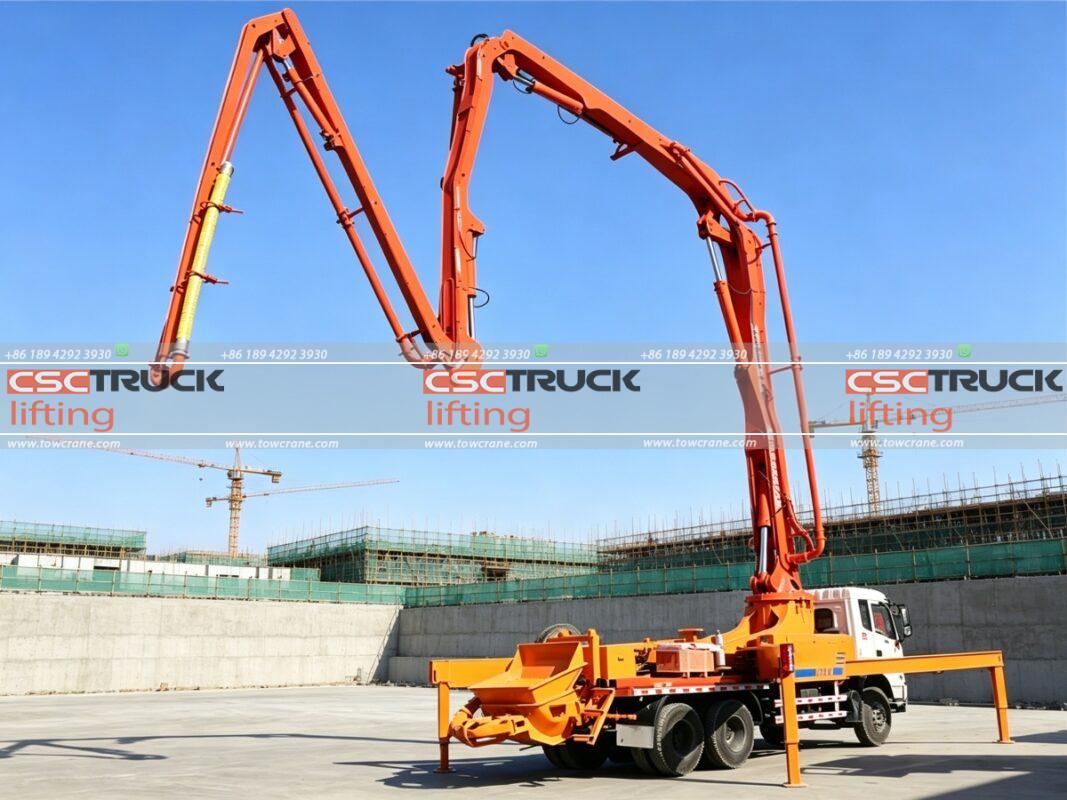
The concrete boom is one of the most recognizable components of a boom pump truck. It consists of several articulated sections that can fold for transportation and unfold during concrete placement.
Hydraulic cylinders control the movement of each boom section, allowing the operator to position the discharge point accurately.
Depending on the truck model, the boom may provide a substantial vertical and horizontal working reach. This allows concrete to be delivered to high-rise buildings, bridges, foundations, tunnels, and other difficult-to-access areas without requiring extensive temporary pipelines.
The boom is therefore one of the major advantages of a truck-mounted concrete pump compared with conventional concrete placement equipment.
Delivery Pipeline
The delivery pipeline carries concrete from the pumping system to the end of the boom.
It is usually made from wear-resistant steel pipes and flexible hoses. Steel pipes provide durability in sections exposed to high pumping pressure and abrasion, while flexible hoses allow the operator to control the final discharge position.
The pipeline must be properly sized and installed because factors such as pipe diameter, length, bends, and internal wear can influence pumping resistance.
Concrete containing abrasive aggregates can gradually wear the inner wall of the pipeline. Regular inspection and timely replacement of worn sections are therefore important for safe and efficient operation.
End Hose
The end hose is the flexible section at the end of the concrete delivery pipeline. It allows workers to move the discharge point over a relatively small area without repositioning the entire boom.
During concrete placement, the operator can use the boom controls to position the hose while workers guide the final discharge location.
Because the end hose is flexible, it is particularly useful for placing concrete into foundations, walls, columns, slabs, and other structures requiring precise positioning.
PTO and Power Transmission System
The Power Take-Off (PTO) and power transmission system transfer engine power to the equipment installed on the truck.
When the pumping system is activated, the PTO provides power to the hydraulic pump, which supplies hydraulic energy to the pumping cylinders and boom.
This arrangement allows the main truck engine to provide power for both vehicle movement and concrete pumping operations, eliminating the need for a separate engine for the superstructure in many configurations.
The proper matching of engine power, PTO, hydraulic pump, and concrete pumping capacity is essential for reliable performance.
Outriggers and Stabilization System
Before pumping begins, the concrete pump truck must be properly stabilized. Hydraulic outriggers are therefore installed around the vehicle.
The outriggers extend outward and transfer the vehicle’s load to stable ground. They help prevent excessive movement or instability when the boom is extended.
Because a concrete boom can reach considerable heights and distances, correct outrigger deployment is an important part of safe operation. Operators must always consider ground conditions, available working space, and the manufacturer’s operating requirements.
Control System
Modern concrete pump trucks use a control system to manage both pumping and boom movement.
The operator can control functions such as:
Pump start and stop
Pumping speed
Boom extension and folding
Boom rotation
Hopper agitation
Emergency shutdown
Many advanced systems use electronic controls and remote controllers, allowing operators to position the boom and regulate concrete flow more accurately.
Good control systems improve both productivity and operator convenience, especially on complex construction sites.
How Do These Components Work Together?
The operation of a concrete pump truck can be understood as a continuous process.
First, a mixer truck delivers fresh concrete into the hopper. The agitator keeps the concrete moving while the pumping cylinders draw material into the pumping chamber.
The pumping mechanism then pushes the concrete through the S-valve and delivery pipeline. Hydraulic cylinders simultaneously control the boom, positioning the end hose above the required pouring location.
The operator adjusts the pumping rate and boom position through the control system, while the outriggers keep the truck stable throughout the operation.
This coordinated system allows large quantities of concrete to be placed efficiently without requiring the mixer truck to drive directly to the pouring point.
Why Are These Components Important?
The performance of a concrete pump truck depends on the interaction between all of its major components. A powerful pump cannot compensate for an undersized hydraulic system, while a long boom cannot perform effectively without a stable chassis and reliable outriggers.
For this reason, buyers should evaluate the complete concrete pumping system, rather than focusing on a single specification. Important factors include pumping capacity, boom reach, hydraulic performance, pipeline configuration, chassis capacity, and operating environment.
CSCTRUCK Towcrane provides truck-mounted concrete pump solutions for building construction, infrastructure projects, bridges, foundations, and other concrete placement applications. Different pump capacities, boom configurations, and chassis options can be selected according to project requirements, helping customers achieve reliable and efficient concrete delivery on demanding construction sites.