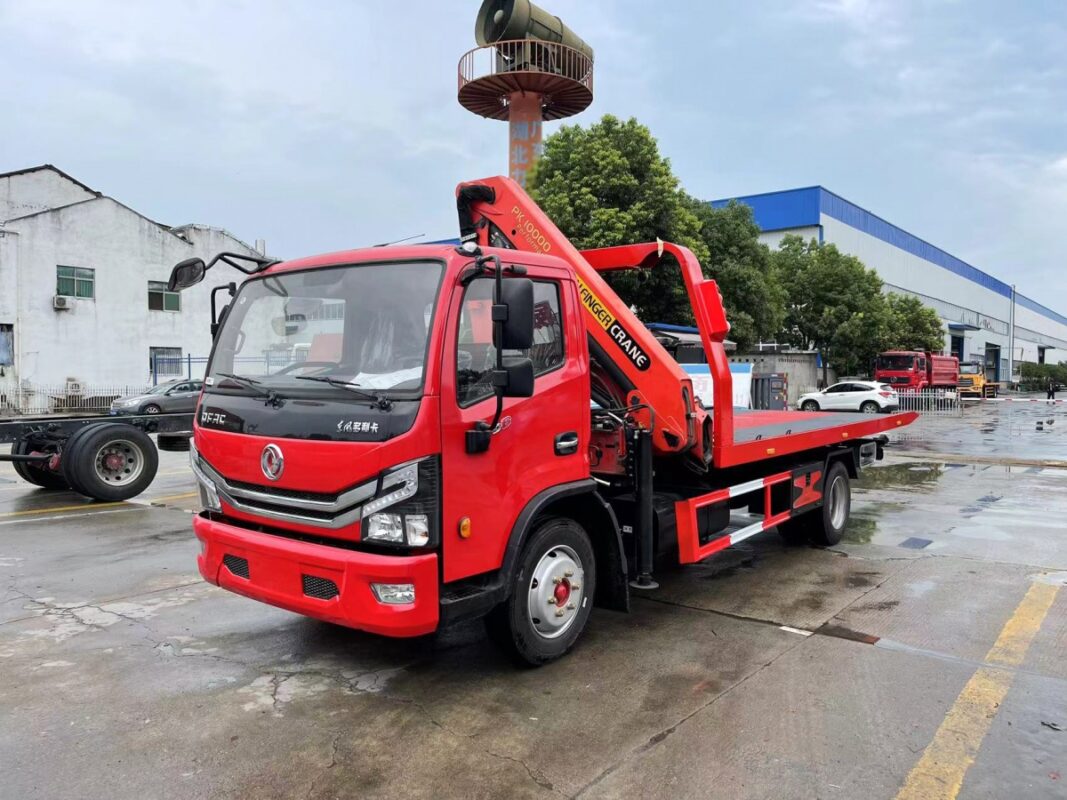
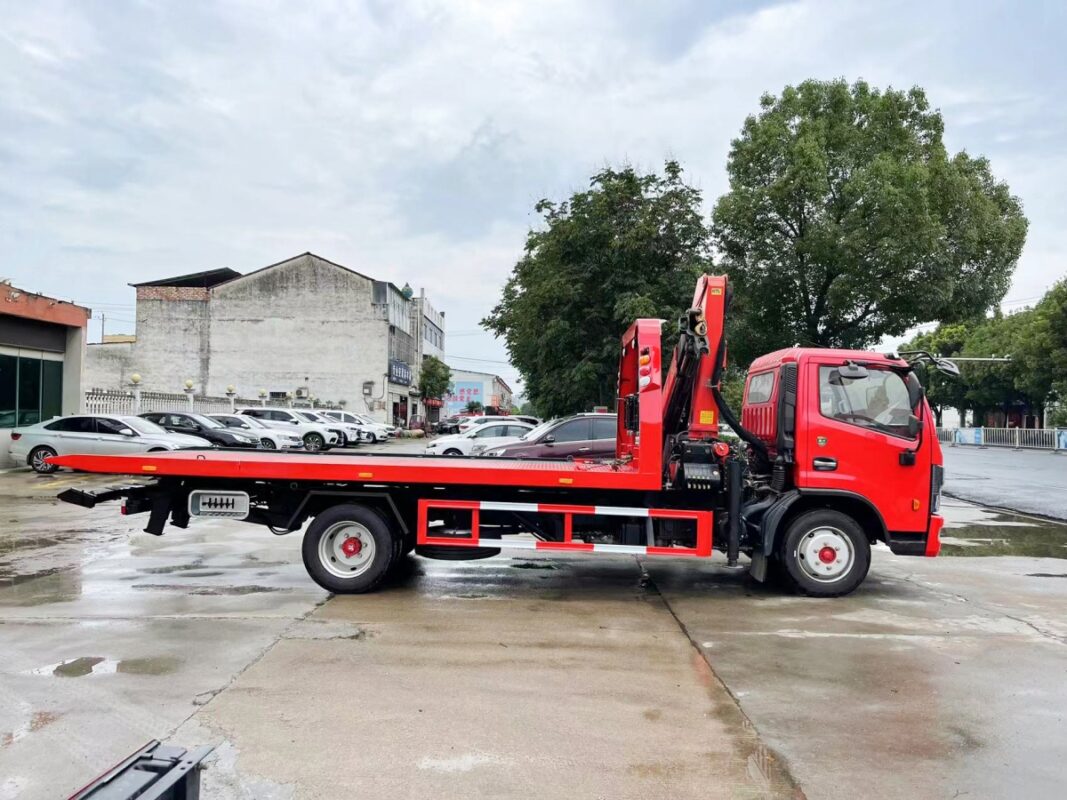
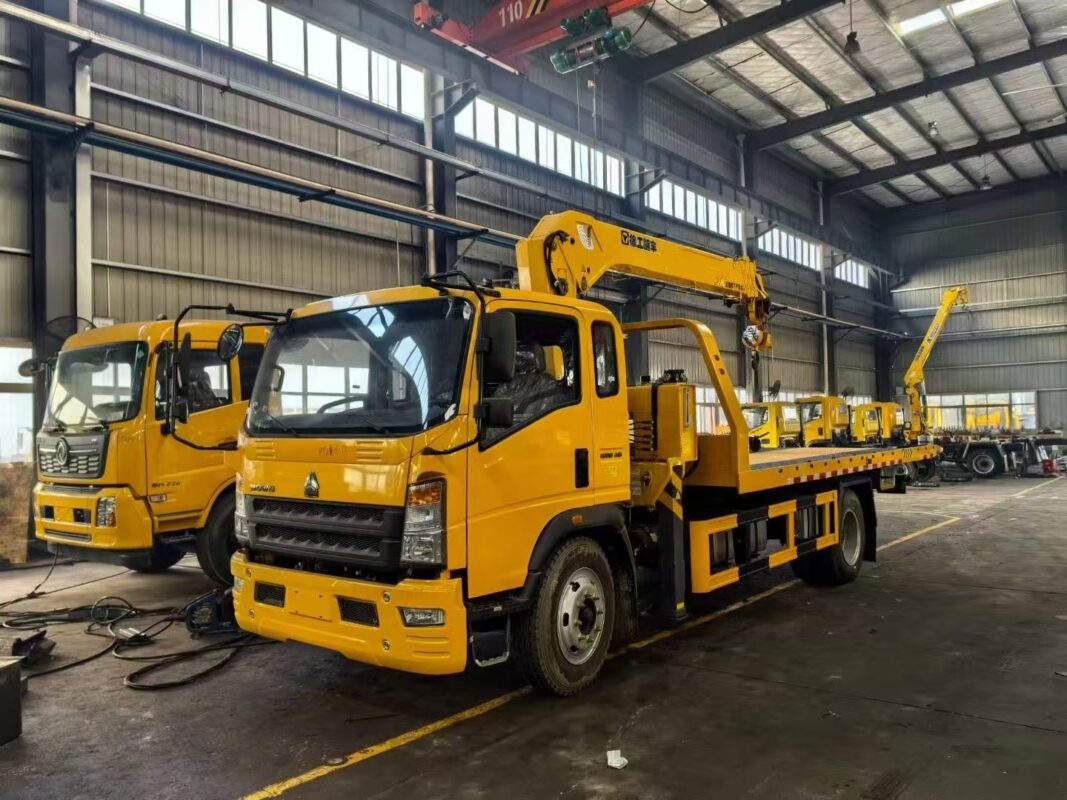
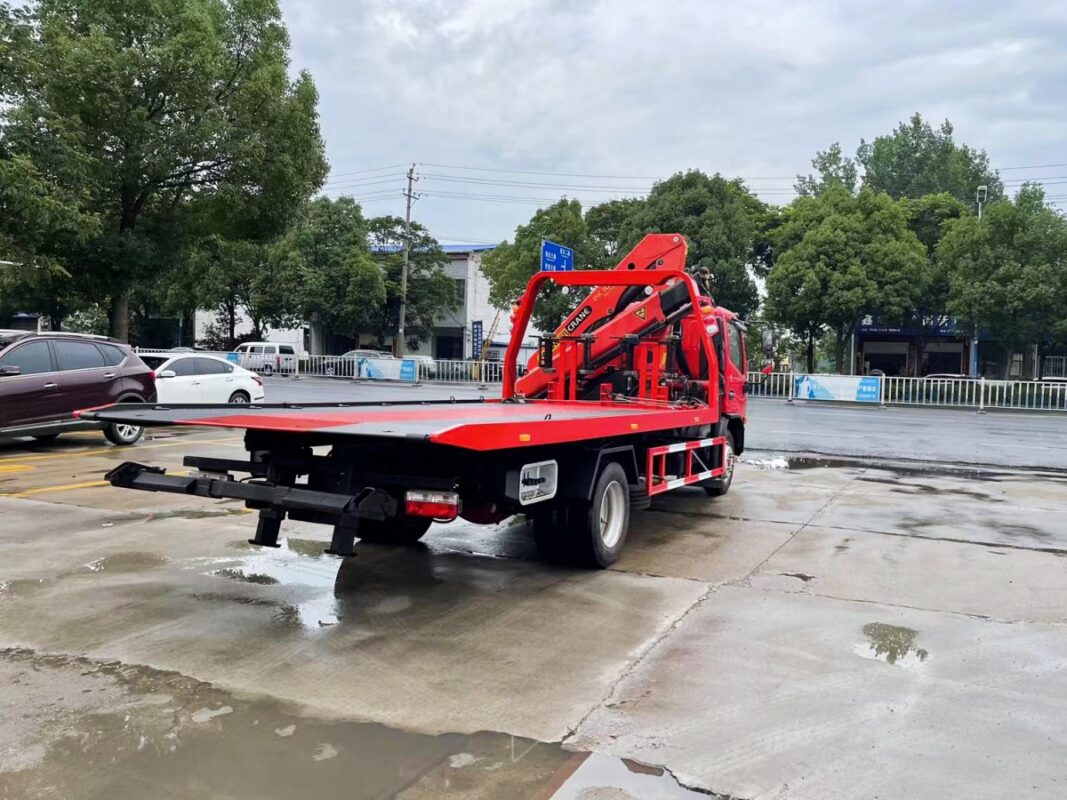
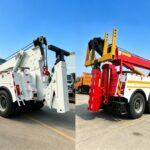
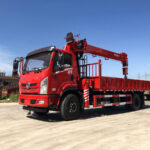
When choosing a crane tow truck, one of the most important decisions is selecting the right crane type. The two most common options are the Telescopic boom crane and the knuckle boom crane. While both are designed to lift and recover disabled vehicles or equipment, they perform differently depending on the recovery environment.
A telescopic boom crane excels at heavy lifting and long reach, making it ideal for open-road and highway recoveries. A knuckle boom crane, on the other hand, offers exceptional flexibility and can operate efficiently in confined spaces where maneuverability is critical.
Understanding the strengths and limitations of each design will help you choose the most suitable recovery vehicle for your daily operations.
What Is a Telescopic Boom Crane?
A telescopic boom crane features a rigid boom that extends outward in a straight line using hydraulic sections. Its simple structure provides excellent lifting capacity and a long working radius, making it a popular choice for heavy-duty recovery work.
Advantages
Higher lifting capacity for heavy vehicles and equipment.
Longer working reach, ideal for roadside and highway recovery.
Simple mechanical structure, resulting in easier maintenance and lower service costs.
Faster setup for straightforward lifting operations.
Excellent stability when handling vertical lifting tasks.
Limitations
Requires more working space to extend and operate safely.
Less flexible when obstacles or overhead structures are present.
Not ideal for narrow streets or confined work areas.
Best Applications
Highway accident recovery
Heavy truck and bus recovery
Construction equipment lifting
Open industrial sites
Long-distance vehicle retrieval
What Is a Knuckle Boom Crane?
A knuckle boom crane uses multiple articulated joints that allow the boom to fold, extend, and rotate with exceptional precision. This articulated design provides greater flexibility when lifting vehicles or equipment in challenging environments.
Advantages
Excellent maneuverability in tight or restricted spaces.
Can lift over walls, guardrails, or other obstacles.
Compact folded design for easier transportation.
Precise load positioning through multiple boom angles.
Suitable for a wide variety of recovery scenarios.
Limitations
Slightly shorter maximum reach than an equivalent straight boom.
More complex hydraulic system requiring regular maintenance.
Generally higher purchase cost.
Best Applications
Urban roadside assistance
Underground parking garages
Residential streets
Narrow construction sites
Municipal rescue operations
Telescopic Boom vs. Knuckle Boom: Side-by-Side Comparison
Feature
Telescopic Boom
Knuckle Boom
Lifting Capacity
Excellent for heavy vertical lifting
Excellent for medium to heavy lifting with flexibility
Working Reach
Longer horizontal and vertical reach
Moderate reach with greater positioning flexibility
Operation in Tight Spaces
Limited
Excellent
Precision Positioning
Good
Excellent
Maintenance
Simpler structure, lower maintenance
More hydraulic joints require regular inspection
Setup Speed
Fast
Slightly longer
Purchase Cost
Generally lower
Generally higher
Typical Applications
Highways, heavy recovery, industrial sites
Urban recovery, confined spaces, municipal rescue
Which Crane Should You Choose?
The right crane depends on the type of recovery work you perform most often.
Choose a telescopic boom crane if you:
Frequently recover heavy trucks, buses, or construction machinery.
Operate mainly on highways or open roads.
Need maximum lifting height and working radius.
Prefer a simpler, lower-maintenance crane system.
Choose a knuckle boom crane if you:
Work in cities or residential neighborhoods.
Recover vehicles from parking garages or narrow streets.
Need to lift around obstacles such as walls or barriers.
Value flexibility and precise load placement over maximum reach.
Can One Recovery Fleet Benefit from Both?
Many professional recovery companies operate both crane types to cover a wider range of recovery scenarios.
A telescopic boom recovery truck is often dispatched for heavy-duty highway recoveries and long-distance towing, while a knuckle boom model is better suited to urban environments where space is limited and maneuverability is essential.
By combining both configurations, fleet operators can improve response efficiency and handle everything from passenger cars to heavy commercial vehicles.
Conclusion
There is no single crane design that is best for every recovery task. A telescopic boom crane offers superior lifting capacity, longer reach, and excellent performance in open environments, making it the preferred choice for heavy-duty recovery work. In contrast, a knuckle boom crane provides outstanding flexibility and precision, allowing operators to work safely and efficiently in confined spaces where a telescopic boom would be difficult to position.
At CSCTRUCK, we manufacture both telescopic boom and knuckle boom recovery tow trucks, available in a wide range of lifting capacities and chassis configurations. Whether your priority is heavy lifting, urban recovery, or a customized solution tailored to your operational needs, our engineering team can help you select the right crane system and configure a recovery vehicle that fits your business requirements.
If you’re unsure which option is best for your fleet, contact us for expert advice and customized recovery truck solutions.